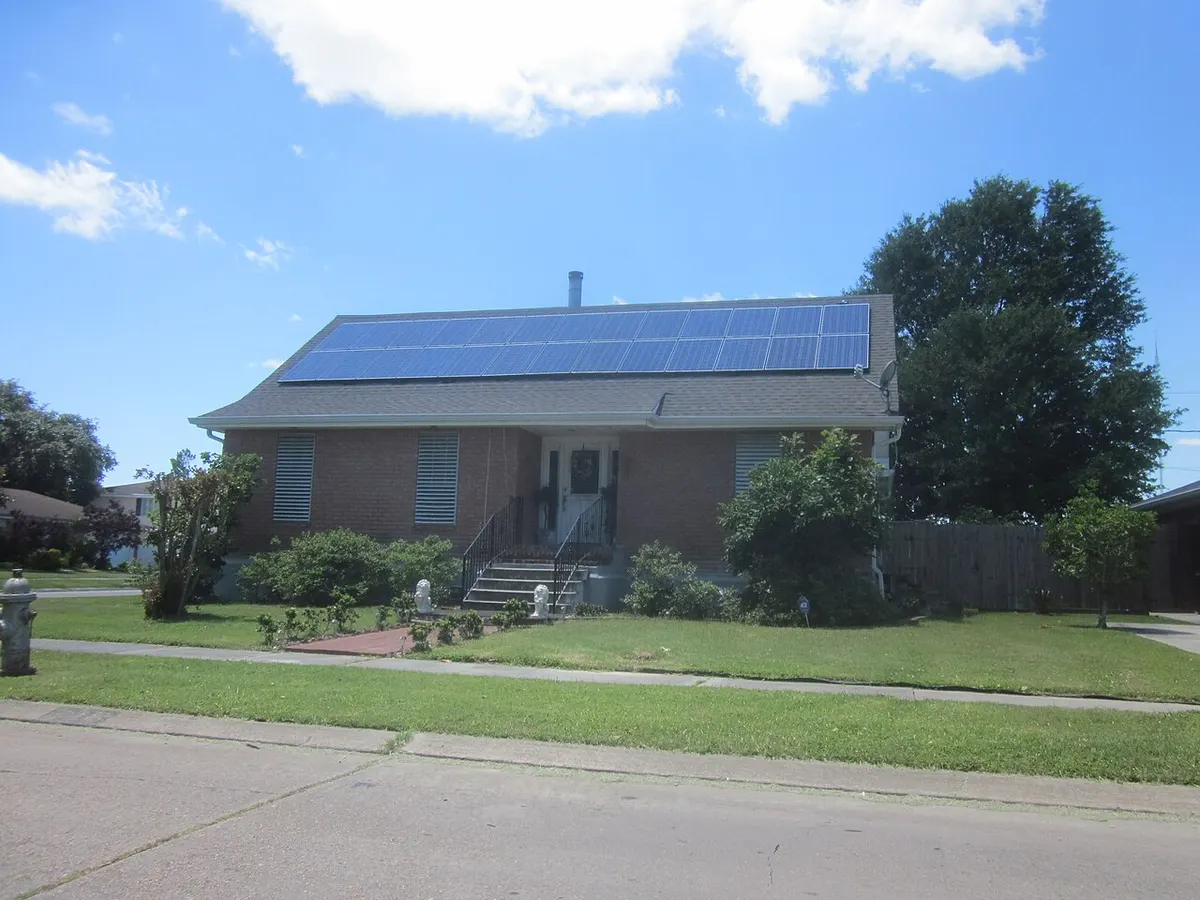
Photo: Infrogmation of New Orleans / Wikimedia Commons (CC BY-SA 3.0)
📋 In This Article
A home is the largest material and energy investment most people ever make. Building or renovating sustainably from the outset — or making greener choices within an existing home — dramatically reduces lifetime environmental impact.
Sustainable Building Materials
Traditional Indian materials (clay brick, lime plaster, stone, bamboo, compressed earth blocks) are far lower in embodied carbon than modern cement and steel. Fly ash bricks are stronger than standard bricks and use industrial waste. Bamboo — stronger than steel per unit weight — is a rapidly renewable structural material.
- Compressed stabilised earth blocks — zero firing energy
- Fly ash bricks — uses industrial waste, lower carbon
- Bamboo — rapid renewal, excellent structural strength
- Reclaimed wood — zero embodied energy, beautiful texture
- Lime plaster — breathable, antifungal, natural material
Passive Cooling and Natural Light
India's climate makes passive design especially valuable. Deep overhangs, cross-ventilation, courtyards, and high thermal mass walls can eliminate or dramatically reduce AC requirements. South-facing rooftop overhangs shade walls during summer while allowing winter sun. Jali screens provide ventilation while reducing glare.
Energy-Efficient Appliances and Lighting
LED lighting uses 75% less energy than incandescent. A 5-star AC uses 25% less electricity than a 2-star model — the upfront cost difference is recovered within 2 years. Induction cooktops are 85% efficient vs. 40% for gas — saving energy while eliminating indoor air pollution.
Sustainable Interior Choices
Choose furniture made from FSC-certified wood, bamboo, or reclaimed materials. Natural fibre textiles (cotton, linen, jute, hemp) are biodegradable and have far lower lifecycle impacts than synthetic materials. Low-VOC paints improve indoor air quality and are widely available in India.
Conclusion
Every home improvement decision is an opportunity to choose more sustainable options. Start with energy-efficient lighting and appliances — the payback is immediate — then progressively incorporate sustainable materials and passive design.