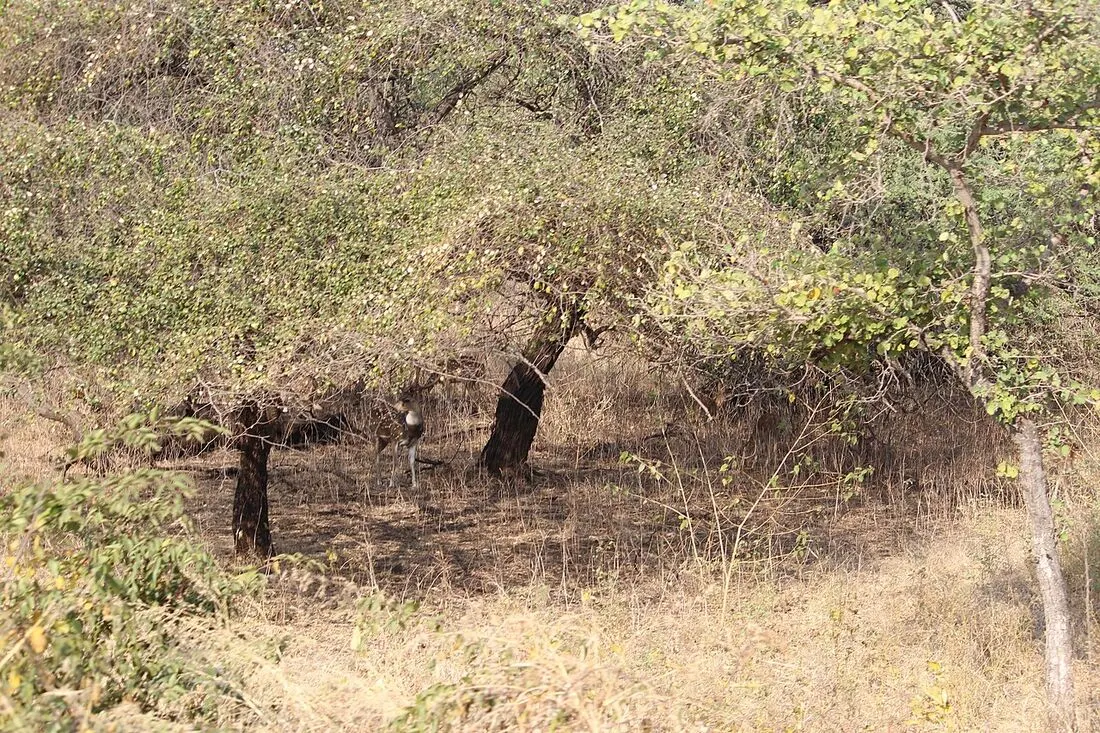
Photo: Vijayakumarblathur / Wikimedia Commons (CC BY-SA 4.0)
📋 In This Article
Silent Valley National Park — located in the Nilgiri hills of Kerala — is one of India's last undisturbed stretches of tropical wet evergreen rainforest, saved from a hydroelectric project in 1980 through a landmark environmental campaign. It is a globally recognised biodiversity hotspot, part of the Nilgiri Biosphere Reserve, with extraordinary concentrations of endemic species.
The Conservation Story
In 1976, the Kerala government approved the Kunthipuzha River hydroelectric project that would have flooded much of Silent Valley's core. The resulting conservation campaign — led by naturalists including M. Krishnan, Madhav Gadgil, and Romulus Whitaker, supported by the Kerala Sastra Sahitya Parishat, and ultimately given international visibility by poet Sugathakumari's poetry — resulted in Prime Minister Indira Gandhi declaring the valley a national park in 1984 and cancelling the dam project. It was India's first major environmental movement victory.
Biodiversity — The Numbers
Despite covering only 237 sq km, Silent Valley hosts: over 1,000 species of flowering plants including 107 species found nowhere else in the world; 34 species of mammals including Lion-tailed Macaque (the rarest macaque, endemic to Western Ghats), tiger, leopard, Asian elephant, Nilgiri Tahr (mountain goat), and otters; over 400 species of butterflies; over 200 species of birds including the Malabar Whistling Thrush and Brown-breasted Flycatcher; over 20 species of freshwater fish; and over 50 species of amphibians including numerous species of Purple Frogs (Nasikabatrachus sahyadrensis) — a creature so ancient and unusual it has its own taxonomic family.
- Lion-tailed Macaque — the valley's flagship species
- Purple Frog — ancient lineage from Gondwana breakup
- Nilgiri Tahr — mountain goat endemic to Western Ghats
- Over 1,000 flowering plant species, 107 endemic
Visiting Silent Valley
Access is strictly controlled — the only entry is through Mukkali village (30km from Mannarkkad). Day visits require advance permit from the Forest Department in Palakkad. An overnight camp at Sairandhri forest rest house inside the park allows access to the core zone trails — this is the most rewarding way to experience the forest. Permits are limited to 100 visitors daily. A trained guide is mandatory and genuinely valuable — they know where to find Lion-tailed Macaques and rare birds. Best time: September-April.
What Makes This Forest Special
Silent Valley's exceptional biodiversity is a result of its inaccessibility (no roads until recently), its position at the confluence of the Nilgiri and Anamalai hills, and the remarkable fact that it has never been logged or farmed. Walking in Silent Valley is walking in a forest that looks essentially as it did before human intervention — 40-metre tall trees, multi-layered canopy, an extraordinary density of life per square metre, and an ecological silence (hence the name, from the absence of cicadas) that is unlike any other Indian forest.
Conclusion
Silent Valley exists because of an environmental movement that demonstrated the power of scientific argument, poetic imagination, and public mobilisation. Visiting the valley is an act of gratitude toward those who saved it — and a reminder of why wilderness areas matter beyond their economic value.