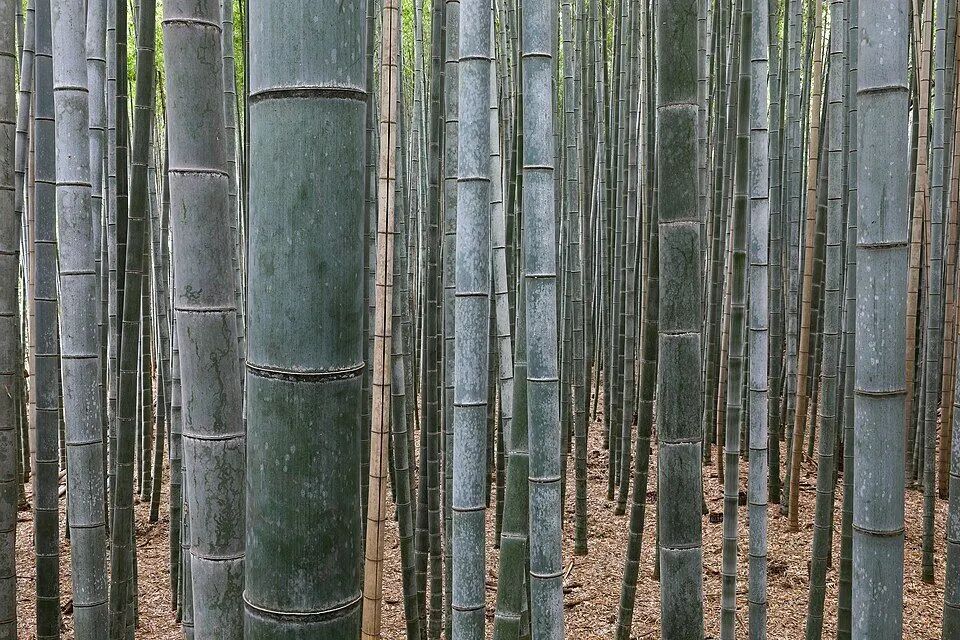
Photo: Basile Morin / Wikimedia Commons (CC BY-SA 4.0)
Bamboo (Bambusoideae spp.): The green gold — world's fastest-growing plant and a sustainable alternative to wood and plastic.
🔍 Quick Facts
| Common name | Bamboo |
| Other names | Bans (Hindi); Moongil (Tamil); Veduru (Telugu) |
| Scientific name | Bambusoideae spp. |
| Plant family | Poaceae (grass family) |
| Size | Varies from 1 m to over 30 m |
| Native region | Asia, Americas, Africa |
| Climate | Tropical/Temperate |
| Ease of growing | Very Fast |
| Parts used | Culm, Shoots, Leaves |
About Bamboo
Bamboo is a giant grass, and some species can grow almost a metre in a single day. India has the second-largest bamboo resources in the world, especially in the north-east. In 2017 India amended the Indian Forest Act so that bamboo grown outside forests is no longer legally classed as a "tree", making it easier for farmers to grow and sell. Many bamboo species flower only once every few decades and then die.
Botanically known as Bambusoideae spp., it belongs to the Poaceae family. It is native to Asia, Americas, Africa and grows best in a tropical/temperate climate. The parts most often used are the culm, shoots and leaves.
Timber & Economic Uses
Bamboo is best known for:
- Construction
- Furniture
- Paper
- Food (shoots)
- Erosion control
What the Wood Is Used For
- Construction, scaffolding and furniture.
- Paper pulp, flooring, textiles and handicrafts.
- Bamboo shoots are eaten in the north-east (fermented as bastenga, khorisa).
How to Grow Bamboo
| ☀️ Sunlight | Full sun to partial shade. |
| 💧 Watering | Regular watering when young. |
| 🪴 Soil | Well-drained, fertile soil. |
| 🌱 Propagation | Rhizome or culm cuttings, or tissue culture. |
| 📅 When to plant (India) | Plant at the start of the monsoon. |
| 🏡 In pots / at home | Clumping ornamental species (such as Bambusa vulgaris "Wamin" or dwarf types) grow in large pots. |
Precautions & Safety
- Raw bamboo shoots contain cyanogenic compounds — always boil before eating.
- Running bamboo species can spread aggressively; choose clumping types for gardens.
Frequently Asked Questions
Further Reading on Bamboo
Written by the WhyOnPlanet editorial team · Last updated October 2026