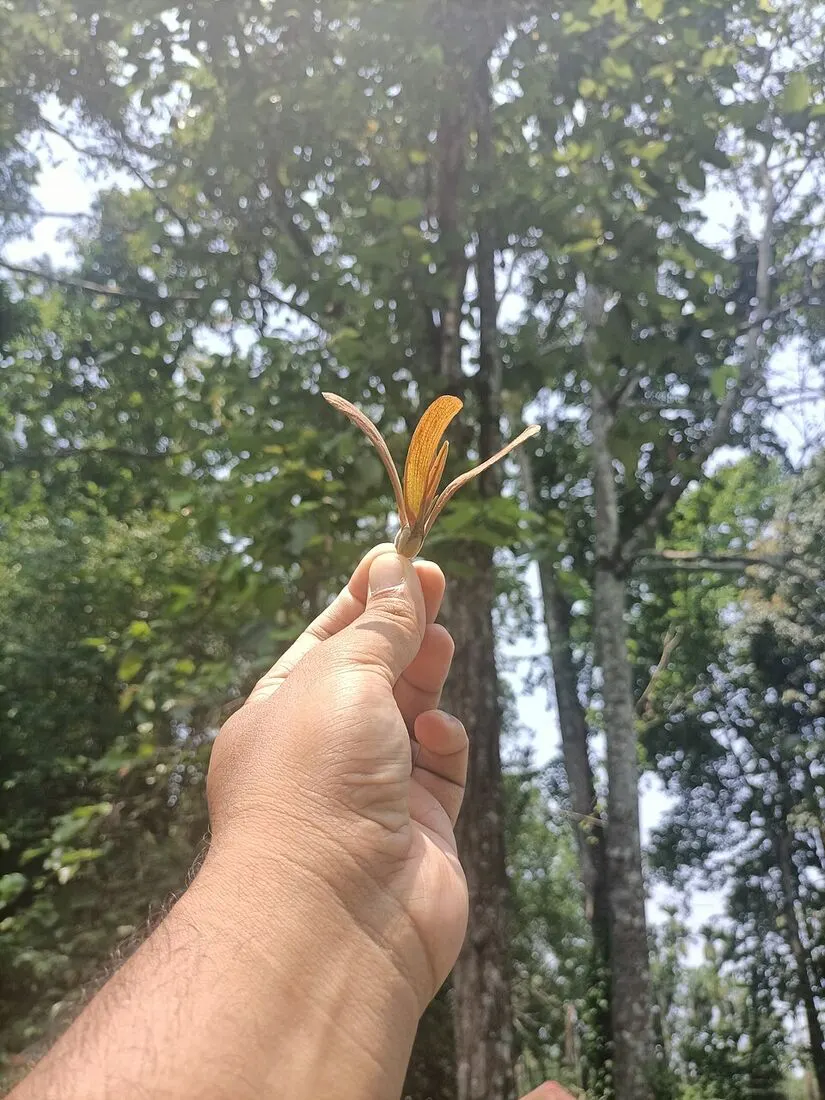
Photo: Debuapriyo / Wikimedia Commons (CC BY-SA 4.0)
Sal Tree (Shorea robusta): Sacred Indian tree of Buddha's birth — an economically vital timber and resin source.
🔍 Quick Facts
| Common name | Sal Tree |
| Other names | Sal, Sakhua (Hindi); Shala (Sanskrit); Kungiliyam (Tamil, for the resin) |
| Scientific name | Shorea robusta |
| Plant family | Dipterocarpaceae |
| Size | 30–35 m tree |
| Native region | India, Nepal |
| Climate | Tropical/Sub-tropical |
| Ease of growing | Moderate |
| Parts used | Wood, Resin, Leaves, Seeds |
About Sal Tree
Sal forests cover large parts of central and eastern India, from Jharkhand and Chhattisgarh to the Terai. For tribal communities, sal is central to life: its leaves are stitched into plates and cups, its seeds are collected for oil, and the Sarhul festival celebrates its flowering. According to Buddhist tradition, the Buddha was born under a sal tree.
Botanically known as Shorea robusta, it belongs to the Dipterocarpaceae family. It is native to India, Nepal and grows best in a tropical/sub-tropical climate. The parts most often used are the wood, resin, leaves and seeds.
Timber & Economic Uses
Sal Tree is best known for:
- Structural timber
- Resin (dammar)
- Religious use
- Fodder
- Traditional medicine
What the Wood Is Used For
- Heavy timber for railway sleepers, beams and doors.
- Leaves are pressed into biodegradable plates (pattal) and cups (dona).
- Sal resin (dammar) is burnt as incense; sal seed butter is used in chocolates and cosmetics.
How to Grow Sal Tree
| ☀️ Sunlight | Full sun. |
| 💧 Watering | Monsoon rainfall; tolerates dry seasons. |
| 🪴 Soil | Deep, well-drained, slightly acidic soil. |
| 🌱 Propagation | Natural regeneration from fresh seeds, which lose viability within days. |
| 📅 When to plant (India) | Seeds fall at the start of the monsoon. |
| 🏡 In pots / at home | Not suitable for pots. |
Precautions & Safety
- Wild sal is protected; felling needs permission.
Frequently Asked Questions
Further Reading on Sal Tree
Written by the WhyOnPlanet editorial team · Last updated October 2026