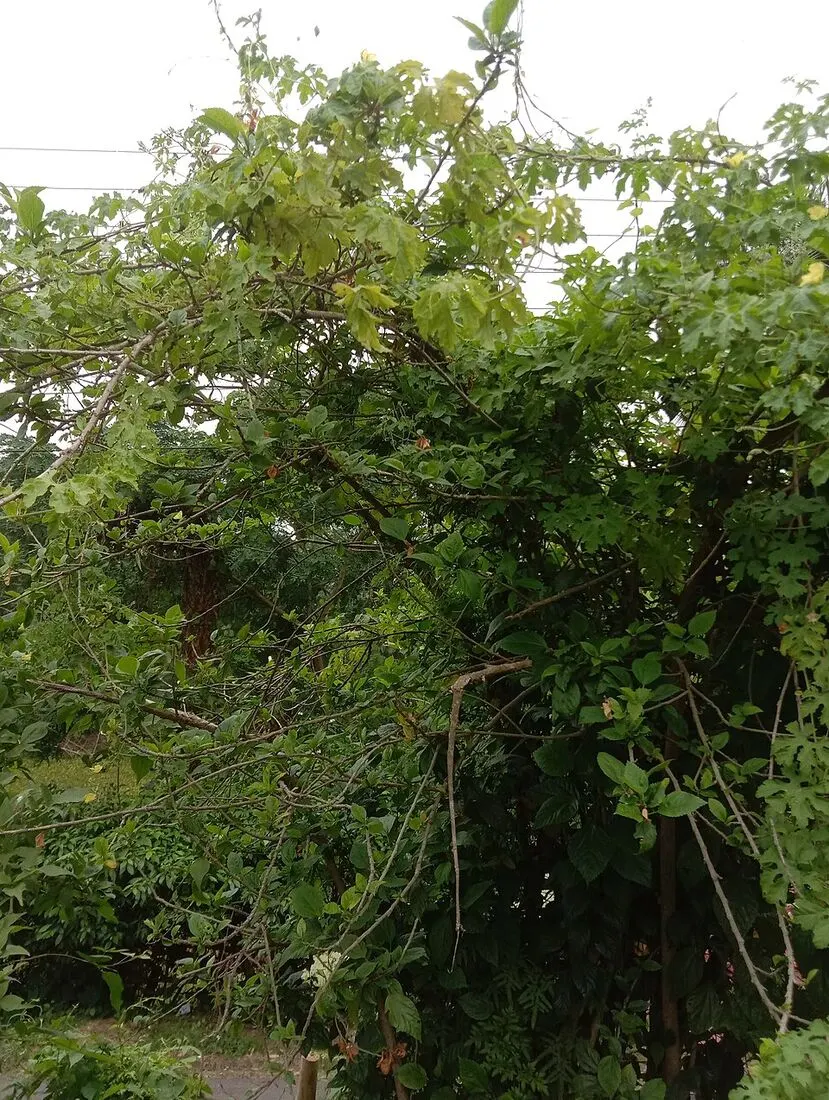
Photo: Billjones94 / Wikimedia Commons (CC BY-SA 4.0)
Bitter Gourd (Karela) (Momordica charantia): Bitterest vegetable in nature — a top Ayurvedic remedy for diabetes, liver, and blood purification.
🔍 Quick Facts
| Common name | Bitter Gourd (Karela) |
| Other names | Karela (Hindi); Pavakkai (Tamil); Kakarakaya (Telugu) |
| Scientific name | Momordica charantia |
| Plant family | Cucurbitaceae (gourd family) |
| Size | Climbing vine, 2–5 m |
| Native region | Tropical Asia, Africa |
| Climate | Tropical |
| Ease of growing | Fast |
| Parts used | Fruit, Leaves, Seeds, Root |
About Bitter Gourd
Karela is famously bitter, and that bitterness comes from compounds such as charantin and momordicin, which have been studied for lowering blood sugar. It is one of India's most popular home-garden vegetables and grows well on balconies on a simple trellis. Varieties range from long, pale green types to the small, dark, very bitter types of South India.
Botanically known as Momordica charantia, it belongs to the Cucurbitaceae family. It is native to Tropical Asia, Africa and grows best in a tropical climate. The parts most often used are the fruit, leaves, seeds and root.
Uses & Nutrition
Bitter Gourd is best known for:
- Diabetes (blood sugar)
- Blood purifier
- Liver health
- Skin diseases
- Immunity
How to Eat & Cook It
- Cooked as stuffed karela, karela sabzi or chips.
- Karela juice is taken in the morning by some people for blood sugar.
- Salting and squeezing the slices reduces bitterness.
How to Grow Bitter Gourd
| ☀️ Sunlight | Full sun. |
| 💧 Watering | Regular; keep soil moist during fruiting. |
| 🪴 Soil | Rich, well-drained soil with compost. |
| 🌱 Propagation | Seeds soaked overnight, sown directly. |
| 📅 When to plant (India) | Sow February–March or June–July. |
| 🏡 In pots / at home | Grows in a 12-inch pot or grow bag with a trellis. First fruits in about 55–60 days. |
Precautions & Safety
- Can cause hypoglycaemia with diabetes medicines.
- Avoid in pregnancy — it may cause uterine contractions.
- Seeds can trigger haemolysis in people with G6PD deficiency.
Frequently Asked Questions
Further Reading on Bitter Gourd
Written by the WhyOnPlanet editorial team · Last updated October 2026