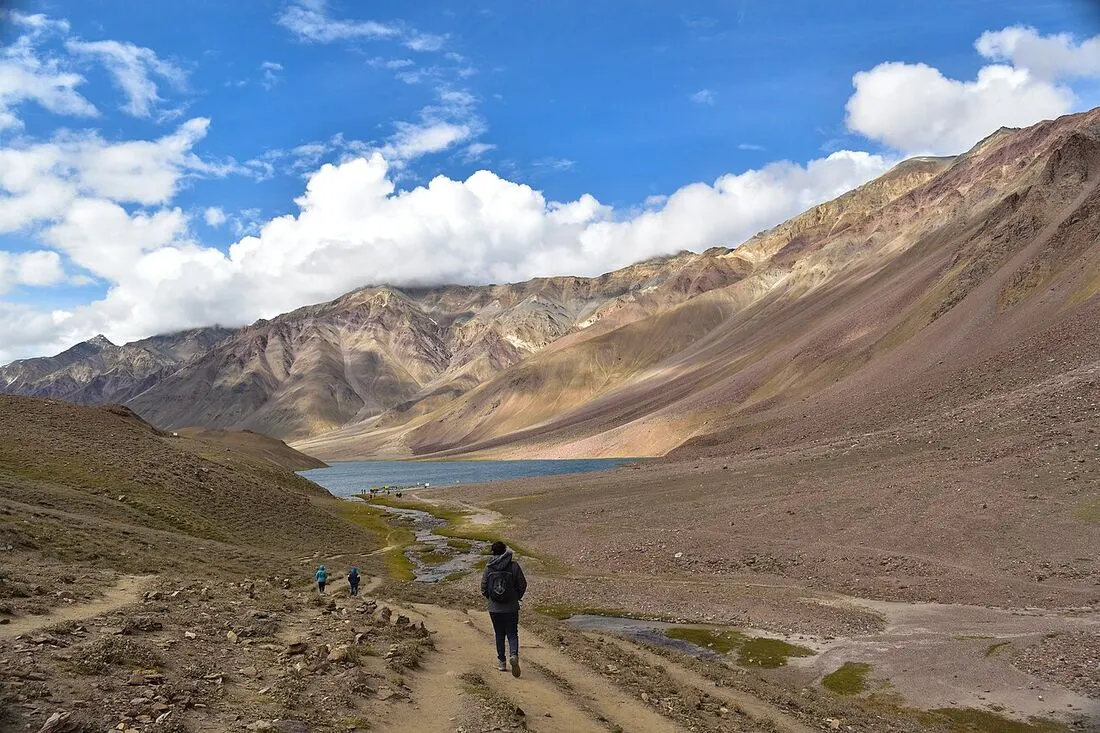
Photo: Adarsh Patel / Wikimedia Commons (CC BY-SA 4.0)
📋 In This Article
Wular Lake — 24km from Srinagar at 1,580m altitude — is one of the largest freshwater lakes in Asia (maximum 217 sq km in flood season), set against the backdrop of the Pir Panjal and Haramukh mountain ranges. A Ramsar Wetland since 1990, Wular is critical habitat for migratory birds and the community of fisherfolk who have depended on it for generations.
Ecology and Biodiversity
Wular receives water from the Jhelum and Bangas rivers and is bordered by extensive reed beds (Phragmites and Typha) that provide nesting and roosting habitat for birds. The lake hosts: over 200 bird species including migratory waterfowl from Central Asia (Ferruginous Duck, Tufted Duck, Common Pochard); the endemic Hangul (Kashmir Stag) in the adjacent Dachigam National Park drinks at the lake margins; Indian softshell turtle; endangered Trout species in feeder streams. The reed beds are harvested traditionally for craft material (baskets, furniture, roofing).
Threats to Wular Lake
Wular faces severe threats: agricultural runoff (fertiliser and pesticide pollution from the valley's rice and maize cultivation); sewage from Sopore and surrounding towns (untreated); encroachment of the lake margin by willow plantations (reducing water surface); invasive water hyacinth and Trapa (water chestnut — a traditional food plant that has become invasive); and wetland drainage for agriculture. The lake has lost approximately 50% of its original surface area since the 1950s. Restoration is ongoing under the National Lake Conservation Plan.
Cultural Significance
The communities around Wular — primarily fisherfolk and reed harvesters — have developed a distinctive lake culture over centuries. The traditional fisherfolk use unique casting methods specific to the shallow, reedy Wular environment. Water chestnut (singhara) harvesting from Wular is a major agricultural activity — Kashmiri water chestnuts are a seasonal delicacy. The Lake Conservation Foundation works with communities to balance traditional use with ecological restoration.
Combining Wular with Kashmir Valleys
Wular Lake combines naturally with several excellent Kashmir destinations: Gulmarg (55km) for mountain meadows and skiing; Dachigam National Park (50km from Sopore via Srinagar) for Hangul deer and Himalayan black bear; the Uri Valley and Gurez Valley for remoter Himalayan landscapes. A Srinagar-Wular-Gulmarg circuit makes an excellent 4-5 day Kashmir itinerary combining mountain, lake, and garden landscapes.
Conclusion
Wular Lake, despite its current degraded state, retains an extraordinary beauty and ecological significance that makes it one of Kashmir's most rewarding natural destinations. Its restoration — still in progress — is a story of community engagement, ecological knowledge, and the slow work of reversing decades of negligence.