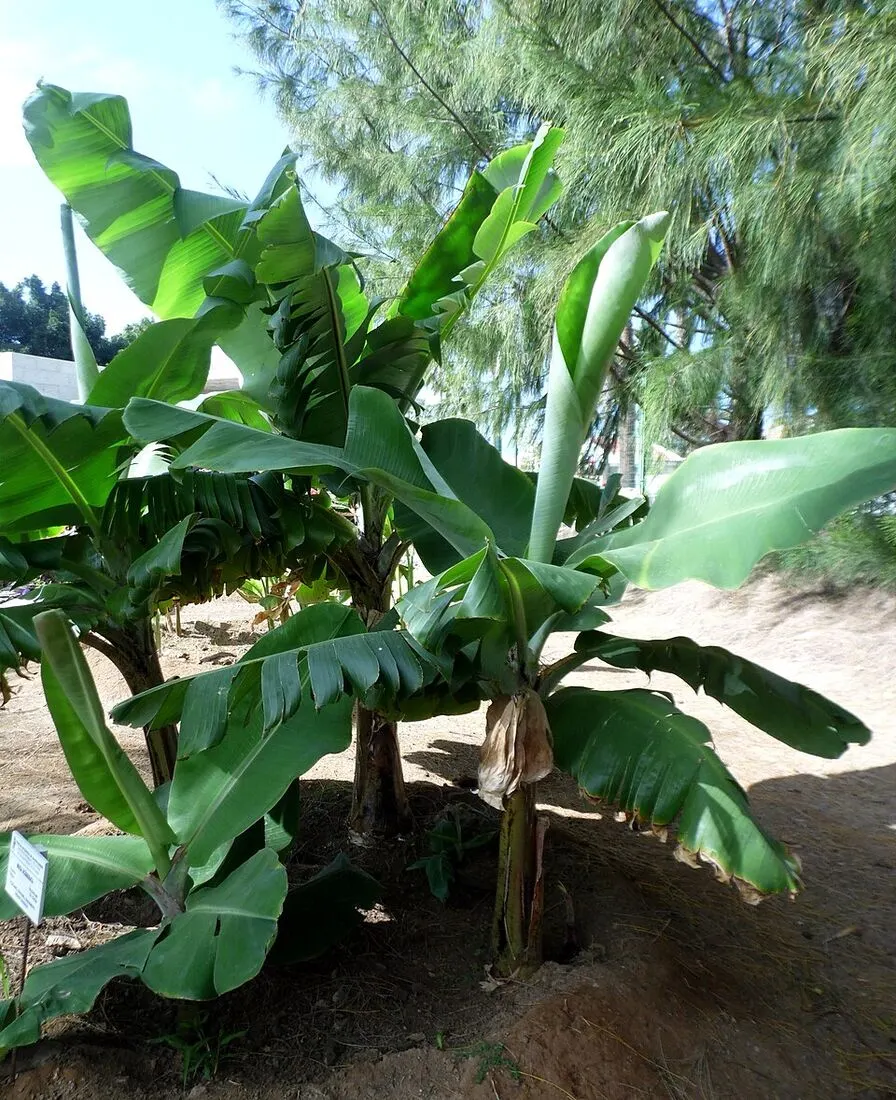
Photo: Kenraiz / Wikimedia Commons (CC BY-SA 3.0)
Banana (Musa acuminata): Most consumed fruit in the world — rich in potassium, B6, and prebiotic fibre for gut health.
🔍 Quick Facts
| Common name | Banana |
| Other names | Kela (Hindi); Vazhai (Tamil); Arati (Telugu); Kadali (Sanskrit) |
| Scientific name | Musa acuminata |
| Plant family | Musaceae |
| Size | 2–6 m giant herb (not a tree) |
| Native region | Southeast Asia |
| Climate | Tropical |
| Ease of growing | Fast |
| Parts used | Fruit, Flower, Stem, Leaves |
About Banana
India is the world's largest banana producer, growing dozens of varieties — from Robusta and Grand Naine to the red banana, the small Elaichi (Yelakki) and the cooking banana Nendran of Kerala. Botanically the "trunk" is a pseudostem of rolled leaves. Every part is used: leaves as plates, the flower (kele ka phool) and stem as vegetables, and fibre for crafts.
Botanically known as Musa acuminata, it belongs to the Musaceae family. It is native to Southeast Asia and grows best in a tropical climate. The parts most often used are the fruit, flower, stem and leaves.
Uses & Nutrition
Banana is best known for:
- Energy source
- Gut health
- Blood pressure
- Mood booster
- Anaemia (iron)
How to Eat & Cook It
- Ripe fruit is eaten fresh and in shakes.
- Raw banana and banana flower are cooked as vegetables.
- Banana stem juice is used traditionally for kidney stones.
How to Grow Banana
| ☀️ Sunlight | Full sun. |
| 💧 Watering | High; needs regular deep watering. |
| 🪴 Soil | Deep, rich, well-drained soil with lots of organic matter. |
| 🌱 Propagation | Suckers (sword suckers) or tissue-culture plants. |
| 📅 When to plant (India) | Plant June–July or February–March; fruit in 11–14 months. |
| 🏡 In pots / at home | Dwarf Cavendish can be grown in a large drum on a terrace. |
Precautions & Safety
- High in potassium — people with kidney disease should limit intake.
- Can be an allergen in people with latex allergy.
Frequently Asked Questions
Further Reading on Banana
Written by the WhyOnPlanet editorial team · Last updated October 2026