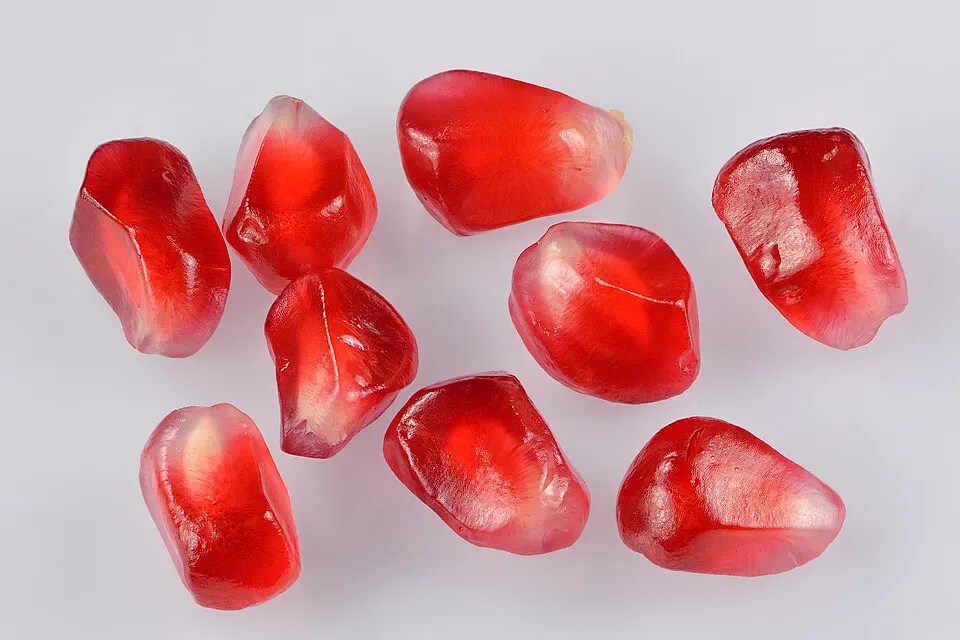
Photo: Ivar Leidus / Wikimedia Commons (CC BY-SA 4.0)
Pomegranate (Anar) (Punica granatum): Ancient fruit of longevity — bursting with punicalagins and antioxidants for heart and skin health.
🔍 Quick Facts
| Common name | Pomegranate (Anar) |
| Other names | Anar (Hindi); Madulai (Tamil); Danimma (Telugu); Dadima (Sanskrit) |
| Scientific name | Punica granatum |
| Plant family | Lythraceae |
| Size | 3–6 m deciduous shrub or small tree |
| Native region | Iran to North India |
| Climate | Arid/Sub-tropical |
| Ease of growing | Moderate |
| Parts used | Fruit, Peel, Seeds, Bark |
About Pomegranate
Maharashtra — especially Solapur — grows most of India's pomegranates, and the Bhagwa variety is the main export variety. The fruit is rich in punicalagins, powerful antioxidants found mainly in the juice and peel. Pomegranate is extremely drought tolerant and is a profitable crop for India's dry regions. Anardana (dried wild pomegranate seeds) is used as a souring spice.
Botanically known as Punica granatum, it belongs to the Lythraceae family. It is native to Iran to North India and grows best in a arid/sub-tropical climate. The parts most often used are the fruit, peel, seeds and bark.
Uses & Nutrition
Pomegranate is best known for:
- Heart health
- Antioxidant
- Anti-inflammatory
- Prostate health
- Gut health
How to Eat & Cook It
- Eaten fresh or juiced.
- Anardana powder sours chole and chutneys.
- Dried peel is used traditionally for diarrhoea and in tooth powders.
How to Grow Pomegranate
| ☀️ Sunlight | Full sun. |
| 💧 Watering | Moderate; irregular watering causes the fruit to crack. |
| 🪴 Soil | Well-drained, even poor or slightly alkaline soil. |
| 🌱 Propagation | Hardwood cuttings or air layering. |
| 📅 When to plant (India) | Plant July–August; the main crop is harvested in winter. |
| 🏡 In pots / at home | Dwarf varieties fruit well in a 16-inch pot. |
Precautions & Safety
- Pomegranate juice may interact with some blood pressure and blood-thinning medicines.
- Juice is high in natural sugar.
Frequently Asked Questions
Further Reading on Pomegranate
Written by the WhyOnPlanet editorial team · Last updated October 2026