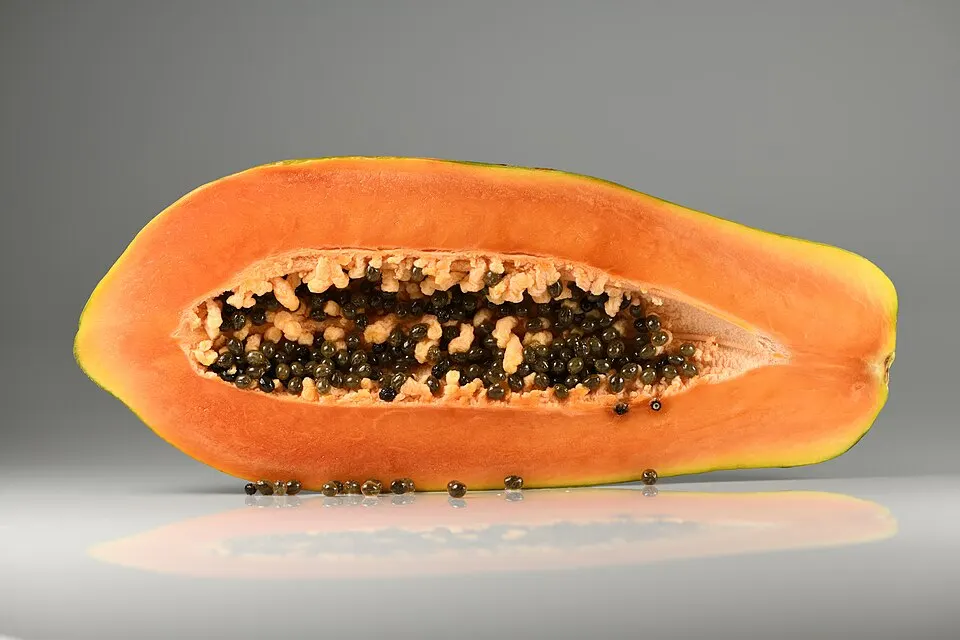
Photo: Ivar Leidus / Wikimedia Commons (CC BY-SA 4.0)
Papaya (Carica papaya): Tropical fruit tree with papain enzyme — a powerful digestive, anti-parasitic, and dengue aid.
🔍 Quick Facts
| Common name | Papaya |
| Other names | Papita (Hindi); Pappali (Tamil); Boppayi (Telugu) |
| Scientific name | Carica papaya |
| Plant family | Caricaceae |
| Size | 2–10 m single-stemmed plant |
| Native region | Mexico |
| Climate | Tropical |
| Ease of growing | Very Fast |
| Parts used | Fruit, Leaves, Seeds, Latex |
About Papaya
India is the world's largest papaya producer. Papaya grows unusually fast, fruiting within 9–11 months of planting, and contains papain, a protein-digesting enzyme used to tenderise meat. Papaya leaf juice is widely taken in India during dengue fever to raise platelet counts — a few small trials suggest a possible benefit, but it is not a substitute for medical care.
Botanically known as Carica papaya, it belongs to the Caricaceae family. It is native to Mexico and grows best in a tropical climate. The parts most often used are the fruit, leaves, seeds and latex.
Uses & Nutrition
Papaya is best known for:
- Digestion (papain)
- Dengue (leaf juice)
- Constipation
- Skin care
- Parasite cleanse
How to Eat & Cook It
- Ripe fruit is eaten fresh or in smoothies.
- Raw papaya is cooked as a vegetable or grated into salads.
- Leaf juice is used during dengue in folk practice.
How to Grow Papaya
| ☀️ Sunlight | Full sun. |
| 💧 Watering | Regular, but waterlogging kills the plant quickly. |
| 🪴 Soil | Light, well-drained soil; plant on a raised mound. |
| 🌱 Propagation | Seeds; Red Lady and Pusa Dwarf are popular varieties. |
| 📅 When to plant (India) | Plant February–March or June–July. |
| 🏡 In pots / at home | Dwarf varieties can fruit in a large drum. |
Precautions & Safety
- Raw or semi-ripe papaya contains latex that may trigger uterine contractions — avoid in pregnancy.
- Latex can cause allergy and skin irritation.
- Leaf juice may interact with blood thinners.
Frequently Asked Questions
Further Reading on Papaya
Written by the WhyOnPlanet editorial team · Last updated October 2026