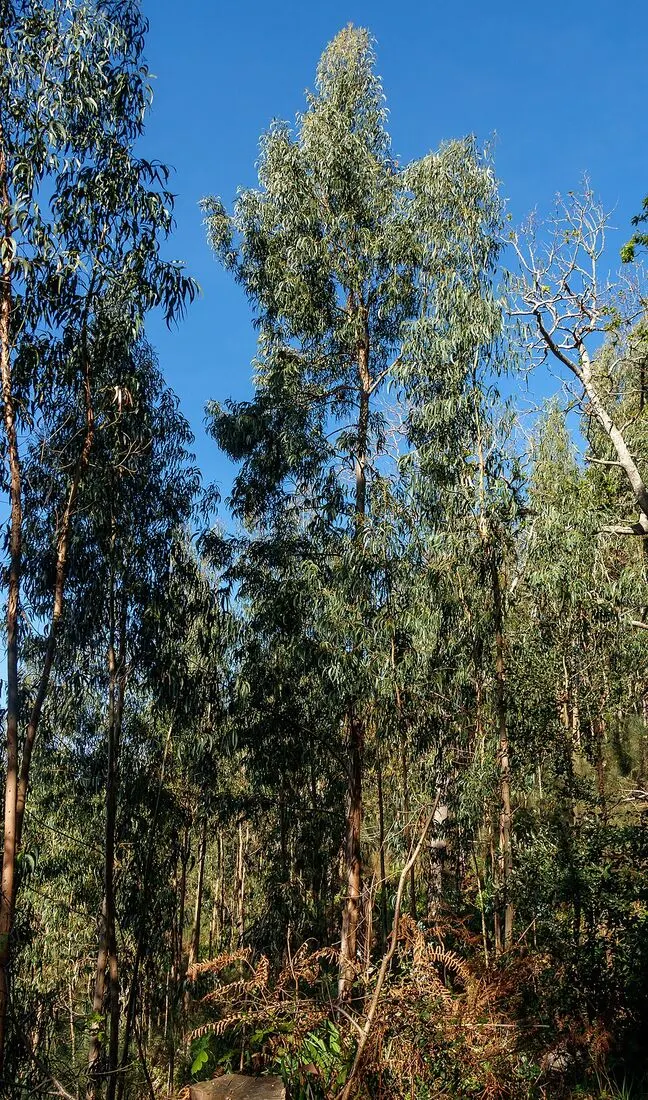
Photo: H. Zell / Wikimedia Commons (CC BY-SA 3.0)
Eucalyptus (Eucalyptus globulus): Fast-growing industrial tree — a key source of timber, paper pulp, and medicinal eucalyptol oil.
🔍 Quick Facts
| Common name | Eucalyptus |
| Other names | Safeda, Nilgiri (Hindi); Thailamaram (Tamil); Nilagiri (Telugu) |
| Scientific name | Eucalyptus globulus |
| Plant family | Myrtaceae |
| Size | 30–60 m evergreen tree |
| Native region | Australia |
| Climate | Tropical/Sub-tropical |
| Ease of growing | Very Fast |
| Parts used | Wood, Leaves, Oil |
About Eucalyptus
Eucalyptus was brought to the Nilgiri Hills from Australia in the 1840s, and "nilgiri oil" is now the common name for eucalyptus oil in India. It grows fast and is widely planted for paper pulp and poles. It is also controversial: dense plantations use a lot of groundwater and suppress undergrowth, so they are discouraged near water-scarce farmland.
Botanically known as Eucalyptus globulus, it belongs to the Myrtaceae family. It is native to Australia and grows best in a tropical/sub-tropical climate. The parts most often used are the wood, leaves and oil.
Timber & Economic Uses
Eucalyptus is best known for:
- Timber
- Paper pulp
- Eucalyptol oil (respiratory)
- Insect repellent
- Biofuel
What the Wood Is Used For
- Paper pulp, poles and firewood.
- Eucalyptus oil for steam inhalation, balms and cough drops.
- Leaves for aromatic decoration.
How to Grow Eucalyptus
| ☀️ Sunlight | Full sun. |
| 💧 Watering | Low; very drought tolerant. |
| 🪴 Soil | Adapts to poor soils. |
| 🌱 Propagation | Clonal cuttings or seeds. |
| 📅 When to plant (India) | Plant in the monsoon. |
| 🏡 In pots / at home | Young plants of smaller species can be grown in pots for a few years. |
Precautions & Safety
- Eucalyptus oil is poisonous if swallowed — even small amounts can be dangerous for children.
- Dense plantations can deplete groundwater.
Frequently Asked Questions
Further Reading on Eucalyptus
Written by the WhyOnPlanet editorial team · Last updated October 2026