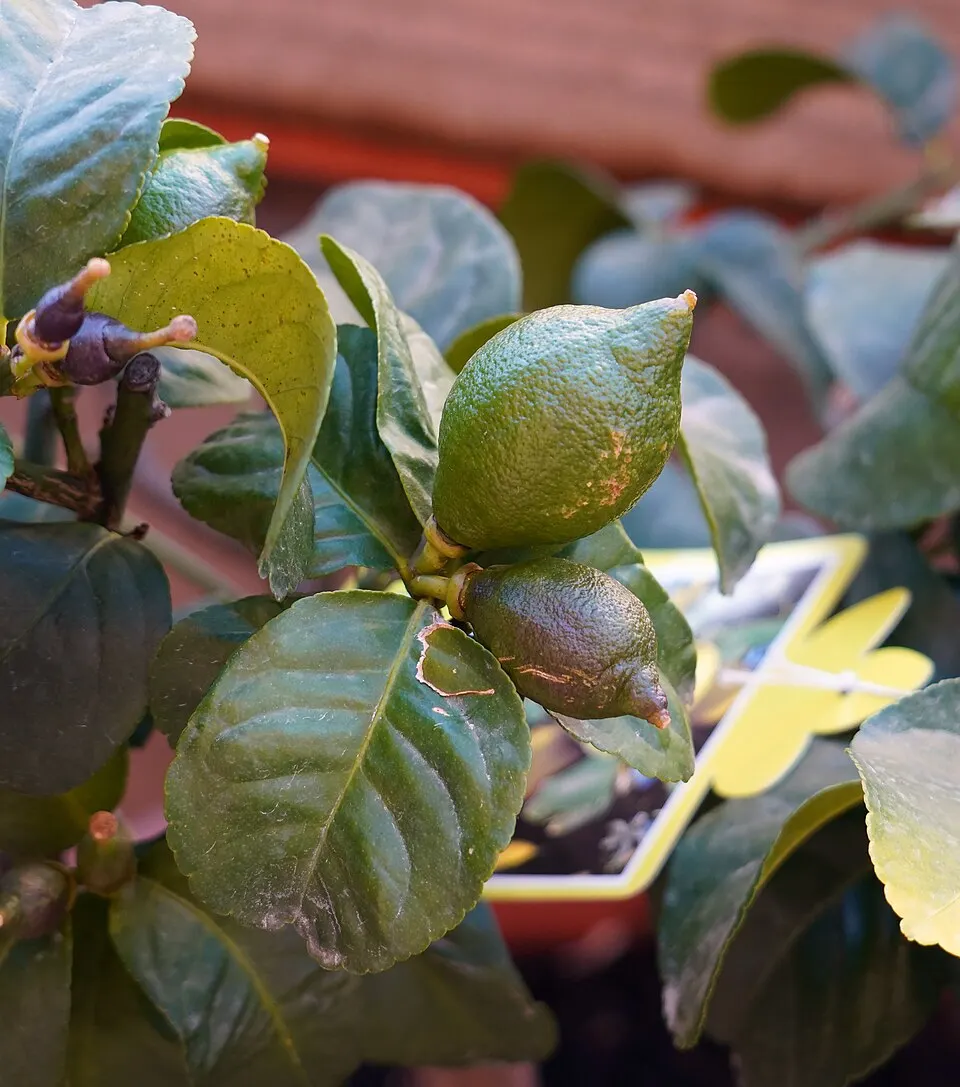
Photo: Commonists / Wikimedia Commons (CC BY-SA 4.0)
Lemon (Nimbu) (Citrus limon): Essential kitchen citrus with alkalising, immune-boosting, and digestive cleansing properties.
🔍 Quick Facts
| Common name | Lemon (Nimbu) |
| Other names | Nimbu (Hindi); Elumichai (Tamil); Nimmakaya (Telugu) |
| Scientific name | Citrus limon |
| Plant family | Rutaceae (citrus family) |
| Size | 3–6 m shrub or small tree |
| Native region | South Asia |
| Climate | Tropical/Sub-tropical |
| Ease of growing | Moderate |
| Parts used | Fruit, Juice, Zest, Peel, Oil |
About Lemon
The small, round, thin-skinned "nimbu" of Indian markets is usually Kagzi lime (Citrus aurantiifolia), while larger oval lemons are Citrus limon. Both are used in the same ways. India is among the world's top producers of lemons and limes. Nimbu pani is the classic Indian summer drink, and lemon is the base of countless pickles.
Botanically known as Citrus limon, it belongs to the Rutaceae family. It is native to South Asia and grows best in a tropical/sub-tropical climate. The parts most often used are the fruit, juice, zest, peel and oil.
Uses & Nutrition
Lemon is best known for:
- Vitamin C
- Immunity
- Digestion
- Skin brightening
- Detox
How to Eat & Cook It
- Juice is used in nimbu pani, dal and salads.
- Whole lemons are made into nimbu ka achaar.
- Lemon with warm water and honey is a popular morning drink.
How to Grow Lemon
| ☀️ Sunlight | Full sun. |
| 💧 Watering | Regular, deep watering; avoid waterlogging. |
| 🪴 Soil | Well-drained, slightly acidic soil. |
| 🌱 Propagation | Air layering, budding or seedlings (seedlings take longer to fruit). |
| 📅 When to plant (India) | Plant in the monsoon or February–March. |
| 🏡 In pots / at home | Kagzi lime and Meyer lemon fruit well in 16–20 inch pots. |
Precautions & Safety
- Acid can erode tooth enamel — rinse your mouth after drinking lemon water.
- Can worsen acid reflux.
- Lemon juice on skin in sunlight can cause burns (phytophotodermatitis).
Frequently Asked Questions
Further Reading on Lemon
Written by the WhyOnPlanet editorial team · Last updated October 2026