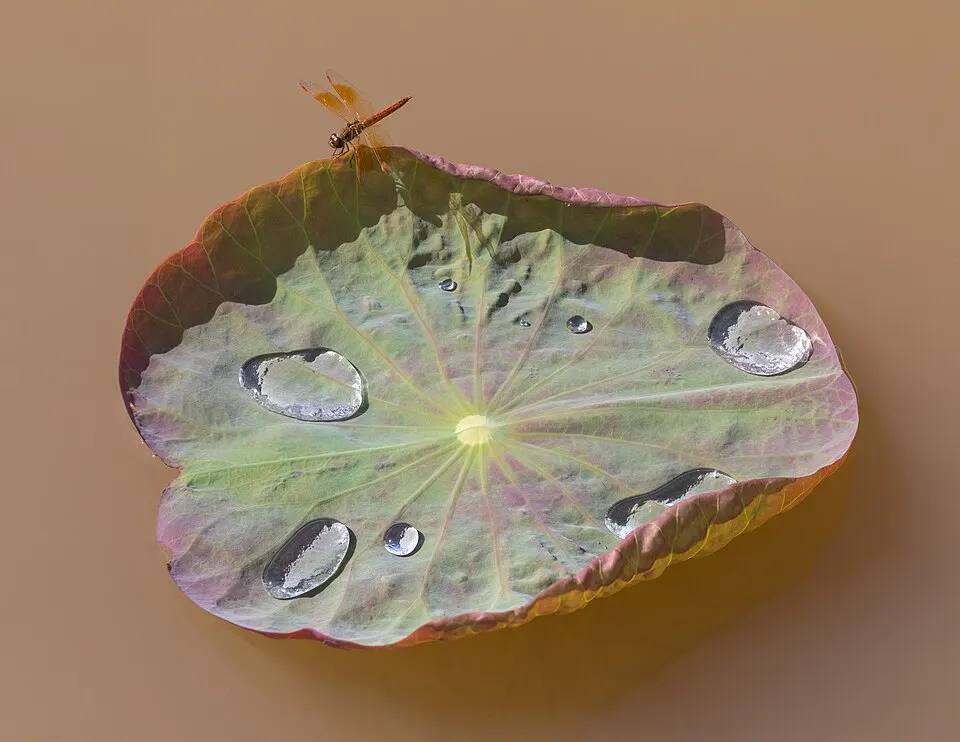
Photo: Basile Morin / Wikimedia Commons (CC BY-SA 4.0)
Lotus (Nelumbo nucifera): India's national flower — sacred in Hinduism and Buddhism, with remarkable medicinal and spiritual value.
🔍 Quick Facts
| Common name | Lotus |
| Other names | Kamal (Hindi); Thamarai (Tamil); Padma, Pankaja (Sanskrit) |
| Scientific name | Nelumbo nucifera |
| Plant family | Nelumbonaceae |
| Size | Aquatic plant; leaves 1–2 m above water |
| Native region | India, Southeast Asia |
| Climate | Tropical/Aquatic |
| Ease of growing | Moderate |
| Parts used | Flowers, Seeds, Rhizome, Leaves |
About Lotus
The lotus is India's national flower and a symbol of purity because it rises clean from muddy water — its leaves are so water-repellent that the "lotus effect" inspired self-cleaning materials. Almost every part is eaten: the rhizome (kamal kakdi or bhein), the seeds (makhana are a different plant, but lotus seeds are eaten as kamal gatta) and the young leaves. Lotus seeds can stay viable for over 1,000 years.
Botanically known as Nelumbo nucifera, it belongs to the Nelumbonaceae family. It is native to India, Southeast Asia and grows best in a tropical/aquatic climate. The parts most often used are the flowers, seeds, rhizome and leaves.
Uses in the Garden & Tradition
Lotus is best known for:
- Stress relief
- Astringent
- Diarrhoea
- Skin care
- Anti-ageing
How It Is Used
- Rhizome (kamal kakdi) is cooked in curries and pickles in Kashmir and North India.
- Seeds (kamal gatta) are roasted or used in sweets.
- Flowers are used in worship; leaves serve as plates in some regions.
How to Grow Lotus
| ☀️ Sunlight | Full sun, 6+ hours. |
| 💧 Watering | Grows in still water 30–60 cm deep. |
| 🪴 Soil | Heavy clay or pond mud. |
| 🌱 Propagation | Rhizome pieces or scarified seeds. |
| 📅 When to plant (India) | Plant February–April; flowers May–October. |
| 🏡 In pots / at home | Grows in a wide tub or bowl without drainage holes; dwarf varieties suit balconies. |
Precautions & Safety
- Do not eat raw rhizome from polluted ponds — parasites and contaminants are a risk.
- Lotus "makhana" sold as fox nuts actually comes from Euryale ferox, a different plant.
Frequently Asked Questions
Further Reading on Lotus
Written by the WhyOnPlanet editorial team · Last updated October 2026