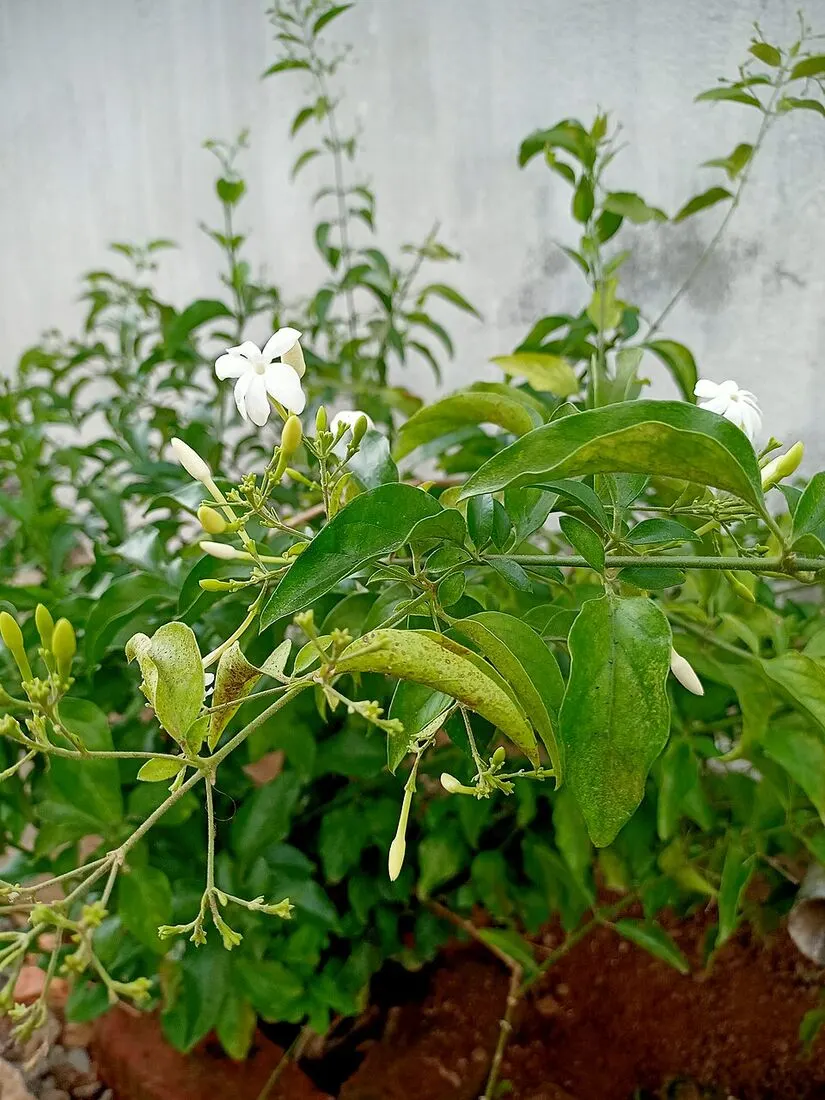
Photo: Vimalananth V / Wikimedia Commons (CC BY-SA 4.0)
Mogra (Arabian Jasmine) (Jasminum sambac): India's most beloved temple flower — used in garlands, essential oil, and traditional hair care.
🔍 Quick Facts
| Common name | Mogra (Arabian Jasmine) |
| Other names | Mogra, Motia, Bela (Hindi); Malli, Gundumalli (Tamil); Mallige (Kannada); Arabian jasmine |
| Scientific name | Jasminum sambac |
| Plant family | Oleaceae (olive family) |
| Size | 1–3 m bushy shrub |
| Native region | South Asia, Southeast Asia |
| Climate | Tropical |
| Ease of growing | Moderate |
| Parts used | Flowers, Oil |
About Mogra
Mogra is the jasmine of Indian summers — strings of its round white buds are worn in hair, offered in temples and sold at every railway station in the south. Madurai Malli has a Geographical Indication tag for its strong fragrance. It is also the national flower of the Philippines (sampaguita) and is used to scent jasmine tea. Mogra flowers most heavily in the hot, dry months of March to June.
Botanically known as Jasminum sambac, it belongs to the Oleaceae family. It is native to South Asia, Southeast Asia and grows best in a tropical climate. The parts most often used are the flowers and oil.
Uses in the Garden & Tradition
Mogra is best known for:
- Aromatherapy
- Hair fragrance
- Stress relief
- Skin care
- Devotional use
How It Is Used
- Buds are strung into gajra for hair and worship.
- Flowers scent jasmine tea and are used in attars.
- Jasmine-infused oil is used for massage and hair.
How to Grow Mogra
| ☀️ Sunlight | Full sun — 6 hours or more for good flowering. |
| 💧 Watering | Regular in summer; reduce in winter. |
| 🪴 Soil | Rich, well-drained soil with compost. |
| 🌱 Propagation | Semi-hardwood cuttings or layering. |
| 📅 When to plant (India) | Plant in February or the monsoon. Prune in January for a heavy summer bloom. |
| 🏡 In pots / at home | Excellent for 12-inch pots on sunny balconies. |
Precautions & Safety
- Jasmine absolute can sensitise skin — dilute well.
- Do not confuse with yellow jasmine (Gelsemium), which is poisonous.
Frequently Asked Questions
Further Reading on Mogra
Written by the WhyOnPlanet editorial team · Last updated October 2026