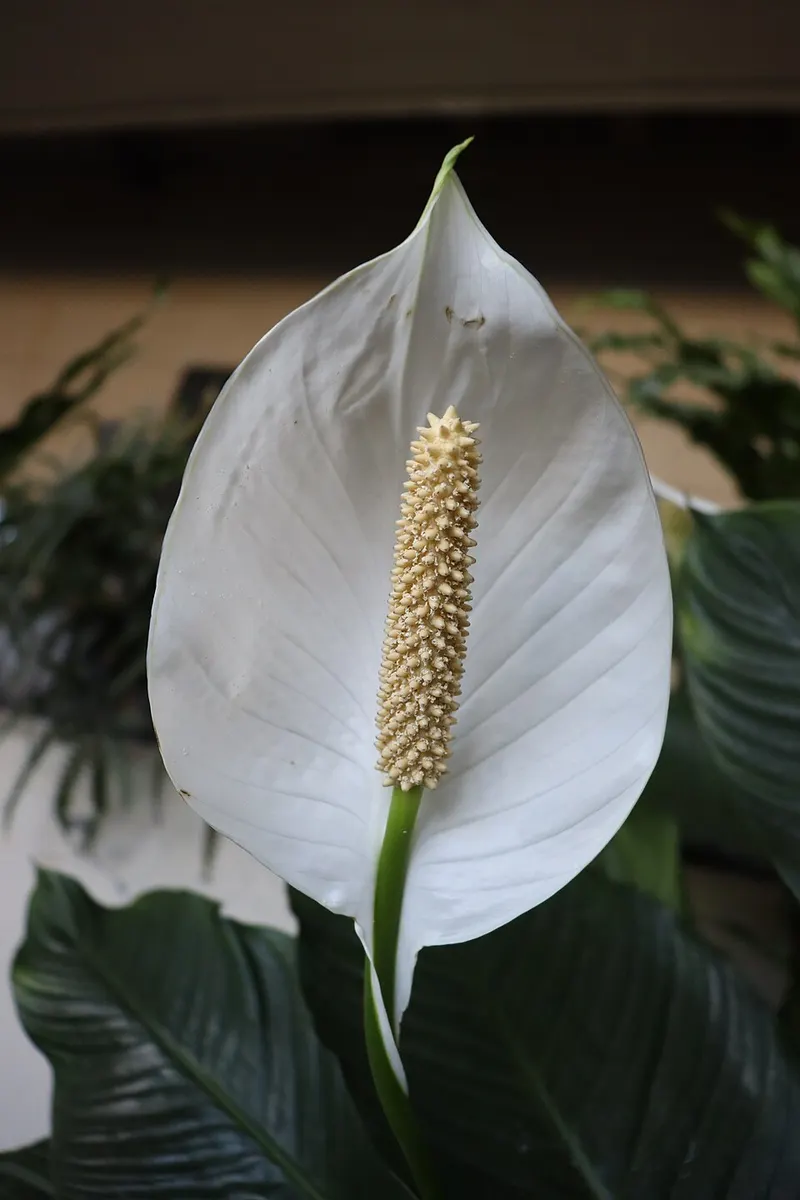
Photo: Fernando Losada Rodríguez / Wikimedia Commons (CC BY-SA 4.0)
Peace Lily (Spathiphyllum wallisii): Popular indoor plant known for air purification — removes benzene, formaldehyde, and CO₂ effectively.
🔍 Quick Facts
| Common name | Peace Lily |
| Other names | Peace lily, Spathiphyllum (no traditional Indian name) |
| Scientific name | Spathiphyllum wallisii |
| Plant family | Araceae (aroid family) |
| Size | 30–90 cm |
| Native region | Tropical Americas |
| Climate | Tropical/Shade |
| Ease of growing | Moderate |
| Parts used | Leaves (air filtering) |
About Peace Lily
The peace lily is one of the best indoor plants for Indian apartments because it tolerates low light and dramatically droops when thirsty — then recovers within hours of watering. It appeared in NASA's 1989 Clean Air Study. Later research showed that you would need hundreds of plants per room to match normal ventilation, so it is best enjoyed as a beautiful, easy houseplant rather than an air purifier.
Botanically known as Spathiphyllum wallisii, it belongs to the Araceae family. It is native to Tropical Americas and grows best in a tropical/shade climate. The parts most often used are the leaves (air filtering).
Uses in the Garden & Tradition
Peace Lily is best known for:
- Air purification
- Feng shui
- Indoor aesthetics
- Stress reduction
- Humidity
How It Is Used
- Grown as an ornamental houseplant for offices and homes.
- White spathes last for weeks and make it a popular gift plant.
How to Grow Peace Lily
| ☀️ Sunlight | Low to medium indirect light; direct sun scorches leaves. |
| 💧 Watering | Water when the top 2–3 cm is dry; drooping leaves signal thirst. |
| 🪴 Soil | Light, airy potting mix with cocopeat and perlite. |
| 🌱 Propagation | Division of the clump. |
| 📅 When to plant (India) | Repot or divide in spring (February–March). |
| 🏡 In pots / at home | A classic indoor pot plant. Wipe the leaves to remove dust. |
Precautions & Safety
- Contains calcium oxalate crystals — toxic to cats, dogs and children if chewed, causing mouth pain and swelling.
- Not a substitute for ventilation or an air purifier.
Frequently Asked Questions
Further Reading on Peace Lily
Written by the WhyOnPlanet editorial team · Last updated October 2026