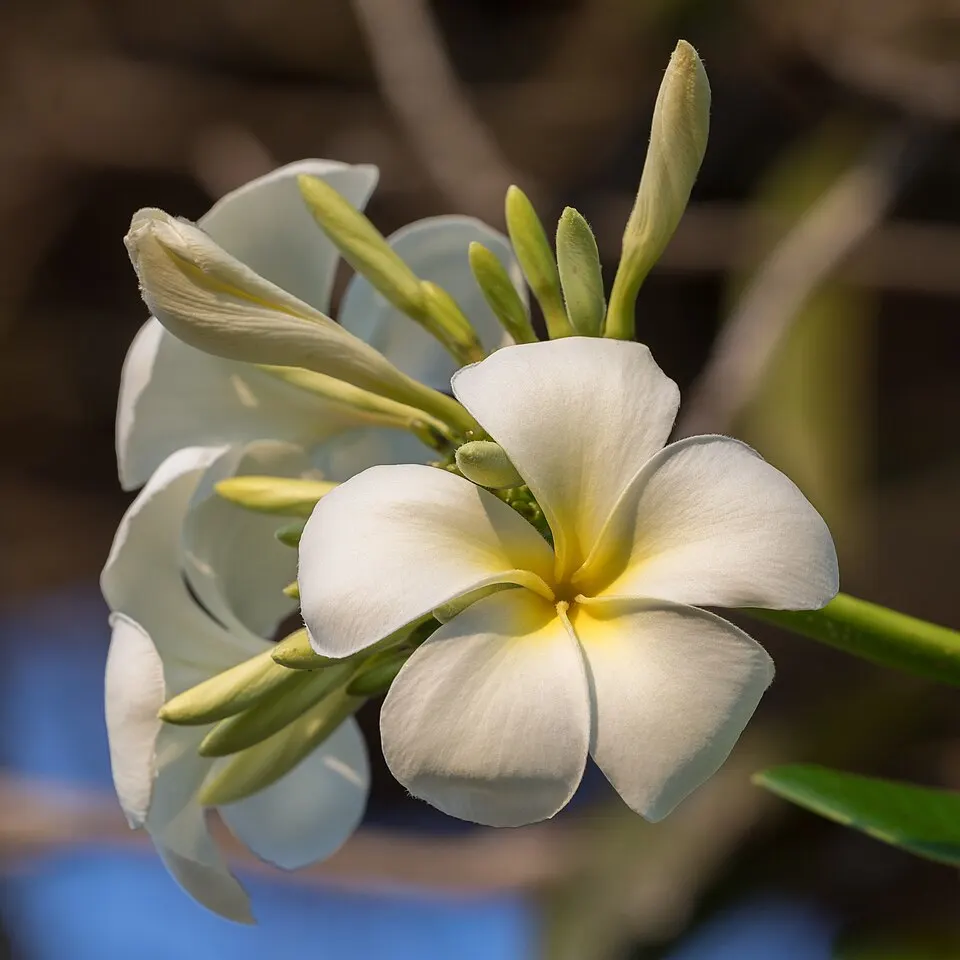
Photo: Basile Morin / Wikimedia Commons (CC BY-SA 4.0)
Plumeria (Champa) (Plumeria rubra): Temple flower of India — waxy, fragrant blooms associated with devotion, and used in Ayurvedic oils.
🔍 Quick Facts
| Common name | Plumeria (Champa) |
| Other names | Champa, Gulchin, Chafa (Hindi, Marathi); Temple tree; Frangipani |
| Scientific name | Plumeria rubra |
| Plant family | Apocynaceae |
| Size | 3–8 m deciduous tree |
| Native region | Central America, Caribbean |
| Climate | Tropical/Sub-tropical |
| Ease of growing | Moderate |
| Parts used | Flowers, Bark |
About Plumeria
Plumeria was brought to India from Central America centuries ago and is now so common around temples and Buddhist monasteries that it is called the temple tree. Its waxy, five-petalled flowers are intensely fragrant at night, when they attract sphinx moths. The tree drops its leaves in winter, leaving thick, candelabra-like branches that flower at the tips.
Botanically known as Plumeria rubra, it belongs to the Apocynaceae family. It is native to Central America, Caribbean and grows best in a tropical/sub-tropical climate. The parts most often used are the flowers and bark.
Uses in the Garden & Tradition
Plumeria is best known for:
- Aromatherapy
- Religious offerings
- Skin care
- Hair oil
- Antioxidant
How It Is Used
- Flowers are offered in temples and used in Hawaiian leis.
- Flower extract is used in perfumes and attars.
- Grown as a shade and ornamental tree.
How to Grow Plumeria
| ☀️ Sunlight | Full sun. |
| 💧 Watering | Moderate; let soil dry between waterings and almost stop in winter. |
| 🪴 Soil | Well-drained, sandy soil. |
| 🌱 Propagation | Cuttings 30–45 cm long, dried for a week before planting. |
| 📅 When to plant (India) | Plant February–April; flowers March–October. |
| 🏡 In pots / at home | Grows well in a large pot; dwarf varieties suit balconies. |
Precautions & Safety
- Milky sap can irritate skin and eyes.
- Not for internal use.
Frequently Asked Questions
Further Reading on Plumeria
Written by the WhyOnPlanet editorial team · Last updated October 2026