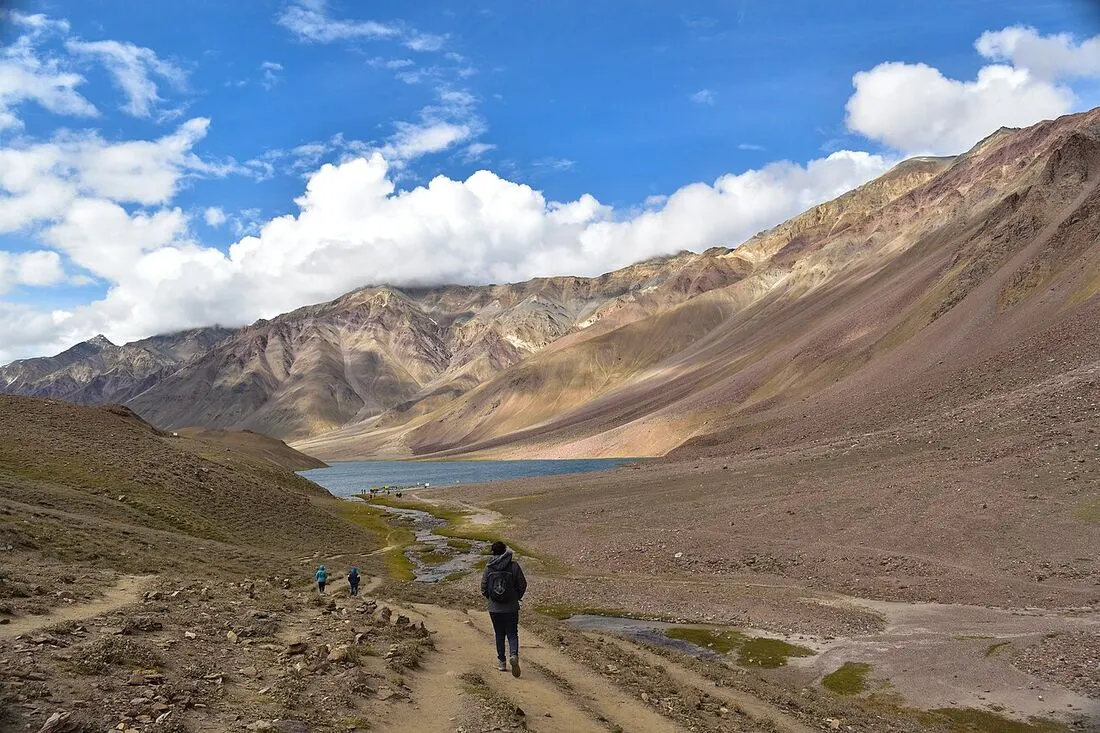
Photo: Adarsh Patel / Wikimedia Commons (CC BY-SA 4.0)
📋 In This Article
Rishikesh — where the Ganga emerges from the Himalayan foothills into the plains — is simultaneously India's white-water rafting capital, its yoga capital, and the gateway to Char Dham pilgrimage routes. This combination of river adventure, spiritual heritage, and Himalayan scenery makes it one of India's most visited destinations for both Indian and international visitors.
White-Water Rafting on the Ganga
Rishikesh offers India's most accessible and best-organised rafting experience on the upper Ganga. The river drops through significant rapids over 16-36km between Shivpuri and Rishikesh. Key rapids: Roller Coaster (Grade III-IV), Golf Course (Grade III), Club House (Grade III), Three Blind Mice (Grade III-IV), and Hilton (Grade IV — the most challenging). Most operators run the standard 16km Shivpuri to NIM Beach route (3-4 hours) for beginners; the full 36km Kaudiyala to Rishikesh route (8 hours) is for intermediate-advanced paddlers.
- Shivpuri to Rishikesh — 16km, beginner-intermediate, 3-4 hrs
- Marine Drive to Rishikesh — 24km, intermediate, 6 hrs
- Kaudiyala to Rishikesh — 36km, advanced, 8 hrs
- Best season: September-November and February-May
Yoga and Ashram Culture
Rishikesh is the world's yoga capital — the city became famous internationally when The Beatles visited the Maharishi Mahesh Yogi's ashram in 1968. Today, dozens of registered yoga schools offer courses from day workshops to 200-hour Yoga Teacher Training Certification (RYT 200). The Yoga Niketan, Parmarth Niketan (the largest, on the Ganga bank, hosts the famous evening Ganga Aarti), and Sivananda Ashram are among the most reputable. The International Yoga Festival (March) draws 1,000+ practitioners from 100 countries.
Lakshman Jhula and Ram Jhula
Rishikesh's iconic landmarks are two suspension footbridges over the Ganga — Lakshman Jhula (1939) and Ram Jhula — swaying with pedestrian traffic, with views up the river to the Himalayan foothills. The ghats below the bridges are used for ritual bathing; the evening Ganga Aarti (at Triveni Ghat and Parmarth Niketan) involves hundreds of priests simultaneously performing fire rituals to the river, accompanied by mantras and drumming. It is one of India's most moving daily rituals.
Beyond Rafting — Adventure Options
Bungee jumping (India's highest at 83m, operated by Jumping Heights), flying fox (600m zip line), giant swing, and canyon rappelling are all available near Rishikesh. The Rajaji National Park (9km from Rishikesh) offers jeep safaris for elephant, tiger, leopard, and rich bird life — often overlooked by visitors focused on river activities. Camping on Ganga beach (riverside camps operated by rafting operators between Shivpuri and Rishikesh) provides excellent overnight experience between rafting days.
Conclusion
Rishikesh works because it offers something for everyone while remaining coherent: the river adventure, the spiritual atmosphere, the Himalayan setting, and the excellent food and café culture have created a destination that rewards repeat visits. The Ganga here — fresh from the mountains, clear and powerful — is a genuinely transformative presence.