Photo: Vyacheslav Argenberg / Wikimedia Commons (CC BY 4.0)
📋 In This Article
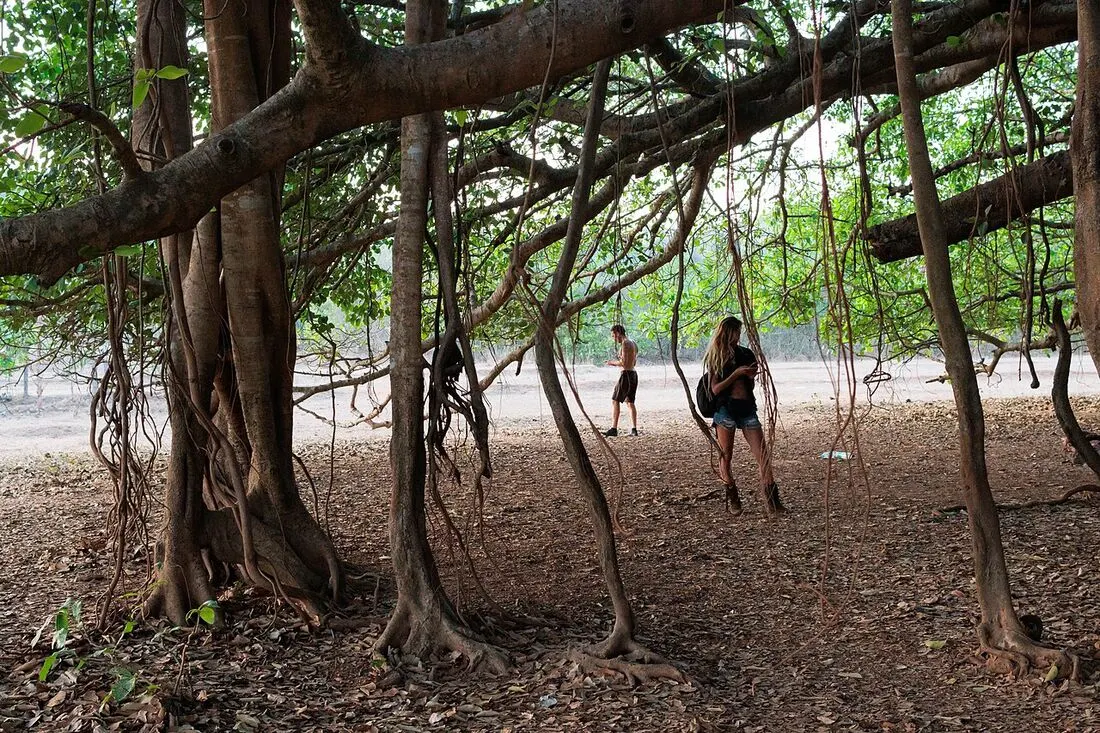
Kodungallur in Thrissur district — one of Kerala's oldest continuously inhabited cities — has an extraordinary concentration of ancient kavus (sacred groves) that have been maintained for over 1,000 years. The area's heritage of Nāga worship (serpent deity veneration) and the associated sarpakavu tradition has preserved fragments of pre-agricultural Kerala forest that provide some of the state's most detailed evidence of original vegetation communities.
The Kodungallur Heritage
Kodungallur (ancient Cranganore or Muciri) was Kerala's most important port city in the early centuries CE — trading with Rome, Arabia, China, and the Mediterranean world. It was home to India's first mosque (Cheraman Juma Masjid, 629 CE), one of India's oldest Jewish synagogues, and early Christian churches — reflecting its cosmopolitan trading heritage. The sacred grove tradition here predates these monotheistic influences by centuries, rooted in the Dravidian worship of serpents, forests, and the mother goddess.
- Kodungallur: one of Kerala's oldest cities
- Cheraman Juma Masjid (629 CE) — India's first mosque
- Ancient Jewish and Christian communities
- Kavus: sacred groves maintained for 1,000+ years
Botanical Surveys of Kodungallur Kavus
Scientific surveys of Kodungallur's kavus have documented species that represent pre-agricultural Kerala forest: Coscinium fenestratum (endangered medicinal plant — source of berberine, used for antimicrobial and antidiabetic applications); Calamus species (rattans — now nearly extinct in agricultural landscapes); Strobilanthes species; multiple Dipterocarpus species; and numerous ferns and epiphytic orchids. The micro-environments created by the accumulated leaf litter and shade canopy of 1,000-year-old groves harbour invertebrate communities — beetles, ants, millipedes — found in no other land use category in the Thrissur district.
The Bharani Festival
The Kodungallur Bharani — held at Kodungallur Bhagavathi Temple annually in the Malayalam month of Karkidakam — is one of Kerala's most ancient and unusual festivals. The kavus surrounding the temple become the focus of intense ritual activity over several days. The festival includes traditional songs (Bharani Pattu) of a explicitly provocative and archaic character that are considered to honour the fierce, unmediated power of the goddess. The connection between the ritual use of the sacred forest space and its ecological preservation is direct — the grove is maintained because it is the deity's domain.
Conservation Status and Challenges
The kavus of Kodungallur face severe development pressure — the city has expanded rapidly and kavu land is valuable real estate. Several ancient groves have been cleared in recent decades. The remaining groves are protected primarily by family religious obligation and temple authority — formal legal protection is limited. The Kerala Kavu Survey conducted by the Kerala Forest Research Institute has mapped 23 significant groves in the Kodungallur area; recommendations for their protection under the Heritage Property designation are pending with the state government.
Conclusion
Kodungallur's kavus hold ecological memory that no archive can replicate — the living descendants of plants from before the agricultural transformation of Kerala's forests. Their preservation depends on the living continuation of the sacred tradition that created them — a tradition now under pressure from every direction, but still generating the devotion that protects these irreplaceable fragments.