Photo: Vyacheslav Argenberg / Wikimedia Commons (CC BY 4.0)
📋 In This Article
The Peepal (Ficus religiosa) — the Sacred Fig — is one of humanity's most significant trees: it is under a Peepal tree that the Buddha attained enlightenment (the Bodhi Tree at Bodh Gaya), Hindus consider it the dwelling of Vishnu and Krishna, and it is among the longest-lived trees in existence — specimens of over 2,000 years are documented. Ancient Peepal trees at temples and village centres across India are living connections to pre-Vedic ecological worship.
The Peepal's Ecological Significance
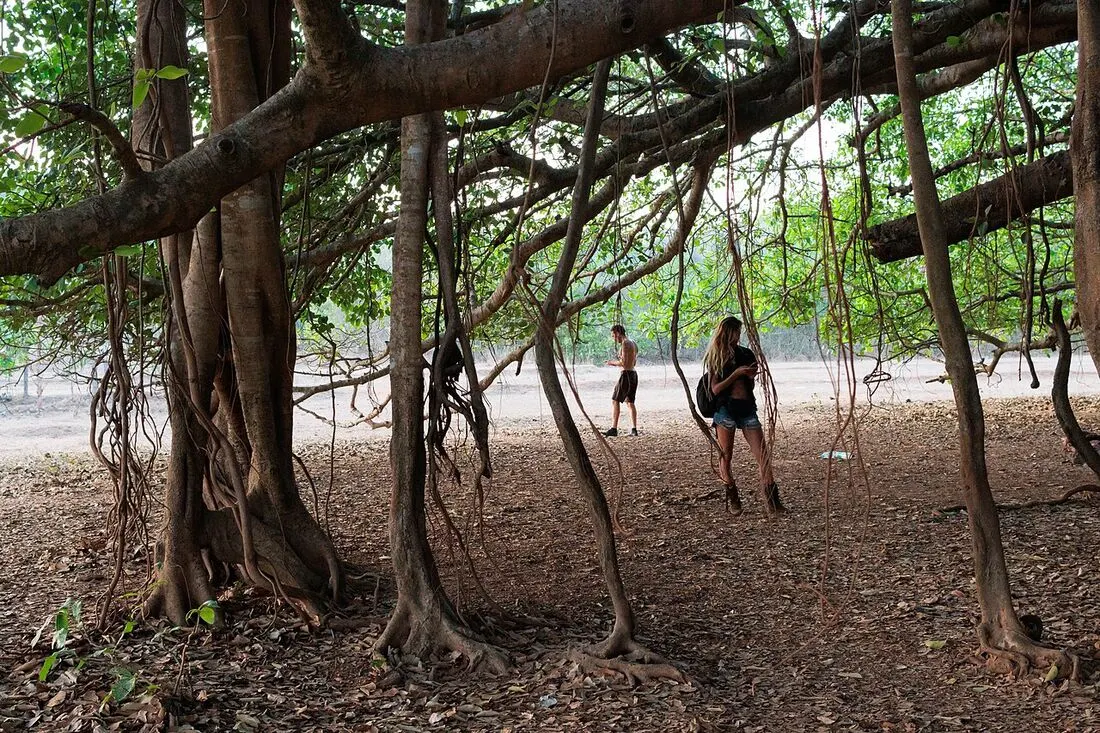
Peepal trees are keystone species in South Asian ecosystems: they are one of the rare trees that release oxygen even at night (through a modified photosynthesis pathway called CAM), making them valuable for air quality in dense urban areas. They are among the world's most important fig trees for frugivores — bats, birds (including the Koel and Malabar Pied Hornbill), and primates. As a strangler fig, Peepal can grow on other trees and structures, eventually enveloping them — creating extraordinary architectural structures when they grow over ruins or walls.
- One of few trees releasing oxygen at night
- Keystone fig species — feeds 300+ bird and bat species
- Medicinal: bark, leaves, and fruit used in Ayurveda
- Longest-lived: specimens over 2,000 years documented
The Bodhi Tree and its Descendants
The original Bodhi Tree at Bodh Gaya (under which Buddha attained enlightenment in 528 BCE) was destroyed by Emperor Ashoka's wife, regrown, destroyed again by Pusyamitra Sunga, and again restored. The current tree — estimated 130-160 years old — is directly descended from the original through cuttings taken to Sri Lanka by Ashoka's daughter Sanghamitta in 288 BCE. The Sri Lankan Jaya Sri Maha Bodhi tree, grown from that cutting, is the world's oldest documented tree planted by a human — 2,300 years old. Cuttings from both are now grown at Buddhist sites globally.
Heritage Peepal Specimens in India
Remarkable ancient Peepal specimens: the Thimmamma Marrimanu (Ficus benghalensis, not religiosa) in Andhra Pradesh — the world's largest tree by canopy area (4.7 acres); the Peepal at Jyotisar (Haryana) — site of the Bhagavad Gita discourse, considered 5,000+ years old; the Peepal at Kabirvad (Gujarat) — growing on a river island, covering 3+ acres of canopy; and thousands of ancient Peepal trees at temple complexes across Tamil Nadu where they are worshipped as Sthalvriksha (the presiding tree of the temple). The Archaeological Survey of India maintains a heritage tree database, though it is incomplete.
Conservation and Community Protection
Ancient Peepal trees at temples and village chautaras (village rest platforms built around the tree) are generally well-protected by community religious obligation — the tree is considered holy and cutting it a sin. Urban Peepal trees in cities face developmental pressure — their root systems lift pavements and their proximity to structures creates conflict. Organizations like the Tree Council of India and state forest departments maintain heritage tree lists, but legal protection for individual trees outside protected areas remains weak.
Conclusion
The Peepal tree's extraordinary combination of ecological keystone function, longevity, and deep cultural significance across Hinduism, Buddhism, and Jainism makes it India's most important tree. Protecting the ancient specimens that remain — often simply by respecting the religious sanction that has protected them for millennia — is one of the most straightforward conservation acts available.
