Photo: Vyacheslav Argenberg / Wikimedia Commons (CC BY 4.0)
📋 In This Article
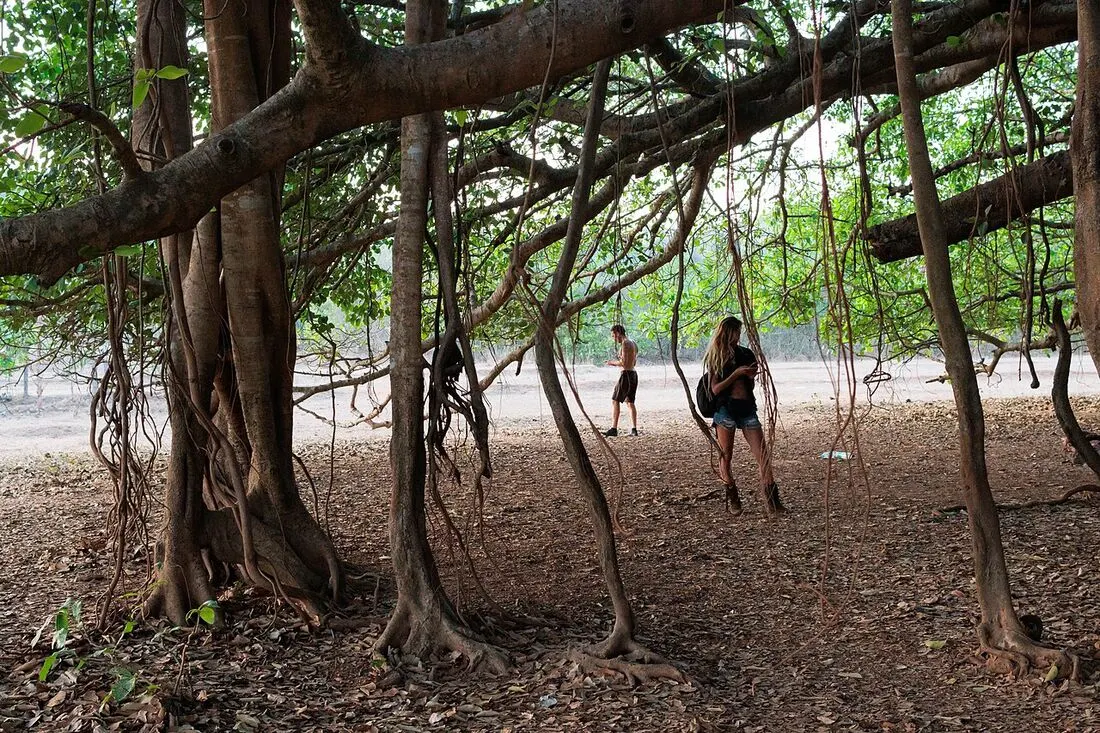
Sarpakavu — literally "snake grove" — are small sacred forest patches dedicated to Nāga (serpent deities) maintained adjacent to temples and family shrines across Kerala. These groves, found in virtually every village in the state, have been maintained as inviolable sacred spaces for over 2,000 years — and have unintentionally preserved extraordinary patches of biodiversity within an otherwise densely human-modified landscape.
The Culture of Sarpakavu
Kerala's Nāga worship tradition is among the oldest in India — the worship of serpents as household protective deities and manifestations of fertility and prosperity predates Brahmanical influence. Every major Kerala family (particularly Nair communities) maintained a sarpakavu in the corner of their ancestral compound (tharavadu). The grove — even if only 50 square metres — was never cleared, fertilised, or harvested. These conditions allow centuries of leaf litter accumulation, natural regeneration, and establishment of shade-tolerant forest floor species found nowhere else in the surrounding landscape.
- Found in virtually every Kerala village and family compound
- Dedicated to Nāga (serpent deities)
- Vary from 50 sq metres to several hectares
- Sacred rule: nothing to be cut, cleared, or harvested
Biodiversity in Miniature
Studies of Kerala's kavu (groves, including both sarpakavu and other deity groves) have documented remarkable biodiversity: rare orchids (Bulbophyllum, Dendrobium) found only in undisturbed forest conditions; ferns including rare Selaginella and Ophioglossum species; medicinal plants (Rauvolfia serpentina — the source of reserpine, the first antihypertensive drug — Sida species, Asparagus racemosus); multiple snake species including the King Cobra; and amphibians including rare Caecilians (limbless amphibians). The kanamara of several kavus — the accumulated seed bank in the leaf litter — is a time capsule of Kerala's pre-agricultural vegetation.
The Snakes — Guardians and Residents
Sarpakavus' snake residents are considered the deity's earthly manifestation — harming or killing a snake in a sarpakavu is considered the most serious possible religious transgression. This has had the remarkable practical effect of creating snake refugia throughout the human landscape. King Cobras (Ophiophagus hannah), Indian Rock Pythons, the venomous but ecologically important pit vipers, and rat snakes all find sanctuary in sarpakavus. The population of King Cobras in Kerala — significantly higher per unit area than anywhere else in India — is likely partially attributable to sarpakavu protection.
Decline and Revival
Sarpakavus are under severe pressure: ancestral family compounds are subdivided and sold, and new owners often clear the grove for construction. Road widening eliminates roadside kavus. Urbanisation and changing religious practice have weakened the social obligation that protected them. The Kerala government's Kavu Registry and the Kerala State Biodiversity Board's initiative to document and protect kavus represent initial steps toward formal recognition. Several environmental organisations and temple trusts are working to restore and expand kavus as urban biodiversity reserves.
Conclusion
Sarpakavus are Kerala's accidental nature reserves — 2,000 years of serpent worship have maintained biodiversity through what no conservation policy could achieve: a direct sacred sanction against disturbance. Their survival into the 21st century requires both the renewal of their cultural significance and their formal recognition as the extraordinary ecological assets they are.