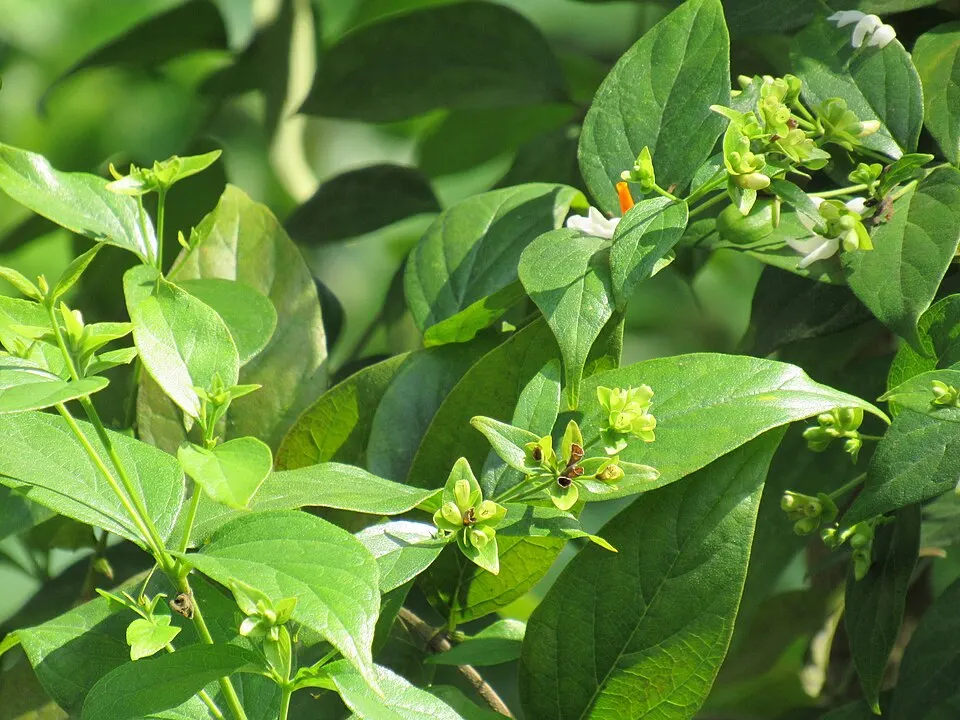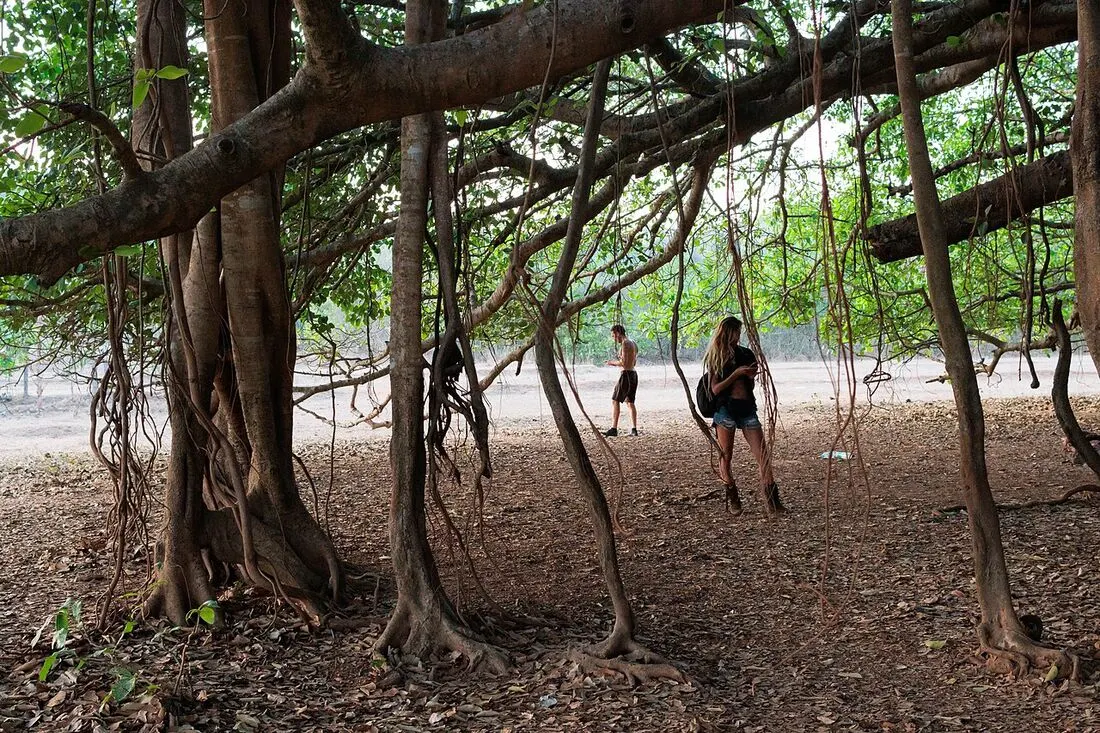
Photo: Vyacheslav Argenberg / Wikimedia Commons (CC BY 4.0)
📋 In This Article
Vrindavan — the forest where Lord Krishna spent his childhood in Hindu tradition — was once a vast sacred forest landscape along the Yamuna River in present-day Mathura district, Uttar Pradesh. Over centuries of human settlement, the 12 sacred van (forests) of Vrindavan were reduced to tiny vestiges. Today, a remarkable reforestation movement is attempting to restore the sacred ecology using traditional plant species mentioned in the Bhagavata Purana.
The 12 Sacred Forests of Vrindavan
The Braj Bhumi (Mathura-Vrindavan area) has 12 sacred forests (the Dwadash Vans or 12 Forests) that tradition identifies as the playgrounds of Lord Krishna: Vrindavan, Nandishwar, Bhadra Vana, Bilvavana, Lohavana, Bhandiravana, Madhuvana, Talavana, Kumudavana, Bahulavana, Kamyavana, and Khidiravana. Each forest is associated with specific Krishna stories and is a pilgrimage point in the Braj Chaurasi Kos Yatra — a 252km circumambulation of the Braj landscape. The forests were described in texts as containing specific sacred trees (kadamba, parijat, tamala, ashok) and inhabited by specific birds and animals associated with Krishna.
- 12 sacred forests (Dwadash Vans) — traditional Krishna landscape
- Trees associated with Krishna: Kadamba, Parijat, Tamala, Ashok
- Braj Yatra — 252km circumambulation of the sacred landscape
- Mathura-Vrindavan complex receives 50+ million pilgrims annually
The Degraded Sacred Landscape
By the 20th century, the Vrindavan forests had been reduced to token groves around temples — the vast Yamuna floodplain that provided the forested setting of the Krishna stories was converted to agriculture, housing, and eventually industrial use. The Yamuna River (heavily polluted by Delhi's sewage and industrial effluents) has lost its ecological function in the Braj landscape. Surviving sacred trees — particularly ancient kadamba trees — are individual specimens surrounded by concrete, rather than forest communities. The sacred ecology described in the texts has essentially disappeared.
The Reforestation Movement
The Braj Vrindavan Heritage Alliance and several Krishna temple trusts (particularly ISKCON and the Vrindavan Forest Revival Project) have initiated reforestation using species mentioned in the Bhagavata Purana — treating the ancient text as a species list for the original forest composition. Thousands of volunteers plant kadamba, parijat, ashok, tamala, and other sacred species in degraded areas. Ayodhya Forest Revival by Akira Miyawaki method (dense multi-species planting mimicking natural forest succession) is being applied in temple courtyards and open land.
The Challenge of Sacred Ecology
Restoring Vrindavan's sacred forests faces practical challenges: land ownership fragmentation makes large-scale planting difficult; Yamuna water quality must improve for floodplain ecology to function; the enormous pilgrimage footfall (50+ million visitors annually) creates constant pressure on green areas; and the gap between religious veneration of the landscape and actual environmental protection of it is significant. The movement's most important contribution may be creating public awareness that devotion to Krishna logically requires devotion to the ecology that the stories describe.
Conclusion
Vrindavan's sacred forest revival is a remarkable convergence of religious devotion and ecological restoration — using the authority of the Bhagavata Purana as a species guide, and pilgrimage devotion as the motivation for planting. It represents India's most direct attempt to reconstruct a sacred ecology from its textual description.