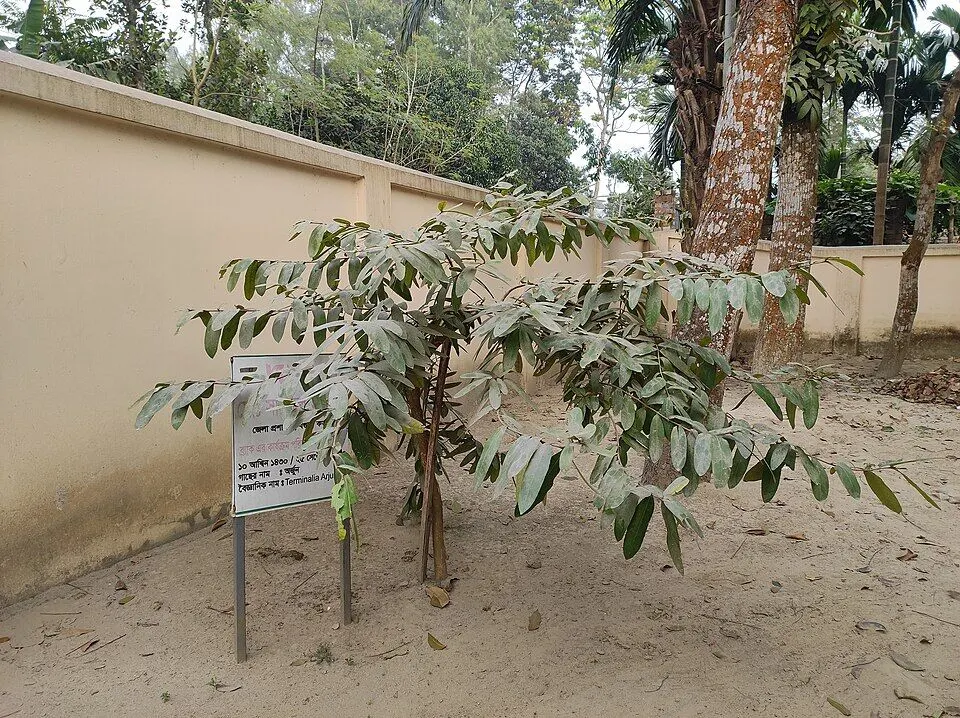
Photo: ManikDas1122 / Wikimedia Commons (CC BY-SA 4.0)
Arjuna Tree (Terminalia arjuna): Ayurveda's premier cardiac tonic — the bark of the Arjuna tree supports heart health naturally.
🔍 Quick Facts
| Common name | Arjuna Tree |
| Other names | Arjun, Kahu (Hindi); Marudham (Tamil); Tella maddi (Telugu) |
| Scientific name | Terminalia arjuna |
| Plant family | Combretaceae |
| Size | 20–25 m tree with smooth grey-white bark |
| Native region | India |
| Climate | Tropical |
| Ease of growing | Moderate |
| Parts used | Bark, Fruit, Leaves |
About Arjuna Tree
Arjuna grows along rivers and streams across central and southern India and is easy to spot by its smooth, pale bark that peels off in flakes. Ayurveda has used the bark as a heart tonic since the time of the Ashtanga Hridaya. Modern studies have looked at arjuna bark for angina and heart failure with some positive early results. Its leaves also feed the silkworms that produce tasar silk.
Botanically known as Terminalia arjuna, it belongs to the Combretaceae family. It is native to India and grows best in a tropical climate. The parts most often used are the bark, fruit and leaves.
Traditional & Ayurvedic Uses
Arjuna Tree is best known for:
- Heart health
- Blood pressure
- Cholesterol
- Wound healing
- Asthma
Most of these uses come from Ayurveda and folk medicine. Where we know of good clinical evidence, or of a specific safety concern, we say so in the overview, precautions and FAQs on this page.
How Arjuna Is Used
- Bark powder is boiled in milk to make Arjuna ksheerapaka, a traditional heart tonic.
- Standardised bark extracts are sold as capsules.
- Bark paste is applied to wounds and fractures in folk medicine.
How to Grow Arjuna Tree
| ☀️ Sunlight | Full sun. |
| 💧 Watering | Prefers moist soil; ideal near water bodies. |
| 🪴 Soil | Deep, fertile, moist alluvial soil. |
| 🌱 Propagation | Seeds (soaked for 48 hours) or nursery saplings. |
| 📅 When to plant (India) | Plant in the monsoon. |
| 🏡 In pots / at home | Not suitable for pots — a large riverside tree. |
Precautions & Safety
- May interact with heart, blood pressure and blood-thinning medicines — use only with your doctor's knowledge.
- Not a substitute for prescribed cardiac treatment.
- Avoid in pregnancy due to lack of safety data.
Frequently Asked Questions
Written by the WhyOnPlanet editorial team · Last updated October 2026