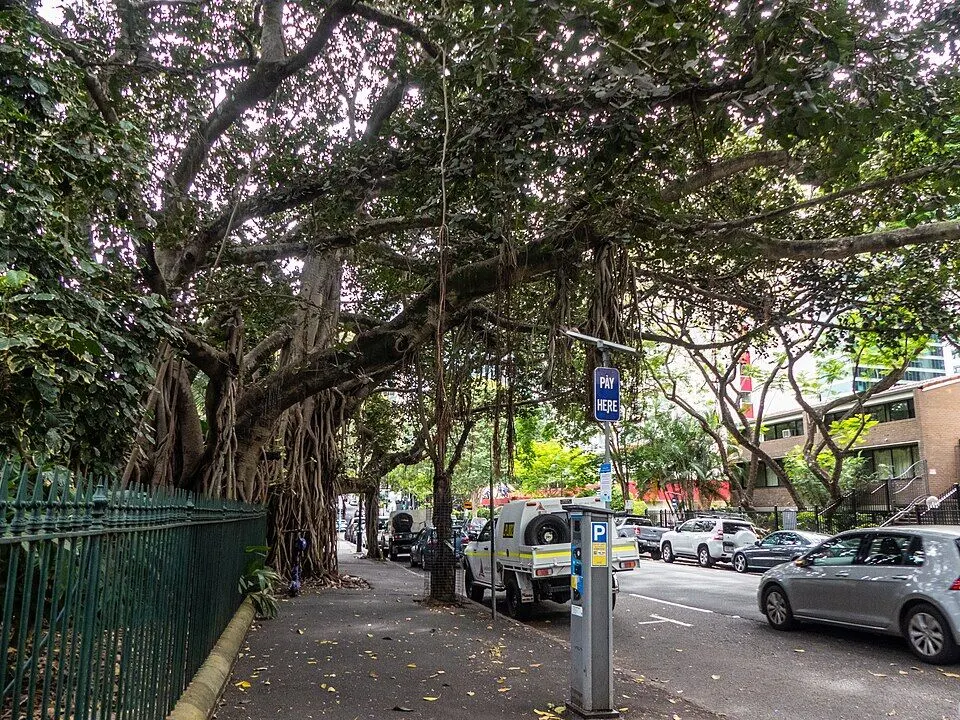
Photo: John Robert McPherson / Wikimedia Commons (CC BY-SA 4.0)
Banyan Tree (Ficus benghalensis): India's national tree — a sacred, long-lived giant with aerial roots used in traditional medicine.
🔍 Quick Facts
| Common name | Banyan Tree |
| Other names | Bargad, Vat (Hindi); Aalamaram (Tamil); Marri (Telugu); Nyagrodha (Sanskrit) |
| Scientific name | Ficus benghalensis |
| Plant family | Moraceae (fig family) |
| Size | 20–30 m tall, spreading indefinitely via aerial roots |
| Native region | Indian Subcontinent |
| Climate | Tropical |
| Ease of growing | Slow |
| Parts used | Bark, Leaves, Aerial roots, Latex |
About Banyan Tree
The banyan is India's national tree. Its aerial roots grow down from the branches, thicken into new trunks, and let a single tree spread over an enormous area — the Great Banyan in Howrah's botanical garden covers more than 1.5 hectares. Married women worship the banyan on Vat Purnima, and its broad shade has made it the traditional meeting place of Indian villages.
Botanically known as Ficus benghalensis, it belongs to the Moraceae family. It is native to Indian Subcontinent and grows best in a tropical climate. The parts most often used are the bark, leaves, aerial roots and latex.
Traditional & Ayurvedic Uses
Banyan Tree is best known for:
- Diabetes
- Skin diseases
- Diarrhoea
- Dental health
- Joint pain
Most of these uses come from Ayurveda and folk medicine. Where we know of good clinical evidence, or of a specific safety concern, we say so in the overview, precautions and FAQs on this page.
How Banyan Is Used
- Aerial root tips are chewed as a traditional dental cleanser.
- Bark decoction is used in Ayurveda for diarrhoea and as an astringent.
- Latex is applied to cracked heels and minor wounds in folk medicine.
How to Grow Banyan Tree
| ☀️ Sunlight | Full sun. |
| 💧 Watering | Hardy once established; water young saplings regularly. |
| 🪴 Soil | Deep, fertile soil, but adapts widely. |
| 🌱 Propagation | Large cuttings or air-layering of aerial roots. |
| 📅 When to plant (India) | Plant at the start of the monsoon. |
| 🏡 In pots / at home | Only as a bonsai — banyan is one of the most popular Indian bonsai species. Never plant near buildings or walls. |
Precautions & Safety
- Latex may cause skin irritation in some people.
- Roots are aggressive — keep at least 15 m from buildings, pipes and walls.
Frequently Asked Questions
Further Reading on Banyan Tree
Written by the WhyOnPlanet editorial team · Last updated October 2026