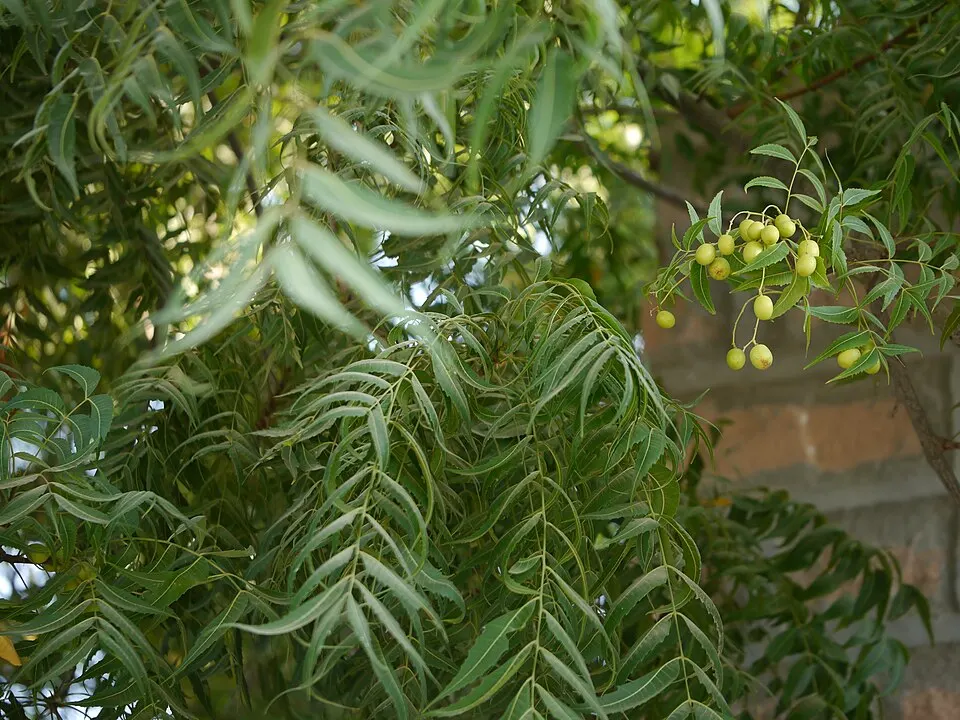
Photo: Dinesh Valke from Thane, India / Wikimedia Commons (CC BY-SA 2.0)
Neem (Azadirachta indica): The village pharmacy of India — antimicrobial, antifungal, and purifying in nature.
🔍 Quick Facts
| Common name | Neem |
| Other names | Neem, Nimb (Hindi); Vembu (Tamil); Vepa (Telugu); Nimba (Sanskrit) |
| Scientific name | Azadirachta indica |
| Plant family | Meliaceae (mahogany family) |
| Size | 15–20 m evergreen tree |
| Native region | India, Myanmar |
| Climate | Tropical/Sub-tropical |
| Ease of growing | Fast |
| Parts used | Leaves, Bark, Seeds, Flowers |
About Neem
Neem has been called "sarva roga nivarini" — the healer of all ailments — and "the village pharmacy". Neem twigs (datun) are still used as toothbrushes across rural India, and neem leaves are stored with grain and woollens to keep insects away. Its seeds yield azadirachtin, the active ingredient in many organic pesticides. India fought and won a landmark patent case at the European Patent Office over a neem-based fungicide, protecting traditional knowledge.
Botanically known as Azadirachta indica, it belongs to the Meliaceae family. It is native to India, Myanmar and grows best in a tropical/sub-tropical climate. The parts most often used are the leaves, bark, seeds and flowers.
Traditional & Ayurvedic Uses
Neem is best known for:
- Skin diseases
- Blood purifier
- Dental care
- Pest repellent
- Wound healing
Most of these uses come from Ayurveda and folk medicine. Where we know of good clinical evidence, or of a specific safety concern, we say so in the overview, precautions and FAQs on this page.
How Neem Is Used
- Leaves are boiled in bath water or ground into a paste for skin problems.
- Twigs are chewed as a traditional toothbrush (datun).
- Neem oil, diluted with water and a little soap, is sprayed on plants as an organic pesticide.
How to Grow Neem
| ☀️ Sunlight | Full sun. |
| 💧 Watering | Extremely drought tolerant; water saplings weekly for the first year only. |
| 🪴 Soil | Grows in poor, dry, rocky and even saline soils, but not in waterlogged land. |
| 🌱 Propagation | Fresh seeds (they lose viability within weeks) or nursery saplings. |
| 📅 When to plant (India) | Plant saplings at the start of the monsoon, June–July. |
| 🏡 In pots / at home | Not suited to long-term pots; it can be kept as a bonsai or small potted sapling for a few years. |
Precautions & Safety
- Neem oil is poisonous if swallowed and has caused serious illness in infants — never give it to children.
- Long-term internal use of leaf extracts may affect fertility and the liver.
- Avoid internal use in pregnancy and before surgery.
Frequently Asked Questions
Further Reading on Neem
Written by the WhyOnPlanet editorial team · Last updated October 2026