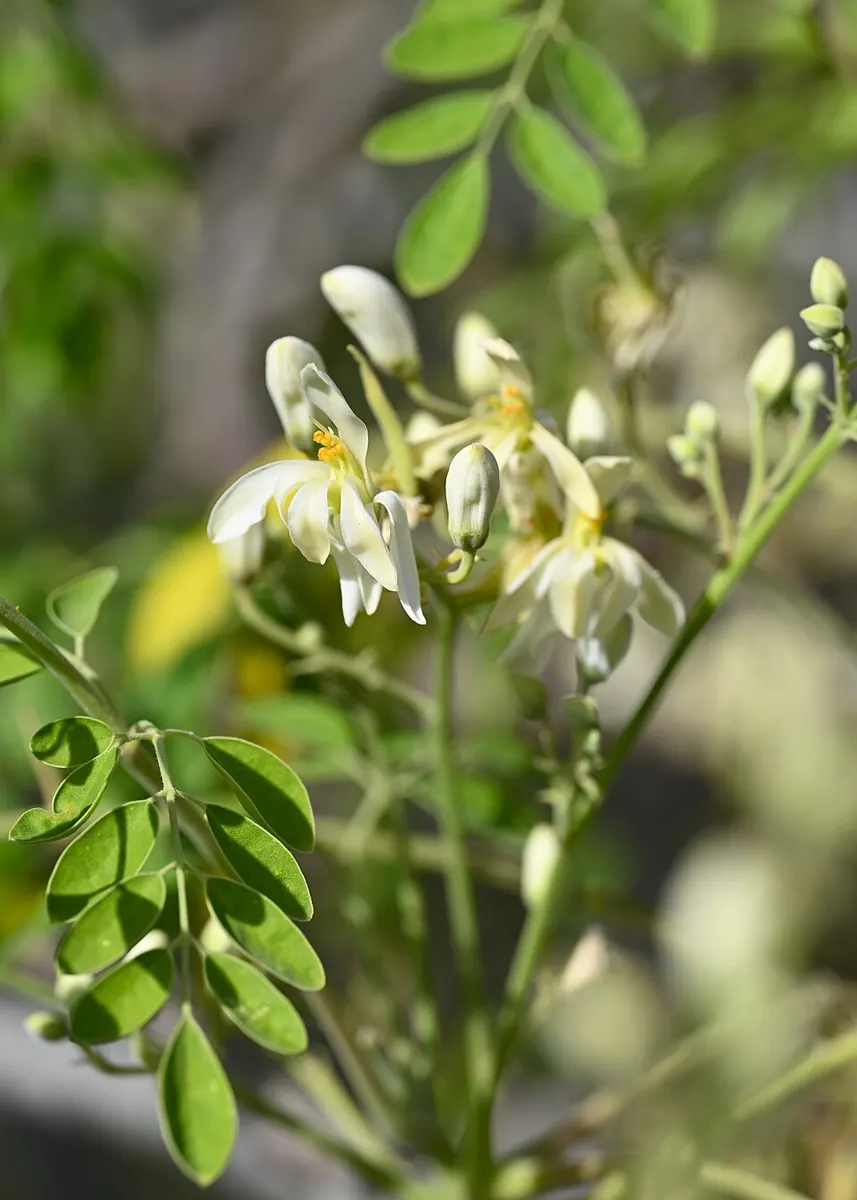
Photo: Krzysztof Ziarnek, Kenraiz / Wikimedia Commons (CC BY-SA 4.0)
Moringa (Drumstick Tree) (Moringa oleifera): Superfood tree packed with nutrients, vitamins, and medicinal compounds.
🔍 Quick Facts
| Common name | Moringa (Drumstick Tree) |
| Other names | Sahjan, Saijan (Hindi); Murungai (Tamil); Munaga (Telugu); Shevga (Marathi) |
| Scientific name | Moringa oleifera |
| Plant family | Moringaceae |
| Size | 5–12 m fast-growing deciduous tree |
| Native region | India |
| Climate | Tropical/Sub-tropical |
| Ease of growing | Very Fast |
| Parts used | Leaves, Pods, Seeds, Flowers |
About Moringa
Moringa is among the fastest-growing trees in the world — a cutting can reach 3 metres in its first year. India is the world's largest producer, mainly of the drumstick pods eaten in sambar. Its leaves are rich in protein, iron, calcium and vitamins A and C, which is why moringa leaf powder is promoted in nutrition programmes in India and Africa. (See also our separate profile of drumstick pods as a vegetable.)
Botanically known as Moringa oleifera, it belongs to the Moringaceae family. It is native to India and grows best in a tropical/sub-tropical climate. The parts most often used are the leaves, pods, seeds and flowers.
Traditional & Ayurvedic Uses
Moringa is best known for:
- Nutrition powerhouse
- Blood sugar control
- Inflammation
- Energy
- Milk production
Most of these uses come from Ayurveda and folk medicine. Where we know of good clinical evidence, or of a specific safety concern, we say so in the overview, precautions and FAQs on this page.
How Moringa Is Used
- Fresh leaves are cooked in dal, poriyal and soups.
- Dried leaf powder is added to smoothies, chapati dough and chutney powders.
- Drumstick pods are cooked in sambar and curries; seeds are used to clarify water.
How to Grow Moringa
| ☀️ Sunlight | Full sun. |
| 💧 Watering | Drought tolerant; water weekly when young. Overwatering rots the roots. |
| 🪴 Soil | Light, sandy, well-drained soil; dislikes clay and waterlogging. |
| 🌱 Propagation | Thick hardwood cuttings (1–1.5 m) or seeds; PKM-1 is a popular annual variety from Tamil Nadu. |
| 📅 When to plant (India) | Plant with the monsoon (June–August) or in early spring. |
| 🏡 In pots / at home | Grows in a large (20 inch+) container if cut back regularly to 1.5–2 m. |
Precautions & Safety
- Root and bark contain toxic compounds and should not be eaten.
- Avoid bark and root in pregnancy — they can cause uterine contractions.
- Leaf powder may lower blood sugar and blood pressure.
Frequently Asked Questions
Further Reading on Moringa
Written by the WhyOnPlanet editorial team · Last updated October 2026