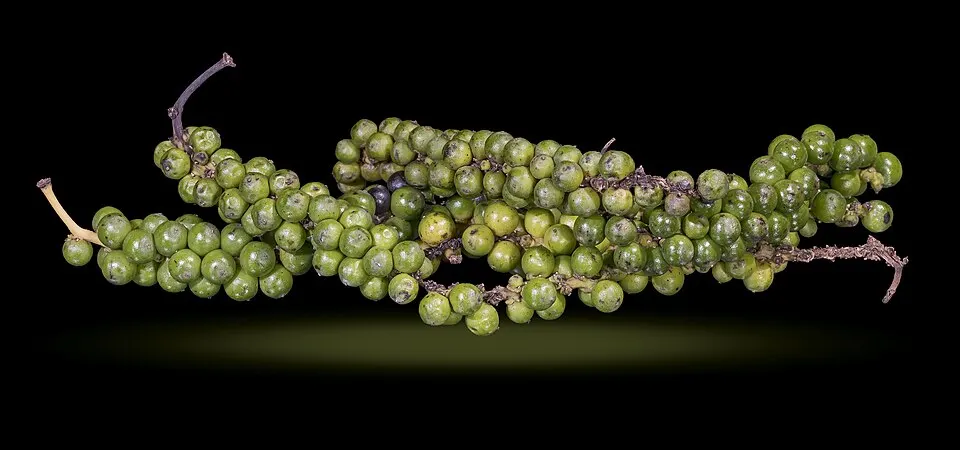
Photo: Didier Descouens / Wikimedia Commons (CC BY-SA 4.0)
Black Pepper (Piper nigrum): King of spices — piperine enhances nutrient absorption and has potent antioxidant properties.
🔍 Quick Facts
| Common name | Black Pepper |
| Other names | Kali mirch (Hindi); Milagu (Tamil); Kurumulaku (Malayalam); Maricha (Sanskrit) |
| Scientific name | Piper nigrum |
| Plant family | Piperaceae (pepper family) |
| Size | Climbing vine, trained to 6–10 m |
| Native region | South India |
| Climate | Tropical/Humid |
| Ease of growing | Moderate |
| Parts used | Berries (dried), Oil |
About Black Pepper
Black pepper was the spice that brought Arab, Roman, and later Portuguese traders to the Malabar coast of Kerala. Black, white and green peppercorns all come from the same vine: black pepper is the unripe fruit dried in the sun, while white pepper is the ripe seed with the skin removed. Its pungent compound, piperine, is studied for boosting the absorption of nutrients such as curcumin.
Botanically known as Piper nigrum, it belongs to the Piperaceae family. It is native to South India and grows best in a tropical/humid climate. The parts most often used are the berries (dried) and oil.
Traditional & Ayurvedic Uses
Black Pepper is best known for:
- Digestion
- Bioavailability enhancer
- Anti-inflammatory
- Respiratory
- Antibacterial
Most of these uses come from Ayurveda and folk medicine. Where we know of good clinical evidence, or of a specific safety concern, we say so in the overview, precautions and FAQs on this page.
How Black Is Used
- Freshly ground over food as a seasoning.
- Added to turmeric milk and kadha to boost absorption and warmth.
- One of the three ingredients of Trikatu with ginger and long pepper.
How to Grow Black Pepper
| ☀️ Sunlight | Partial shade. |
| 💧 Watering | Regular moisture and high humidity. |
| 🪴 Soil | Rich, well-drained, slightly acidic soil. |
| 🌱 Propagation | Runner shoots from the base of the vine, rooted in nursery bags. |
| 📅 When to plant (India) | Plant May–June with the monsoon; harvest December–February. |
| 🏡 In pots / at home | Can be grown in a large pot with a tall moss pole in humid areas; bush pepper (from lateral branches) is better for pots. |
Precautions & Safety
- Can irritate the stomach in people with ulcers or gastritis.
- May increase the absorption of some medicines — check with your doctor if on regular medication.
Frequently Asked Questions
Further Reading on Black Pepper
Written by the WhyOnPlanet editorial team · Last updated October 2026