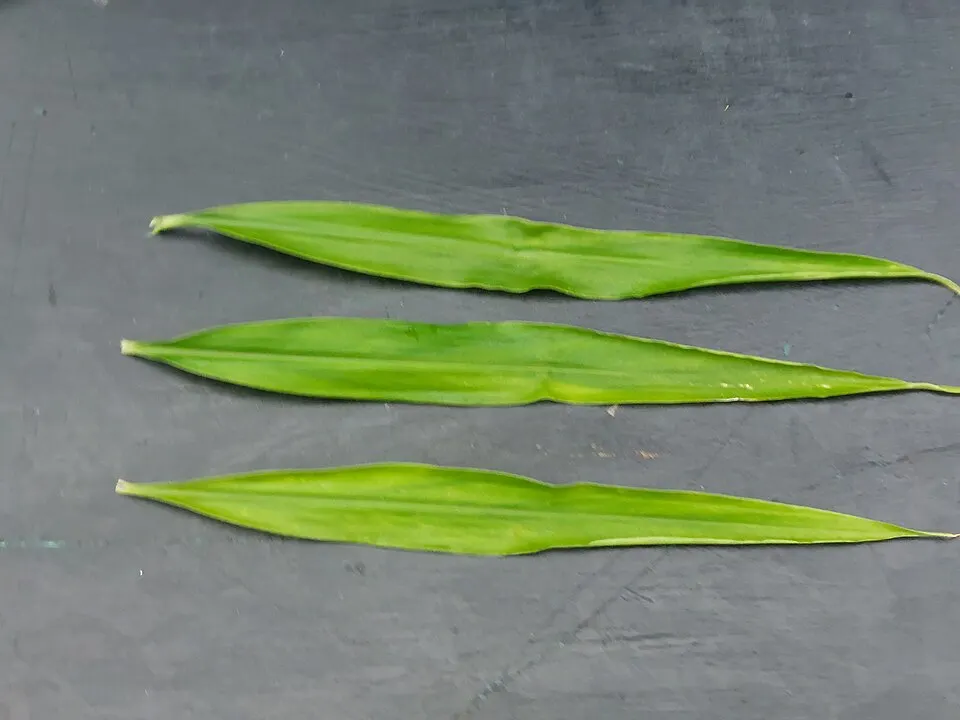
Photo: Schlaghecken Josef / Wikimedia Commons (CC BY-SA 4.0)
Ginger (Zingiber officinale): Universal digestive and anti-inflammatory rhizome used across culinary and healing traditions.
🔍 Quick Facts
| Common name | Ginger |
| Other names | Adrak (Hindi); Inji (Tamil, Malayalam); Allam (Telugu); Sonth (dried ginger) |
| Scientific name | Zingiber officinale |
| Plant family | Zingiberaceae (ginger family) |
| Size | 60–100 cm perennial |
| Native region | Maritime Southeast Asia |
| Climate | Tropical/Humid |
| Ease of growing | Moderate |
| Parts used | Rhizome, Leaves |
About Ginger
India is the world's largest producer of ginger, with Kerala and the north-eastern states leading production. Fresh ginger (adrak) and dried ginger (sonth or shunthi) are used differently in Ayurveda: fresh ginger for colds and appetite, dried ginger as a stronger digestive. Ginger is one of the few home remedies with good clinical evidence — for nausea, including morning sickness and motion sickness.
Botanically known as Zingiber officinale, it belongs to the Zingiberaceae family. It is native to Maritime Southeast Asia and grows best in a tropical/humid climate. The parts most often used are the rhizome and leaves.
Traditional & Ayurvedic Uses
Ginger is best known for:
- Nausea relief
- Digestion
- Cold & flu
- Pain relief
- Blood sugar
Most of these uses come from Ayurveda and folk medicine. Where we know of good clinical evidence, or of a specific safety concern, we say so in the overview, precautions and FAQs on this page.
How Ginger Is Used
- Fresh ginger is crushed into tea, curries and chutneys.
- Sonth (dried ginger) powder is mixed with jaggery or used in digestive churnas.
- Ginger juice with honey and lemon is a traditional cold remedy.
How to Grow Ginger
| ☀️ Sunlight | Partial shade; filtered light is best. |
| 💧 Watering | Keep soil moist but well drained. |
| 🪴 Soil | Rich, loose loam with compost — ginger needs room to spread. |
| 🌱 Propagation | Plant a piece of fresh rhizome with visible "eyes" (buds). |
| 📅 When to plant (India) | Plant April–May; harvest after 8–10 months, or earlier for tender ginger. |
| 🏡 In pots / at home | Grows well in a wide, shallow container or grow bag in partial shade. |
Precautions & Safety
- High doses may cause heartburn and stomach upset.
- May increase bleeding risk with blood-thinning medication.
- Pregnant women should keep to food amounts and check with a doctor.
Frequently Asked Questions
Further Reading on Ginger
Written by the WhyOnPlanet editorial team · Last updated October 2026