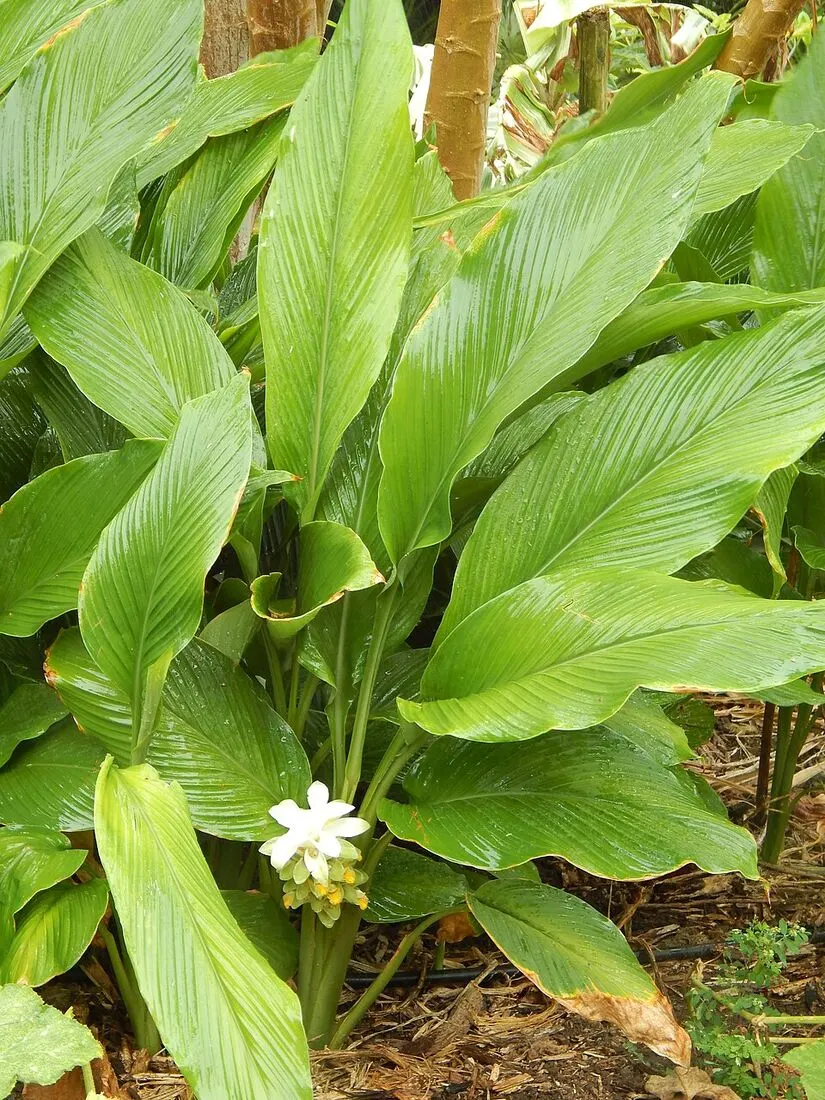
Photo: Forest and Kim Starr / Wikimedia Commons (CC BY 3.0 us)
Turmeric (Curcuma longa): Golden spice with potent anti-inflammatory and antioxidant properties.
🔍 Quick Facts
| Common name | Turmeric |
| Other names | Haldi (Hindi); Manjal (Tamil, Malayalam); Pasupu (Telugu); Haridra (Sanskrit) |
| Scientific name | Curcuma longa |
| Plant family | Zingiberaceae (ginger family) |
| Size | 60–100 cm leafy perennial |
| Native region | South & Southeast Asia |
| Climate | Tropical |
| Ease of growing | Moderate |
| Parts used | Rhizome (Root) |
About Turmeric
India grows about 75% of the world's turmeric, and Erode in Tamil Nadu and Sangli in Maharashtra are major trading hubs. Its colour comes from curcumin, one of the most researched plant compounds in the world. Curcumin is poorly absorbed on its own, which is why turmeric is traditionally cooked with fat and black pepper (whose piperine boosts absorption). Lakadong turmeric from Meghalaya is prized for its high curcumin content.
Botanically known as Curcuma longa, it belongs to the Zingiberaceae family. It is native to South & Southeast Asia and grows best in a tropical climate. The parts most often used are the rhizome (root).
Traditional & Ayurvedic Uses
Turmeric is best known for:
- Anti-inflammatory
- Joint pain
- Skin glow
- Liver health
- Wound healing
Most of these uses come from Ayurveda and folk medicine. Where we know of good clinical evidence, or of a specific safety concern, we say so in the overview, precautions and FAQs on this page.
How Turmeric Is Used
- Ground turmeric is used daily in curries, dals and pickles.
- Haldi doodh (turmeric milk) with a pinch of black pepper is a popular bedtime drink.
- Turmeric paste is applied in the pre-wedding haldi ceremony and to minor cuts.
How to Grow Turmeric
| ☀️ Sunlight | Full sun to partial shade. |
| 💧 Watering | Regular watering during growth; reduce as leaves yellow before harvest. |
| 🪴 Soil | Loose, rich, well-drained loam with plenty of compost. |
| 🌱 Propagation | Plant pieces of fresh rhizome (with 2–3 buds) 5 cm deep. |
| 📅 When to plant (India) | Plant April–June; harvest 7–9 months later when leaves dry (January–March). |
| 🏡 In pots / at home | Grows easily in a 12–14 inch pot or grow bag — one rhizome can give 500 g or more. |
Precautions & Safety
- High-dose curcumin supplements have been linked to rare liver injury.
- May increase bleeding risk with blood thinners and should be stopped before surgery.
- Can worsen gallstones and acid reflux in some people.
Frequently Asked Questions
Further Reading on Turmeric
Written by the WhyOnPlanet editorial team · Last updated October 2026