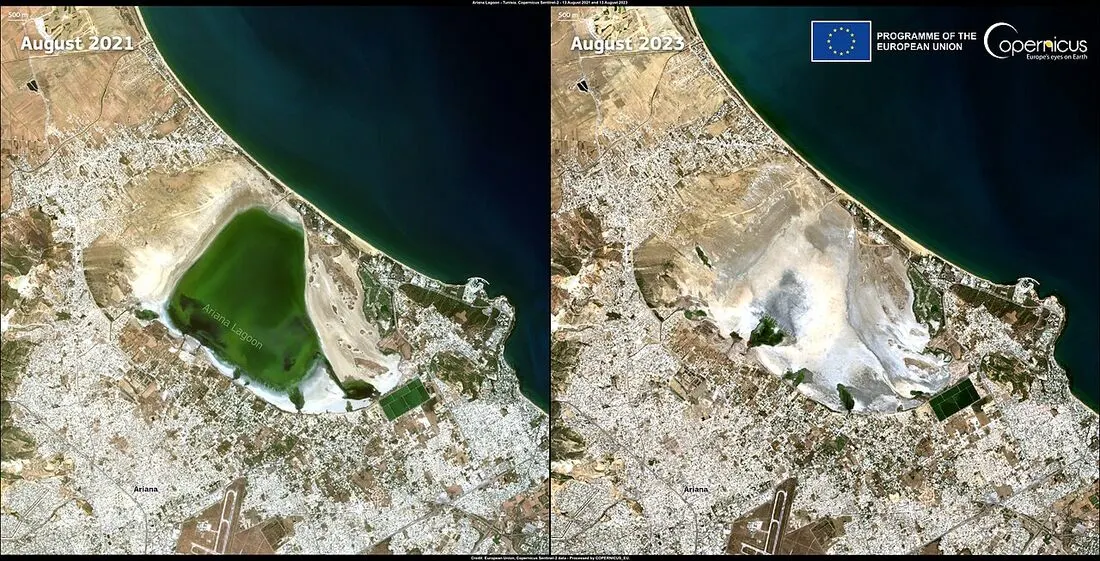
Photo: European Union, Copernicus Sentinel-2 imagery / Wikimedia Commons (Attribution)
📋 In This Article
India's monsoon feeds 70% of the country's annual rainfall and sustains agriculture for 1.4 billion people. Climate change is disrupting this ancient rhythm with profound consequences for food security, water supply, and livelihoods.
How Monsoons Are Changing
Research shows Indian monsoon rainfall is becoming more variable — extreme rainfall events (floods) are increasing while overall monsoon duration is shortening. Some regions receive 2–3 months of rain in 2–3 weeks, while others face extended dry spells. The monsoon onset date has become less predictable, complicating planting decisions for farmers.
Impact on Agriculture
Irregular rainfall causes crop failures at both extremes — flooding destroys standing crops, while dry spells during critical growth phases cause yield losses. India's kharif crop season (June–October) is most affected. Punjab and Haryana — India's breadbasket — face groundwater depletion as farmers pump more to compensate for unpredictable rain.
Flood and Drought Cycles
Paradoxically, India faces more simultaneous flooding and droughts as rainfall concentrates in intense bursts. Cities built without adequate drainage face repeated flooding from brief intense rainfall events. Rural areas in drought-prone regions like Marathwada face multi-year droughts more frequently.
Adaptation Strategies
Short-term monsoon forecasting has improved dramatically, helping farmers time planting. Drought-resistant crop varieties are being adopted in vulnerable regions. Watershed management and reviving traditional water harvesting structures increase resilience. Urban planners are redesigning drainage systems for intense rainfall events.
Conclusion
The Indian monsoon is changing in ways that require urgent adaptation at every level — from national water policy to individual farm decisions. Building resilience now is far cheaper than managing crises later.