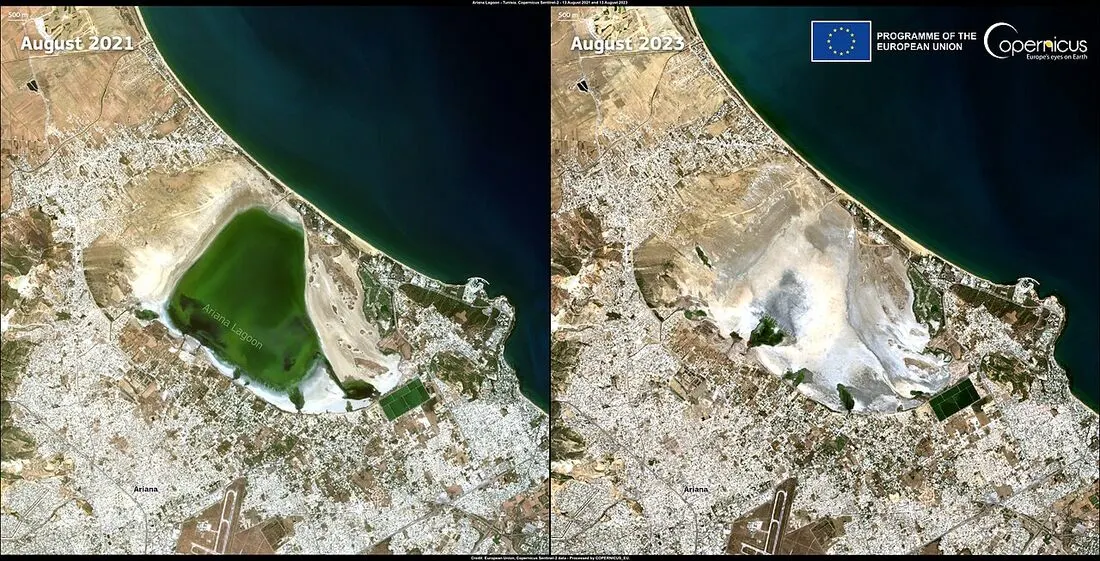
Photo: European Union, Copernicus Sentinel-2 imagery / Wikimedia Commons (Attribution)
📋 In This Article
India recorded its hottest February in over a century in 2023, and heatwaves that once struck every few years now arrive annually — earlier, longer, and more intense. Understanding the causes and adapting proactively is now essential for millions of Indians.
Why Indian Heatwaves Are Intensifying
Climate change is raising India's baseline temperature by approximately 0.2°C per decade. Urbanisation replaces heat-absorbing vegetation with concrete, amplifying temperatures in cities. Deforestation reduces the natural evaporative cooling effect of forests. These factors compound to produce heat events that were once-in-50-year occurrences now happening every 5 years.
Health Impacts of Extreme Heat
Heat stroke, heat exhaustion, and dehydration are immediate dangers. India recorded over 24,000 heat-related deaths between 1992–2015. Outdoor labourers, the elderly, and young children are most at risk. Even moderate heat stress reduces cognitive performance, physical productivity, and sleep quality.
- Drink 3–4 litres of water daily in peak heat
- Avoid outdoor activity between 11 am and 4 pm
- Wear light, loose, light-coloured cotton clothing
- Eat light, frequent meals — avoid heavy, spicy food in heat
- Know the signs of heat stroke: confusion, no sweating, high temperature
Urban Heat Island Solutions
Cities can reduce peak temperatures by 2–3°C through green roofs, urban forests, light-coloured road surfaces, and water bodies. Delhi's tree-cover policy and Ahmedabad's white rooftop painting programme have shown measurable results.
Agricultural Adaptation
Heatwaves at critical crop growth stages (flowering, grain-filling) cause severe yield losses. Farmers are shifting planting dates, adopting heat-tolerant varieties, and using mulching and shade nets to protect crops. India's agricultural research institutions are breeding heat-tolerant wheat, rice, and vegetable varieties.
Conclusion
Heatwaves are India's fastest-growing climate risk. Awareness, preparedness, and urban greening are immediate solutions — while rapid decarbonisation remains the long-term answer.