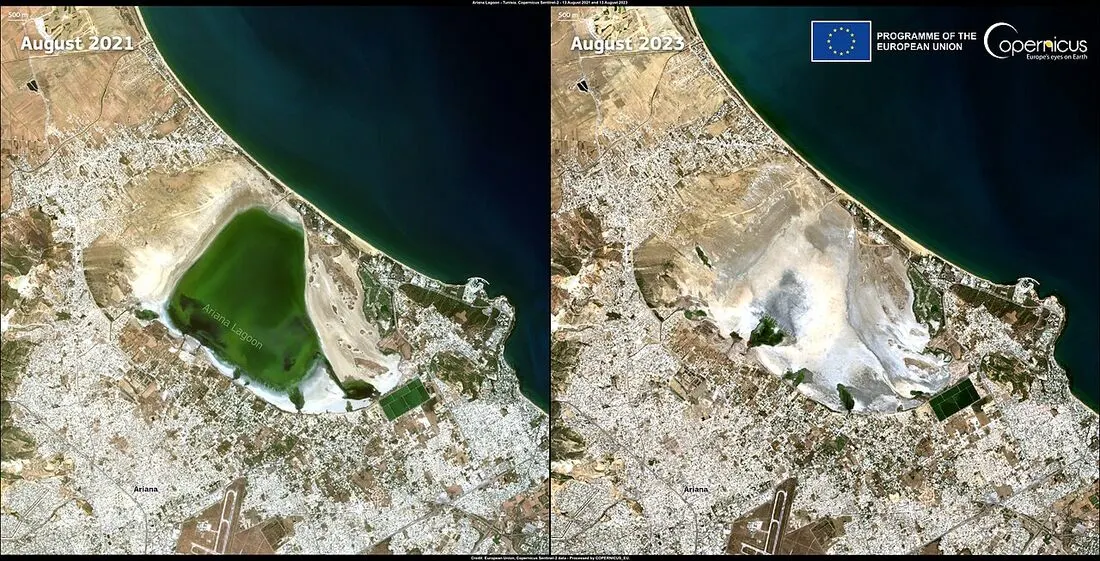
Photo: European Union, Copernicus Sentinel-2 imagery / Wikimedia Commons (Attribution)
📋 In This Article
Climate change refers to long-term shifts in global temperatures and weather patterns. While some change is natural, human activities — primarily burning fossil fuels — have accelerated warming at an unprecedented rate since the Industrial Revolution.
The Greenhouse Effect
The Earth is naturally warmed by greenhouse gases (CO₂, methane, water vapour) that trap heat from the sun. Human activities have dramatically increased these gases — atmospheric CO₂ has risen from 280 ppm pre-industrial to over 420 ppm today, causing average global temperatures to rise by 1.1°C.
Key Impacts of Climate Change
Rising temperatures cause glaciers to melt, sea levels to rise, and weather patterns to become more extreme. India has already seen increased frequency of heatwaves, erratic monsoons, and more intense cyclones — all directly linked to climate change.
- Rising sea levels threatening coastal cities
- More intense and frequent heatwaves
- Disrupted monsoon and rainfall patterns
- Increased frequency of cyclones and floods
- Loss of biodiversity and ecosystem collapse
India's Role and Vulnerability
India is the world's third largest CO₂ emitter but also among the countries most vulnerable to climate impacts. With 600 million people dependent on monsoon-fed agriculture, climate disruption poses serious food and water security challenges.
What Can Be Done
Climate change requires action at every level — from international policy (Paris Agreement, carbon markets) to individual choices (diet, transport, energy). Rapid transition to renewable energy, reforestation, and sustainable agriculture are the most impactful solutions.
Conclusion
Climate change is the defining challenge of our time — but it is a challenge we understand, and one we have the tools to address. The only question is collective will.