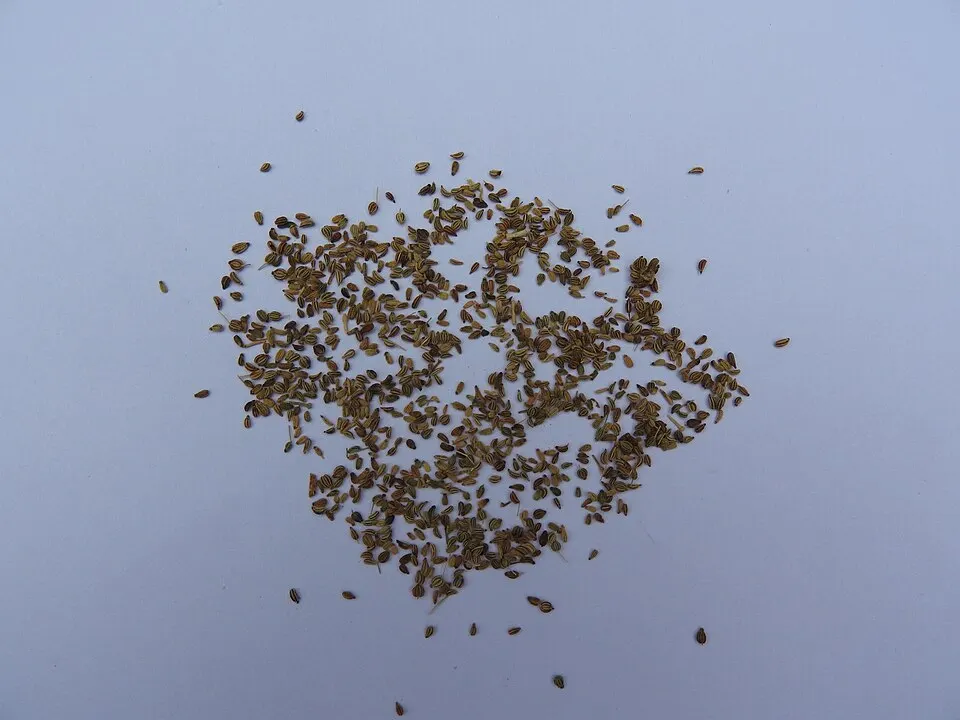
Photo: Yercaud-elango / Wikimedia Commons (CC BY-SA 4.0)
Carom Seeds (Ajwain) (Trachyspermum ammi): Pungent Indian spice with thymol compounds — outstanding for digestive complaints and respiratory issues.
🔍 Quick Facts
| Common name | Carom Seeds (Ajwain) |
| Other names | Ajwain, Ajowan (Hindi); Omam (Tamil); Vamu (Telugu); Carom seeds |
| Scientific name | Trachyspermum ammi |
| Plant family | Apiaceae (carrot family) |
| Size | 60–90 cm annual |
| Native region | Egypt, India |
| Climate | Semi-arid |
| Ease of growing | Easy |
| Parts used | Seeds, Oil |
About Carom Seeds
Ajwain seeds smell strongly of thyme because they contain thymol, a natural antiseptic. Ajwain is India's go-to remedy for gas and indigestion — ajwain with black salt after a heavy meal is a household tradition. Rajasthan and Gujarat grow most of the crop. (The thick-leaved "ajwain plant" sold in nurseries is a different plant, Plectranthus amboinicus.)
Botanically known as Trachyspermum ammi, it belongs to the Apiaceae family. It is native to Egypt, India and grows best in a semi-arid climate. The parts most often used are the seeds and oil.
Traditional & Ayurvedic Uses
Carom Seeds is best known for:
- Indigestion
- Gas & bloating
- Cold & cough
- Acidity
- Arthritis
Most of these uses come from Ayurveda and folk medicine. Where we know of good clinical evidence, or of a specific safety concern, we say so in the overview, precautions and FAQs on this page.
How Carom Is Used
- Seeds are used in parathas, pakoras, puris and bread doughs.
- A pinch of seeds with black salt is chewed after heavy meals for gas.
- Ajwain steam inhalation or roasted-seed potli is used for blocked noses.
How to Grow Carom Seeds
| ☀️ Sunlight | Full sun. |
| 💧 Watering | Light, moderate watering. |
| 🪴 Soil | Loamy, well-drained soil. |
| 🌱 Propagation | Seeds sown directly. |
| 📅 When to plant (India) | Sow October–November; harvest February–March. |
| 🏡 In pots / at home | Easy in a pot as a cool-season crop. |
Precautions & Safety
- Avoid large amounts in pregnancy.
- Can aggravate acidity and ulcers when taken in excess.
- Thymol oil is strong — do not apply undiluted.
Frequently Asked Questions
Further Reading on Carom Seeds
Written by the WhyOnPlanet editorial team · Last updated October 2026