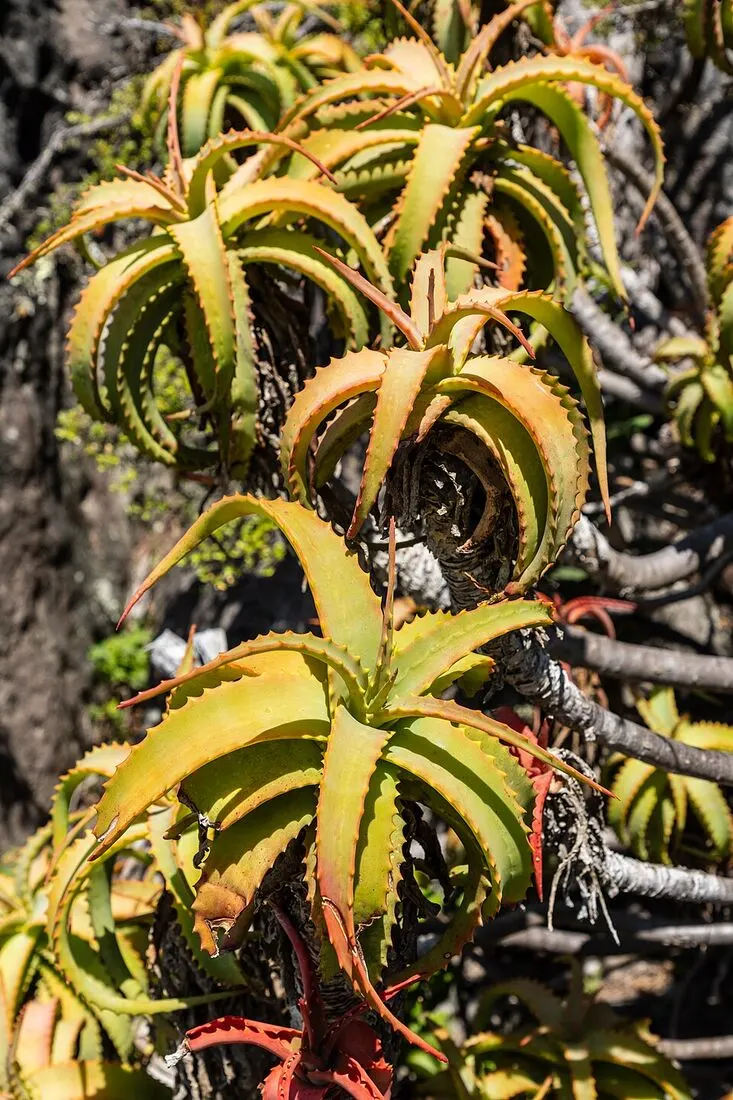
Photo: Dietmar Rabich / Wikimedia Commons (CC BY-SA 4.0)
Aloe Vera (Aloe barbadensis miller): Versatile succulent prized for skin healing, digestion, and hydration.
🔍 Quick Facts
| Common name | Aloe Vera |
| Other names | Ghritkumari, Gwarpatha (Hindi); Kattralai (Tamil); Kalabanda (Telugu); Kumari (Sanskrit) |
| Scientific name | Aloe barbadensis miller |
| Plant family | Asphodelaceae |
| Size | 60–100 cm succulent |
| Native region | Arabian Peninsula |
| Climate | Arid/Tropical |
| Ease of growing | Easy |
| Parts used | Gel, Latex |
About Aloe Vera
Aloe vera is a stemless succulent that stores a clear gel in its thick leaves. It is probably the easiest medicinal plant to keep alive in an Indian home. Its gel is well known for soothing sunburn and minor burns. Note that two products come from the leaf: the inner gel, which is soothing, and the yellow latex (aloin) just under the skin, which is a strong laxative and is now restricted in many countries.
Botanically known as Aloe barbadensis miller, it belongs to the Asphodelaceae family. It is native to Arabian Peninsula and grows best in a arid/tropical climate. The parts most often used are the gel and latex.
Traditional & Ayurvedic Uses
Aloe Vera is best known for:
- Sunburn relief
- Moisturizer
- Digestion
- Hair care
- Wound healing
Most of these uses come from Ayurveda and folk medicine. Where we know of good clinical evidence, or of a specific safety concern, we say so in the overview, precautions and FAQs on this page.
How Aloe Is Used
- Fresh gel is applied to sunburn, minor burns and dry skin.
- Gel is used in hair masks and as a face moisturiser.
- Washed gel (with the yellow latex fully removed) is used in juices in some traditions.
How to Grow Aloe Vera
| ☀️ Sunlight | Bright light to full sun; afternoon shade in harsh summers. |
| 💧 Watering | Water only when the soil is completely dry — every 2–3 weeks. Overwatering is the main cause of death. |
| 🪴 Soil | Sandy, gritty cactus mix. |
| 🌱 Propagation | Separate the pups (offsets) that grow around the base. |
| 📅 When to plant (India) | Plant any time outside the peak monsoon. |
| 🏡 In pots / at home | Ideal for pots; terracotta helps prevent rot. Repot when pups crowd the pot. |
Precautions & Safety
- The yellow latex (aloin) is a strong laxative; long-term use can cause cramps, diarrhoea and low potassium.
- Aloe latex taken orally is unsafe in pregnancy.
- Patch-test the gel first — some people develop skin allergy.
Frequently Asked Questions
Further Reading on Aloe Vera
Written by the WhyOnPlanet editorial team · Last updated October 2026