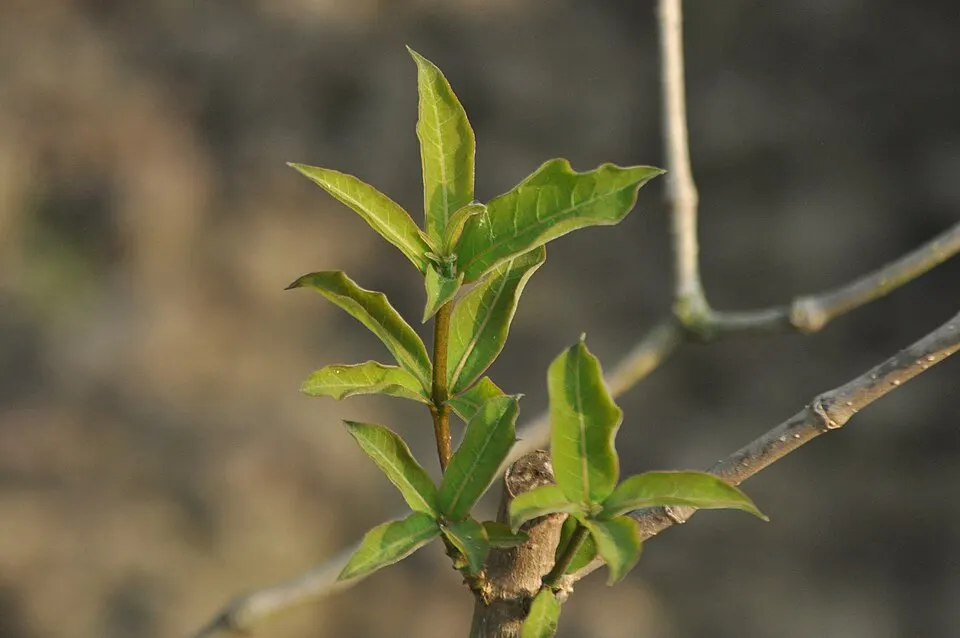
Photo: Atudu / Wikimedia Commons (CC BY-SA 4.0)
Sarpagandha (Indian Snakeroot) (Rauvolfia serpentina): Source of reserpine — a critical Ayurvedic and pharmaceutical plant for high blood pressure.
🔍 Quick Facts
| Common name | Sarpagandha (Indian Snakeroot) |
| Other names | Sarpagandha, Chandrabhaga (Hindi); Indian snakeroot |
| Scientific name | Rauvolfia serpentina |
| Plant family | Apocynaceae |
| Size | 30–90 cm shrub |
| Native region | India, Southeast Asia |
| Climate | Tropical |
| Ease of growing | Moderate |
| Parts used | Root |
About Sarpagandha
Sarpagandha has a famous place in medical history. Indian scientists studied its use for hypertension in the 1930s and 1940s, and reserpine, isolated from its roots in 1952, became one of the first modern antihypertensive and antipsychotic drugs. Wild populations have been heavily over-collected and the species is listed as endangered, so cultivation is now encouraged.
Botanically known as Rauvolfia serpentina, it belongs to the Apocynaceae family. It is native to India, Southeast Asia and grows best in a tropical climate. The parts most often used are the root.
Traditional & Ayurvedic Uses
Sarpagandha is best known for:
- Hypertension
- Anxiety
- Insomnia
- Snake bite (folk)
- Psychosis (historical)
Most of these uses come from Ayurveda and folk medicine. Where we know of good clinical evidence, or of a specific safety concern, we say so in the overview, precautions and FAQs on this page.
How Sarpagandha Is Used
- Roots are processed by pharmaceutical companies to make reserpine.
- Root powder is used by Ayurvedic doctors in formulations such as Sarpagandha vati for blood pressure and insomnia.
How to Grow Sarpagandha
| ☀️ Sunlight | Partial shade. |
| 💧 Watering | Regular; prefers moist conditions. |
| 🪴 Soil | Rich, loamy, well-drained soil with organic matter. |
| 🌱 Propagation | Seeds, root cuttings or stem cuttings. |
| 📅 When to plant (India) | Plant in the monsoon; roots are harvested after 18–24 months. |
| 🏡 In pots / at home | Can be grown in a pot in a shaded area. |
Precautions & Safety
- Never self-medicate — the root is potent and can cause severe depression, very low blood pressure, nasal congestion and stomach ulcers.
- Dangerous with antidepressants and many heart medicines.
- Contraindicated in pregnancy and in people with depression or peptic ulcer.
Frequently Asked Questions
Written by the WhyOnPlanet editorial team · Last updated October 2026