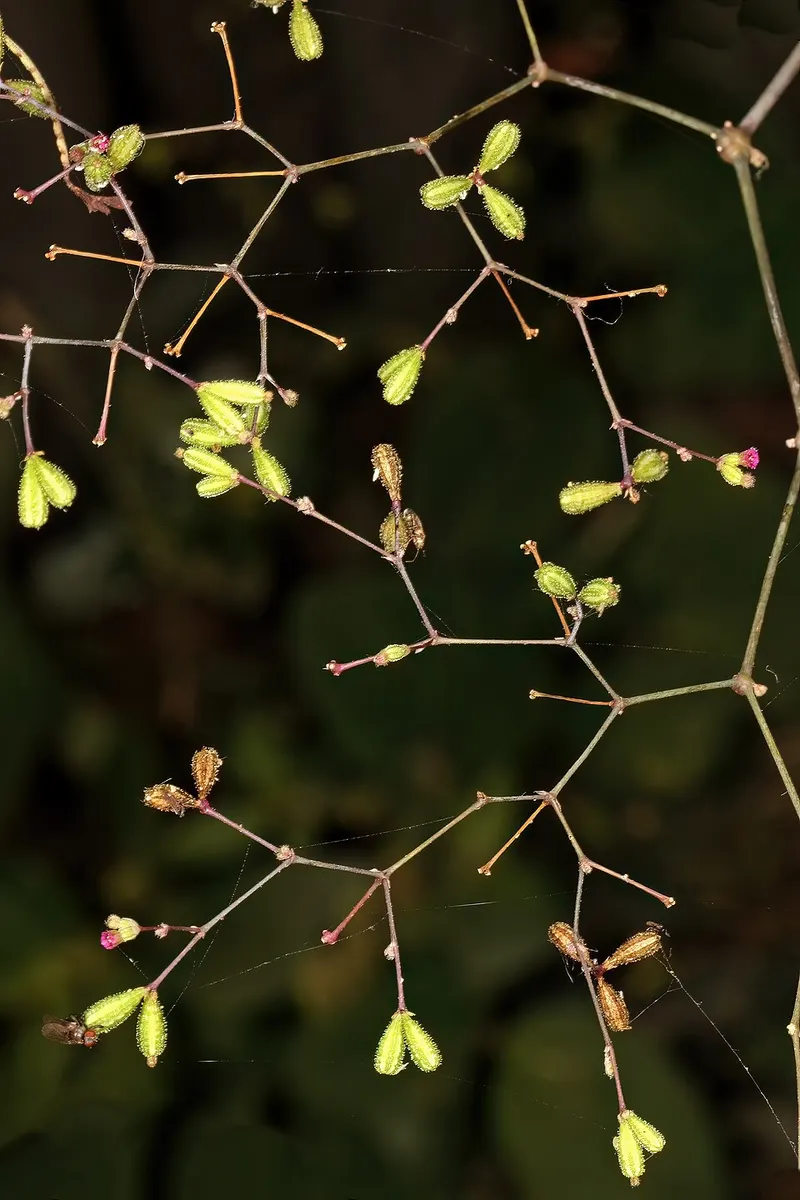
Photo: SAplants / Wikimedia Commons (CC BY-SA 4.0)
Punarnava (Boerhavia diffusa): Rejuvenating Ayurvedic herb that regenerates the body — powerful for kidneys and liver.
🔍 Quick Facts
| Common name | Punarnava |
| Other names | Punarnava, Gadha purna (Hindi); Mookkirattai (Tamil); Atikamamidi (Telugu); Hogweed |
| Scientific name | Boerhavia diffusa |
| Plant family | Nyctaginaceae |
| Size | Creeping herb, branches up to 1 m |
| Native region | India, Tropical regions |
| Climate | Tropical |
| Ease of growing | Easy |
| Parts used | Roots, Leaves, Seeds |
About Punarnava
Punarnava means "that which renews the body" — and also refers to the way the plant dries up in summer and springs back with the rains. It is a common weed of roadsides and wastelands across India, recognised by its small pink flowers and pinkish stems. In Ayurveda it is used mainly as a diuretic for swelling (oedema) and for kidney and liver support. The leaves are also cooked as a green in some regions.
Botanically known as Boerhavia diffusa, it belongs to the Nyctaginaceae family. It is native to India, Tropical regions and grows best in a tropical climate. The parts most often used are the roots, leaves and seeds.
Traditional & Ayurvedic Uses
Punarnava is best known for:
- Kidney health
- Liver detox
- Diuretic
- Oedema
- Anti-inflammatory
Most of these uses come from Ayurveda and folk medicine. Where we know of good clinical evidence, or of a specific safety concern, we say so in the overview, precautions and FAQs on this page.
How Punarnava Is Used
- Root decoction is used traditionally as a diuretic for swelling.
- Leaves are cooked as a vegetable in Bengal and parts of South India.
- It is the main ingredient of Punarnavadi mandur and Punarnavasava.
How to Grow Punarnava
| ☀️ Sunlight | Full sun. |
| 💧 Watering | Low; grows on rainfall alone. |
| 🪴 Soil | Any soil, including poor, sandy wasteland. |
| 🌱 Propagation | Seeds or stem cuttings; it often self-seeds. |
| 📅 When to plant (India) | Grows with the monsoon. |
| 🏡 In pots / at home | Easy in a wide pot or hanging basket. |
Precautions & Safety
- Its diuretic action may interact with blood pressure and diuretic medicines.
- Do not self-treat kidney disease or oedema — these need medical diagnosis.
- Avoid in pregnancy.
Frequently Asked Questions
Written by the WhyOnPlanet editorial team · Last updated October 2026