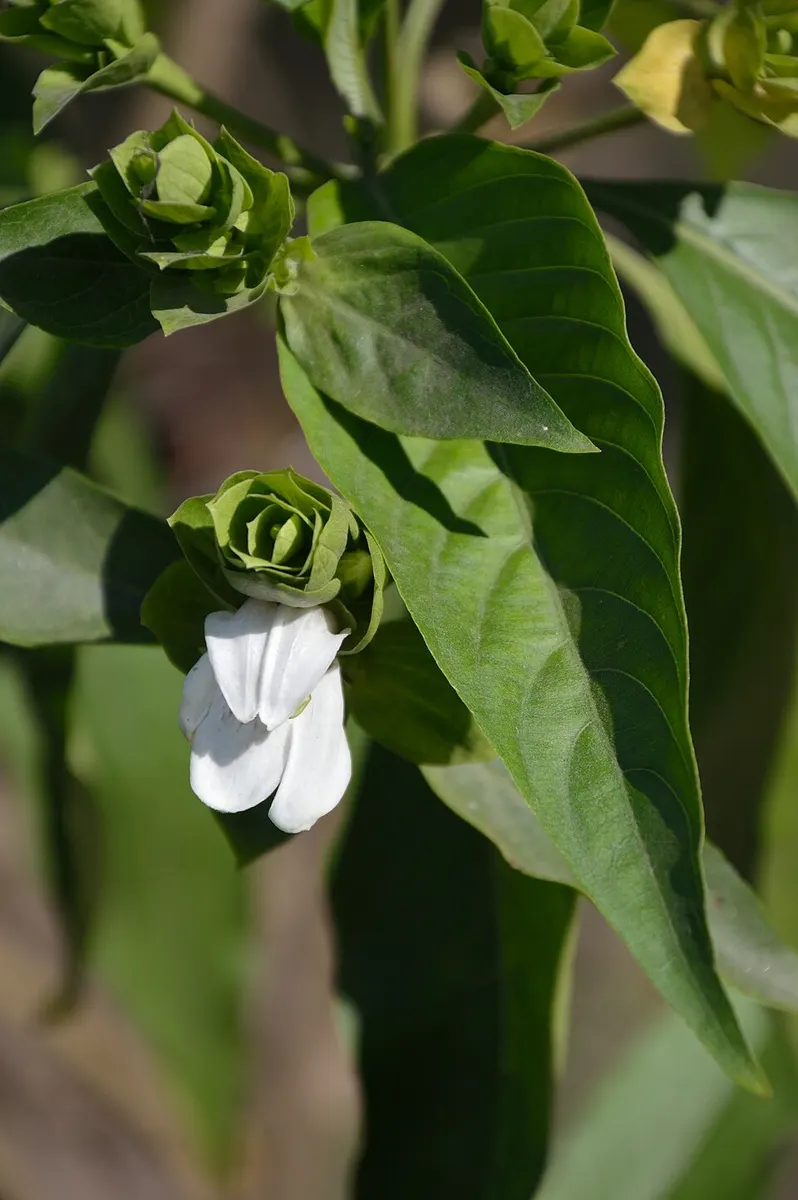
Photo: Biswarup Ganguly / Wikimedia Commons (CC BY 3.0)
Vasaka (Malabar Nut) (Justicia adhatoda): Principal Ayurvedic herb for respiratory diseases — used for cough, asthma, and bronchitis.
🔍 Quick Facts
| Common name | Vasaka (Malabar Nut) |
| Other names | Adusa, Arusa (Hindi); Adathodai (Tamil); Addasaramu (Telugu); Vasa (Sanskrit) |
| Scientific name | Justicia adhatoda |
| Plant family | Acanthaceae |
| Size | 1–3 m evergreen shrub |
| Native region | India, Sri Lanka |
| Climate | Tropical |
| Ease of growing | Fast |
| Parts used | Leaves, Roots, Bark, Flowers |
About Vasaka
Vasaka is the classical Ayurvedic herb for the chest. Its leaves contain vasicine, which was the starting point for bromhexine and ambroxol, two widely used mucolytic cough medicines. It is a hardy shrub often planted as a hedge in rural India, with white flowers marked with purple lines.
Botanically known as Justicia adhatoda, it belongs to the Acanthaceae family. It is native to India, Sri Lanka and grows best in a tropical climate. The parts most often used are the leaves, roots, bark and flowers.
Traditional & Ayurvedic Uses
Vasaka is best known for:
- Asthma
- Bronchitis
- Cough
- TB (adjunct)
- Expectorant
Most of these uses come from Ayurveda and folk medicine. Where we know of good clinical evidence, or of a specific safety concern, we say so in the overview, precautions and FAQs on this page.
How Vasaka Is Used
- Fresh leaf juice (swarasa) with honey is used traditionally for cough.
- Dried leaves are boiled into a decoction for bronchitis and asthma.
- Vasaka is the main herb in Vasavaleha and many Ayurvedic cough syrups.
How to Grow Vasaka
| ☀️ Sunlight | Full sun to partial shade. |
| 💧 Watering | Low to moderate; drought tolerant once established. |
| 🪴 Soil | Grows in most soils, including poor ones. |
| 🌱 Propagation | Stem cuttings root easily in the monsoon. |
| 📅 When to plant (India) | Plant June–August. |
| 🏡 In pots / at home | Grows well in a large pot or as a hedge. |
Precautions & Safety
- Avoid in pregnancy — vasicine can stimulate uterine contractions.
- Large doses may cause vomiting or diarrhoea.
Frequently Asked Questions
Further Reading on Vasaka
Written by the WhyOnPlanet editorial team · Last updated October 2026