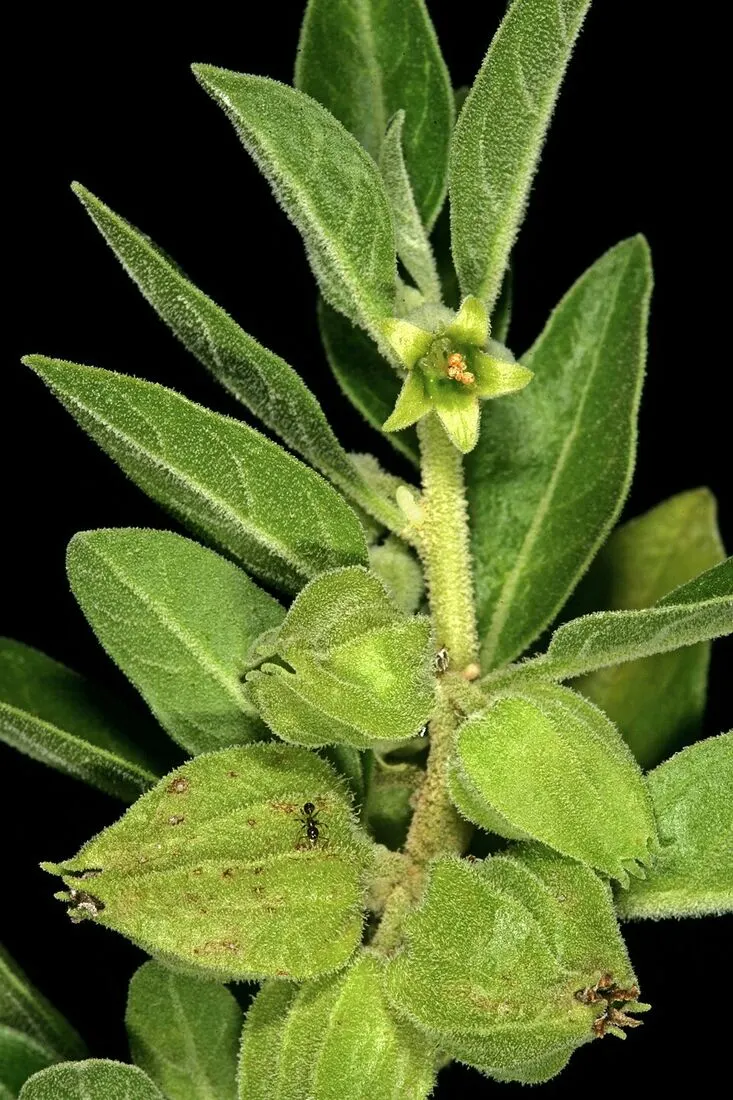
Photo: SAplants / Wikimedia Commons (CC BY-SA 4.0)
Ashwagandha (Withania somnifera): Powerful adaptogen that fights stress, boosts energy, and supports overall vitality.
🔍 Quick Facts
| Common name | Ashwagandha |
| Other names | Ashwagandha, Asgandh (Hindi); Amukkara (Tamil); Indian ginseng, Winter cherry |
| Scientific name | Withania somnifera |
| Plant family | Solanaceae (nightshade family) |
| Size | 30–150 cm woody shrub |
| Native region | India, Africa |
| Climate | Arid/Semi-arid |
| Ease of growing | Moderate |
| Parts used | Root, Leaves, Berries |
About Ashwagandha
Ashwagandha means "smell of a horse" — a reference both to the odour of its fresh root and to the strength it is said to give. It is the best-known Ayurvedic rasayana (rejuvenative) worldwide. Several randomised trials have found that root extracts reduce perceived stress and cortisol. In India it is grown commercially in the dry Neemuch–Mandsaur belt of Madhya Pradesh and in Rajasthan. The root is the part used; leaves are not recommended for internal use.
Botanically known as Withania somnifera, it belongs to the Solanaceae family. It is native to India, Africa and grows best in a arid/semi-arid climate. The parts most often used are the root, leaves and berries.
Traditional & Ayurvedic Uses
Ashwagandha is best known for:
- Stress relief
- Energy booster
- Hormone balance
- Brain health
- Muscle strength
Most of these uses come from Ayurveda and folk medicine. Where we know of good clinical evidence, or of a specific safety concern, we say so in the overview, precautions and FAQs on this page.
How Ashwagandha Is Used
- Root powder (3–6 g) is traditionally taken with warm milk and ghee at night.
- Standardised root extracts (such as KSM-66 or Sensoril) are sold as capsules.
- Ashwagandha is an ingredient of Ashwagandharishta and many rasayana formulas.
How to Grow Ashwagandha
| ☀️ Sunlight | Full sun. |
| 💧 Watering | Low; a dryland crop that rots if overwatered. |
| 🪴 Soil | Sandy loam or light red soil, well drained, slightly alkaline. |
| 🌱 Propagation | Seeds sown in nursery beds or directly in the field. |
| 📅 When to plant (India) | Sow in August–September (late kharif). Roots are harvested after 150–180 days, January–March. |
| 🏡 In pots / at home | Grows in a 12-inch pot of sandy mix; harvest roots after the berries turn red. |
Precautions & Safety
- Avoid in pregnancy — it may cause miscarriage.
- May raise thyroid hormone levels and interact with thyroid, sedative, immunosuppressant and diabetes medicines.
- Rare cases of liver injury have been reported; several European countries have restricted it — stop if you notice jaundice or dark urine.
Frequently Asked Questions
Further Reading on Ashwagandha
Written by the WhyOnPlanet editorial team · Last updated October 2026