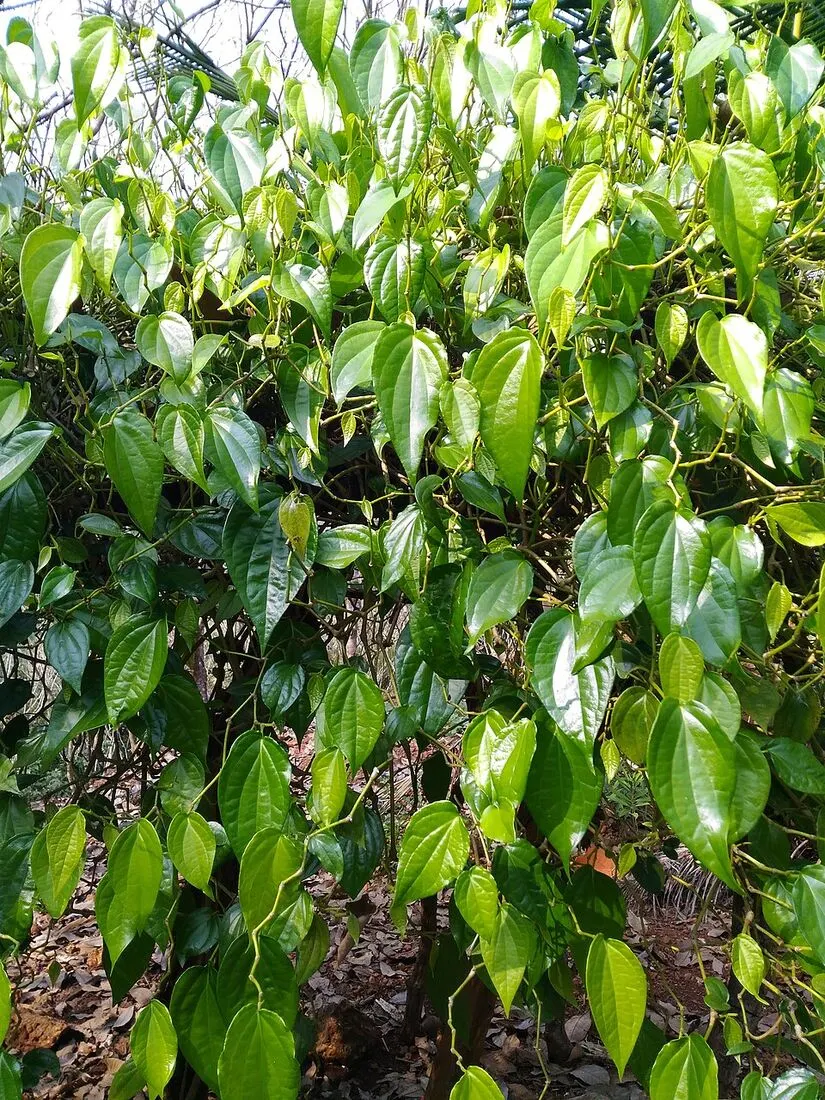
Photo: Vijayanrajapuram / Wikimedia Commons (CC BY-SA 4.0)
Betel Leaf (Paan) (Piper betle): Sacred creeper with antiseptic, digestive, and anti-inflammatory properties used across Asia.
🔍 Quick Facts
| Common name | Betel Leaf (Paan) |
| Other names | Paan (Hindi); Vettilai (Tamil); Tamalapaku (Telugu); Nagavalli (Sanskrit) |
| Scientific name | Piper betle |
| Plant family | Piperaceae (pepper family) |
| Size | Evergreen climbing vine |
| Native region | South & Southeast Asia |
| Climate | Tropical/Humid |
| Ease of growing | Fast |
| Parts used | Leaves |
About Betel Leaf
Betel leaf has been chewed after meals in India for over 2,000 years, and it holds a central place in weddings and rituals. Varieties such as Banarasi, Magahi (with a GI tag from Bihar), Calcutta and Mysore differ in pungency and texture. On its own, the leaf is a mild digestive and antiseptic. The serious health risk comes from what is wrapped in it — areca nut and tobacco.
Botanically known as Piper betle, it belongs to the Piperaceae family. It is native to South & Southeast Asia and grows best in a tropical/humid climate. The parts most often used are the leaves.
Traditional & Ayurvedic Uses
Betel Leaf is best known for:
- Oral antiseptic
- Digestion
- Wound healing
- Respiratory relief
- Anti-inflammatory
Most of these uses come from Ayurveda and folk medicine. Where we know of good clinical evidence, or of a specific safety concern, we say so in the overview, precautions and FAQs on this page.
How Betel Is Used
- A plain leaf is chewed after meals as a digestive and mouth freshener.
- Warm leaves smeared with oil are placed on the chest for congestion in folk practice.
- Leaf juice is used as a mild antiseptic for minor cuts.
How to Grow Betel Leaf
| ☀️ Sunlight | Partial shade; direct afternoon sun scorches the leaves. |
| 💧 Watering | Keep soil consistently moist; it loves humidity. |
| 🪴 Soil | Rich, well-drained loam with plenty of organic matter. |
| 🌱 Propagation | Stem cuttings with 3–4 nodes root easily. |
| 📅 When to plant (India) | Plant June–August. |
| 🏡 In pots / at home | Grows well in a 12-inch pot with a moss pole in a shaded, humid spot. |
Precautions & Safety
- Areca nut (supari) is a Group 1 carcinogen — paan with supari or tobacco greatly increases the risk of oral cancer.
- Plain leaf is generally considered safe in normal amounts.
Frequently Asked Questions
Written by the WhyOnPlanet editorial team · Last updated October 2026