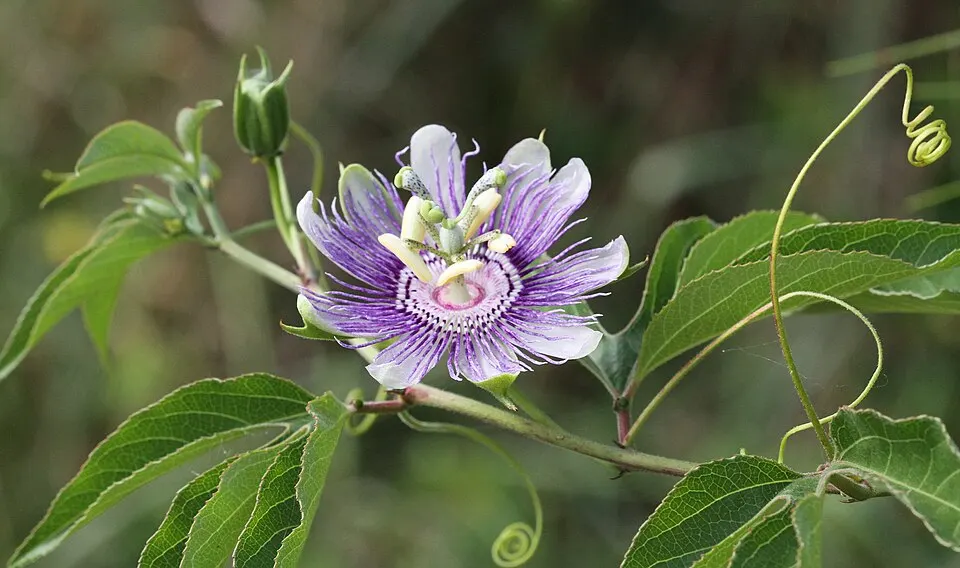
Photo: John Flannery from Richmond County, North Carolina, USA / Wikimedia Commons (CC BY-SA 2.0)
Passion Flower (Passiflora incarnata): Stunning climbing vine used as a natural sedative for anxiety, insomnia, and nervous conditions.
🔍 Quick Facts
| Common name | Passion Flower |
| Other names | Krishna kamal, Rakhi phool (Hindi); Passion vine |
| Scientific name | Passiflora incarnata |
| Plant family | Passifloraceae |
| Size | Vigorous vine, 3–9 m |
| Native region | Americas |
| Climate | Tropical/Sub-tropical |
| Ease of growing | Fast |
| Parts used | Flowers, Leaves, Fruit |
About Passion Flower
The intricate passion flower is called Krishna kamal in India, where devotees see the five Pandavas in its stamens and the hundred Kauravas in its fringe; others call it rakhi phool because it resembles a rakhi. Passiflora incarnata, the North American species, is the one used in herbal medicine as a mild sedative. Many gardens in India grow the edible passion fruit (Passiflora edulis) instead.
Botanically known as Passiflora incarnata, it belongs to the Passifloraceae family. It is native to Americas and grows best in a tropical/sub-tropical climate. The parts most often used are the flowers, leaves and fruit.
Traditional & Ayurvedic Uses
Passion Flower is best known for:
- Anxiety relief
- Insomnia
- Nervous tension
- Pain relief
- Epilepsy (traditional)
Most of these uses come from Ayurveda and folk medicine. Where we know of good clinical evidence, or of a specific safety concern, we say so in the overview, precautions and FAQs on this page.
How Passion Is Used
- Dried leaves and stems are steeped as a calming bedtime tea.
- Standardised extracts are sold for mild anxiety.
- The edible species (P. edulis) gives fruit for juices and desserts.
How to Grow Passion Flower
| ☀️ Sunlight | Full sun to partial shade. |
| 💧 Watering | Regular watering during growth; let soil dry slightly between. |
| 🪴 Soil | Well-drained, moderately fertile soil. |
| 🌱 Propagation | Seeds or stem cuttings. |
| 📅 When to plant (India) | Plant February–April or in the monsoon. |
| 🏡 In pots / at home | Grows in a 16-inch pot with a strong trellis. |
Precautions & Safety
- Can cause drowsiness — do not combine with sedatives or alcohol, or drive after taking it.
- Avoid in pregnancy; it may stimulate the uterus.
Frequently Asked Questions
Further Reading on Passion Flower
Written by the WhyOnPlanet editorial team · Last updated October 2026