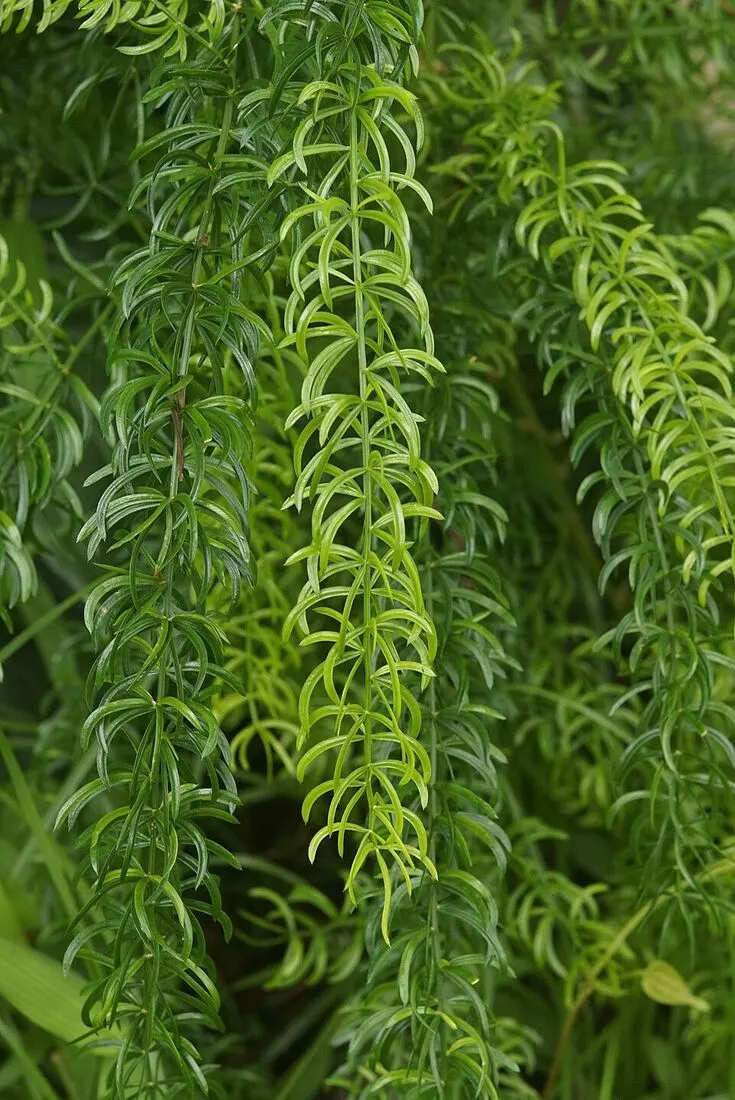
Photo: Vengolis / Wikimedia Commons (CC BY-SA 4.0)
Shatavari (Asparagus racemosus): Premier women's tonic in Ayurveda for hormonal balance and reproductive health.
🔍 Quick Facts
| Common name | Shatavari |
| Other names | Shatavari, Satavar (Hindi); Thaneervittan kizhangu (Tamil); Pilli teegalu (Telugu) |
| Scientific name | Asparagus racemosus |
| Plant family | Asparagaceae (asparagus family) |
| Size | Spiny climber, 1–2 m |
| Native region | India, Sri Lanka |
| Climate | Tropical |
| Ease of growing | Moderate |
| Parts used | Root, Leaves |
About Shatavari
Shatavari means "she who has a hundred husbands" — a reference to its reputation as the foremost Ayurvedic tonic for women. It is a wild asparagus with feathery needle-like leaves, small white fragrant flowers and a cluster of tuberous roots, which are the part used. Most market supply still comes from the wild, and over-harvesting has made cultivation increasingly important.
Botanically known as Asparagus racemosus, it belongs to the Asparagaceae family. It is native to India, Sri Lanka and grows best in a tropical climate. The parts most often used are the root and leaves.
Traditional & Ayurvedic Uses
Shatavari is best known for:
- Female hormonal balance
- Lactation support
- Menopause
- Fertility
- Digestive health
Most of these uses come from Ayurveda and folk medicine. Where we know of good clinical evidence, or of a specific safety concern, we say so in the overview, precautions and FAQs on this page.
How Shatavari Is Used
- Dried root powder is taken with warm milk in traditional practice.
- Shatavari kalpa (a granule preparation) is used for lactation support.
- Fresh tubers are made into a sweet preserve.
How to Grow Shatavari
| ☀️ Sunlight | Partial shade to full sun. |
| 💧 Watering | Moderate; avoid waterlogging, which rots the tubers. |
| 🪴 Soil | Loose, sandy loam so roots can swell; good drainage essential. |
| 🌱 Propagation | Seeds or division of the root crown. |
| 📅 When to plant (India) | Sow in the monsoon. Roots are harvested after 18–24 months. |
| 🏡 In pots / at home | A deep 14-inch pot works; it also makes an attractive ornamental fern-like plant. |
Precautions & Safety
- May have oestrogen-like effects — avoid with hormone-sensitive conditions such as breast cancer or endometriosis.
- Can cause allergy in people sensitive to asparagus.
- May have a mild diuretic effect.
Frequently Asked Questions
Further Reading on Shatavari
Written by the WhyOnPlanet editorial team · Last updated October 2026