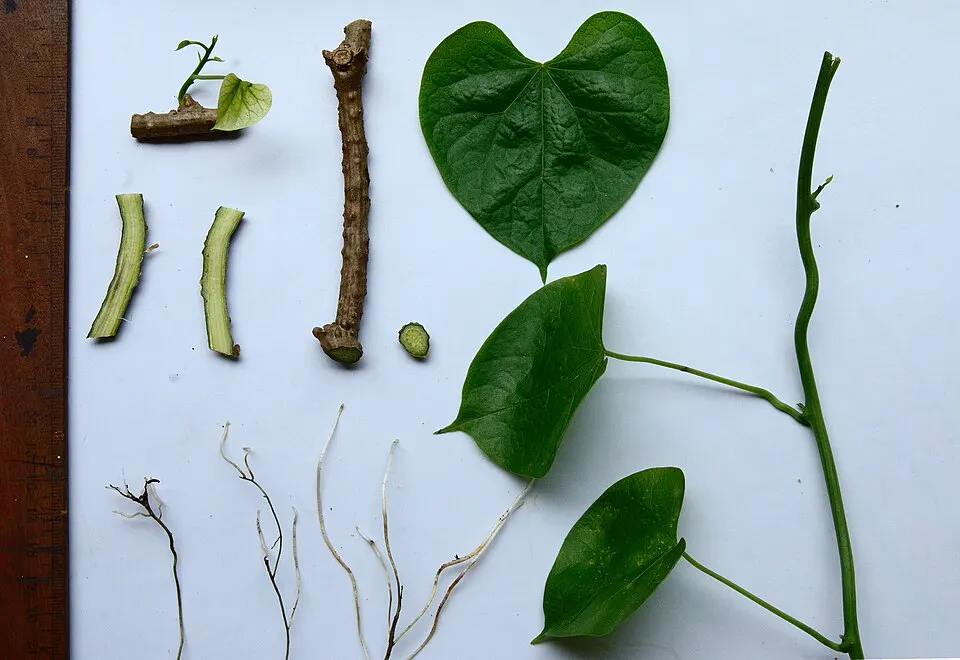
Photo: Arayilpdas at Malayalam Wikipedia / Wikimedia Commons (CC BY 3.0)
Giloy (Guduchi) (Tinospora cordifolia): Ayurvedic immunity herb known as Amrita — the divine nectar of life.
🔍 Quick Facts
| Common name | Giloy (Guduchi) |
| Other names | Giloy, Gurch (Hindi); Seenthil kodi (Tamil); Tippa teega (Telugu); Guduchi, Amrita (Sanskrit) |
| Scientific name | Tinospora cordifolia |
| Plant family | Menispermaceae |
| Size | Woody climber, several metres long |
| Native region | India |
| Climate | Tropical |
| Ease of growing | Fast |
| Parts used | Stem, Leaves, Root |
About Giloy
Giloy is a fleshy-stemmed climber with heart-shaped leaves that often grows over neem and mango trees — giloy grown on neem (neem-giloy) is traditionally considered the best. Ayurveda calls it Amrita, "the nectar of immortality", and the stem is used mainly for fevers. It became one of India's most-consumed herbs during COVID-19. However, doctors have since reported cases of liver injury linked to giloy, so it should not be taken casually or long-term.
Botanically known as Tinospora cordifolia, it belongs to the Menispermaceae family. It is native to India and grows best in a tropical climate. The parts most often used are the stem, leaves and root.
Traditional & Ayurvedic Uses
Giloy is best known for:
- Fever management
- Immunity
- Arthritis
- Gut health
- Detox
Most of these uses come from Ayurveda and folk medicine. Where we know of good clinical evidence, or of a specific safety concern, we say so in the overview, precautions and FAQs on this page.
How Giloy Is Used
- A finger-length piece of stem is crushed and boiled into a decoction (kadha) for fever.
- Giloy satva — starch extracted from the stem — is a traditional preparation.
- Tablets and juices are sold commercially; choose reputable brands.
How to Grow Giloy
| ☀️ Sunlight | Partial shade to full sun. |
| 💧 Watering | Moderate; drought tolerant once established. |
| 🪴 Soil | Any well-drained soil. |
| 🌱 Propagation | Stem cuttings as thick as a finger root very easily — even a cut stem hung on a tree can grow aerial roots. |
| 📅 When to plant (India) | Plant in the monsoon, June–August. |
| 🏡 In pots / at home | Grows well in a large pot with a support or a tree to climb. |
Precautions & Safety
- Case reports in Indian hepatology journals link giloy use to liver injury, especially in people with autoimmune tendencies.
- May lower blood sugar and stimulate the immune system — avoid with autoimmune disease or immunosuppressants.
- Avoid in pregnancy and breastfeeding.
Frequently Asked Questions
Further Reading on Giloy
Written by the WhyOnPlanet editorial team · Last updated October 2026