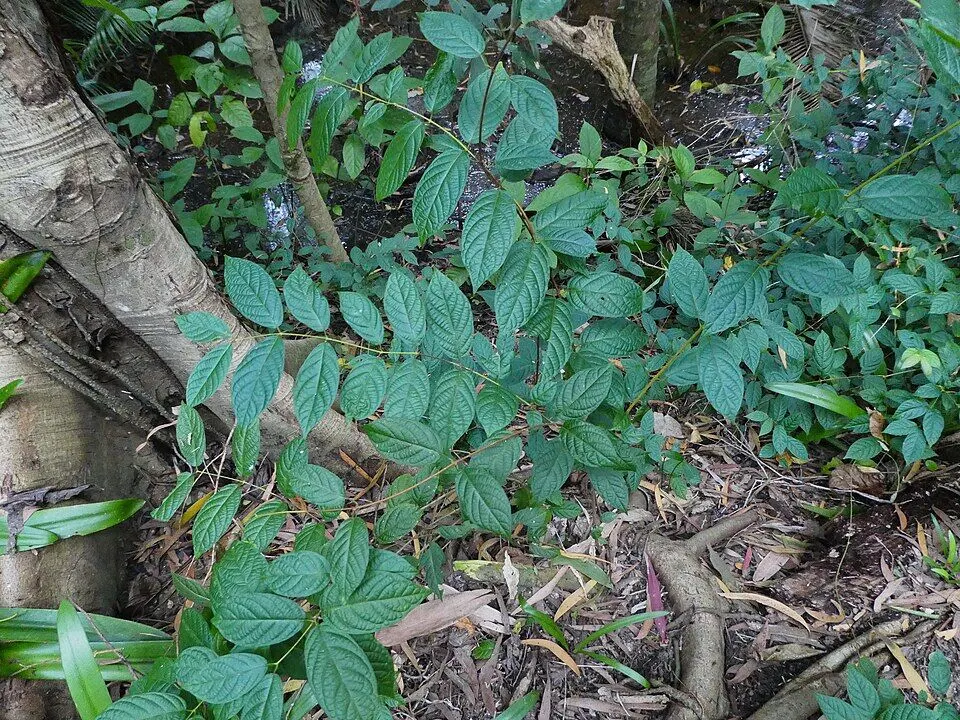
Photo: Steve Fitzgerald / Wikimedia Commons (CC BY-SA 4.0)
Rangoon Creeper (Madhumalti) (Combretum indicum): Spectacular flowering climber with colour-changing blooms — used for digestive parasites and fevers.
🔍 Quick Facts
| Common name | Rangoon Creeper (Madhumalti) |
| Other names | Madhumalti, Madhumalati (Hindi); Rangoon malli (Tamil); Quisqualis |
| Scientific name | Combretum indicum |
| Plant family | Combretaceae |
| Size | Woody climber, up to 8 m |
| Native region | Southeast Asia |
| Climate | Tropical |
| Ease of growing | Fast |
| Parts used | Fruit, Leaves, Root |
About Rangoon Creeper
Madhumalti is loved for clusters of fragrant, drooping flowers that open white in the evening, turn pink the next day, and deep red on the third — so one bunch shows three colours at once. It is one of the most popular climbers for Indian balconies and gate arches. The seeds were traditionally used in China and Southeast Asia to expel intestinal worms.
Botanically known as Combretum indicum, it belongs to the Combretaceae family. It is native to Southeast Asia and grows best in a tropical climate. The parts most often used are the fruit, leaves and root.
Traditional & Ayurvedic Uses
Rangoon Creeper is best known for:
- Gut parasites
- Fever
- Diarrhoea
- Antioxidant
- Ornamental
Most of these uses come from Ayurveda and folk medicine. Where we know of good clinical evidence, or of a specific safety concern, we say so in the overview, precautions and FAQs on this page.
How Rangoon Is Used
- Grown for scent and colour over arches, pergolas and balconies.
- Seeds are used in traditional Chinese medicine for roundworms.
- Flowers are used in some salads and garnishes in Southeast Asia.
How to Grow Rangoon Creeper
| ☀️ Sunlight | Full sun for the most flowers. |
| 💧 Watering | Regular; water deeply in summer. |
| 🪴 Soil | Fertile, well-drained soil. |
| 🌱 Propagation | Cuttings or root suckers. |
| 📅 When to plant (India) | Plant February–March or in the monsoon. Flowers mainly March–October. |
| 🏡 In pots / at home | Grows in a large (16–18 inch) pot with a sturdy support. |
Precautions & Safety
- Seeds can cause hiccups, nausea and vomiting — do not self-medicate.
- A vigorous grower that can overwhelm small spaces without pruning.
Frequently Asked Questions
Written by the WhyOnPlanet editorial team · Last updated October 2026