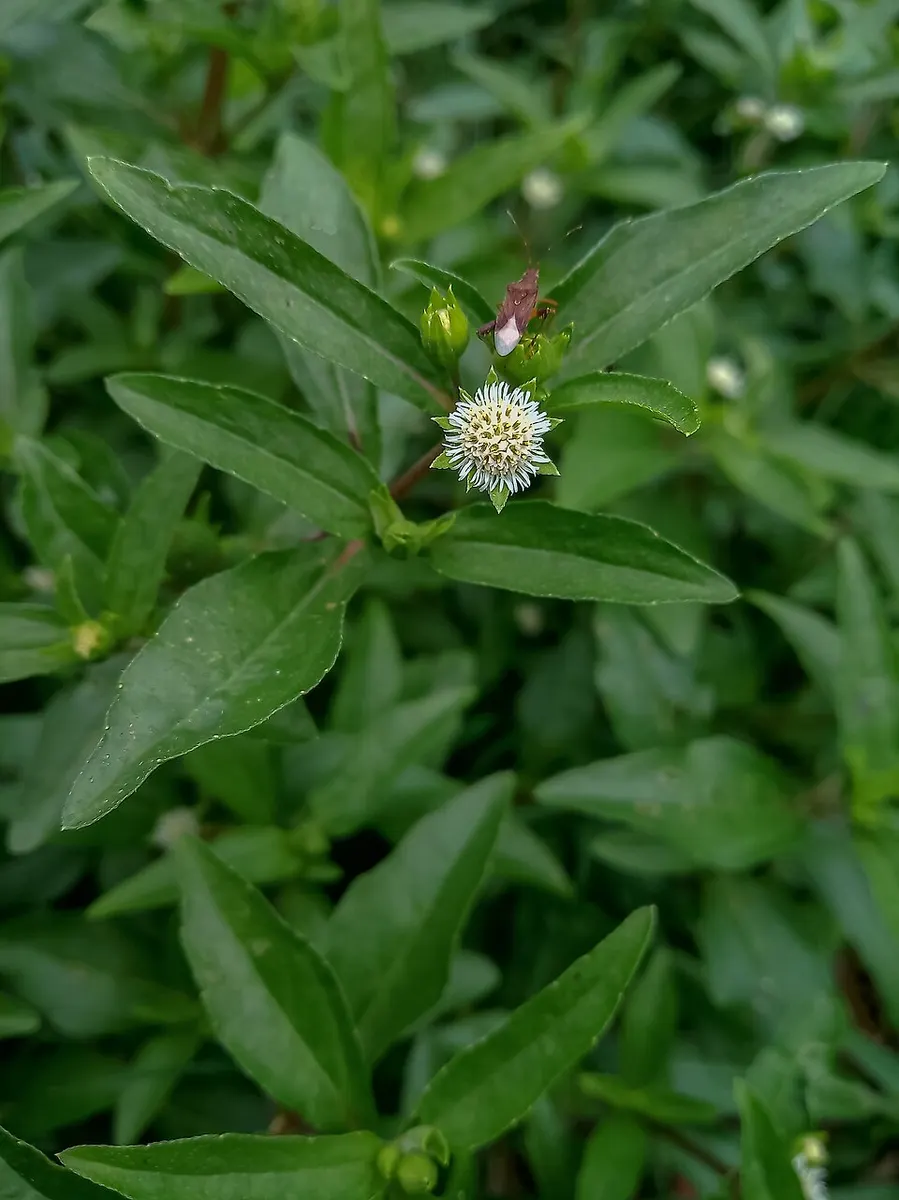
Photo: Filo gèn' / Wikimedia Commons (CC BY-SA 4.0)
Bhringraj (Eclipta prostrata): The ruler of hair herbs — restores colour, prevents loss, and nourishes the scalp and liver.
🔍 Quick Facts
| Common name | Bhringraj |
| Other names | Bhangra, Bhringraj (Hindi); Karisalankanni (Tamil); Guntagalagara (Telugu); False daisy |
| Scientific name | Eclipta prostrata |
| Plant family | Asteraceae (daisy family) |
| Size | 20–60 cm annual herb |
| Native region | India, China, Brazil |
| Climate | Tropical/Wetlands |
| Ease of growing | Fast |
| Parts used | Leaves, Seeds, Root |
About Bhringraj
Bhringraj is a small weed with white, daisy-like flowers that grows in damp places across India. Its name means "king of hair", and Bhringraj taila (oil) is one of the most widely sold Ayurvedic hair oils. When the leaves are crushed, the juice quickly turns black, which may explain why it has long been linked with dark hair. A yellow-flowered species (Wedelia) is also sold under the same name.
Botanically known as Eclipta prostrata, it belongs to the Asteraceae family. It is native to India, China, Brazil and grows best in a tropical/wetlands climate. The parts most often used are the leaves, seeds and root.
Traditional & Ayurvedic Uses
Bhringraj is best known for:
- Hair growth
- Premature greying
- Liver protection
- Memory
- Skin care
Most of these uses come from Ayurveda and folk medicine. Where we know of good clinical evidence, or of a specific safety concern, we say so in the overview, precautions and FAQs on this page.
How Bhringraj Is Used
- Leaves are boiled in coconut or sesame oil to make Bhringraj hair oil.
- Fresh leaf juice is applied to the scalp.
- Leaf powder is taken internally in Ayurveda for liver support.
How to Grow Bhringraj
| ☀️ Sunlight | Full sun to partial shade. |
| 💧 Watering | Keep soil moist — a marsh-loving plant. |
| 🪴 Soil | Moist, rich soil. |
| 🌱 Propagation | Seeds or cuttings; self-seeds readily. |
| 📅 When to plant (India) | Grows best in the monsoon. |
| 🏡 In pots / at home | Easy in a pot kept consistently moist. |
Precautions & Safety
- Internal use should be short-term and supervised.
- Patch-test oils for skin sensitivity.
Frequently Asked Questions
Further Reading on Bhringraj
Written by the WhyOnPlanet editorial team · Last updated October 2026