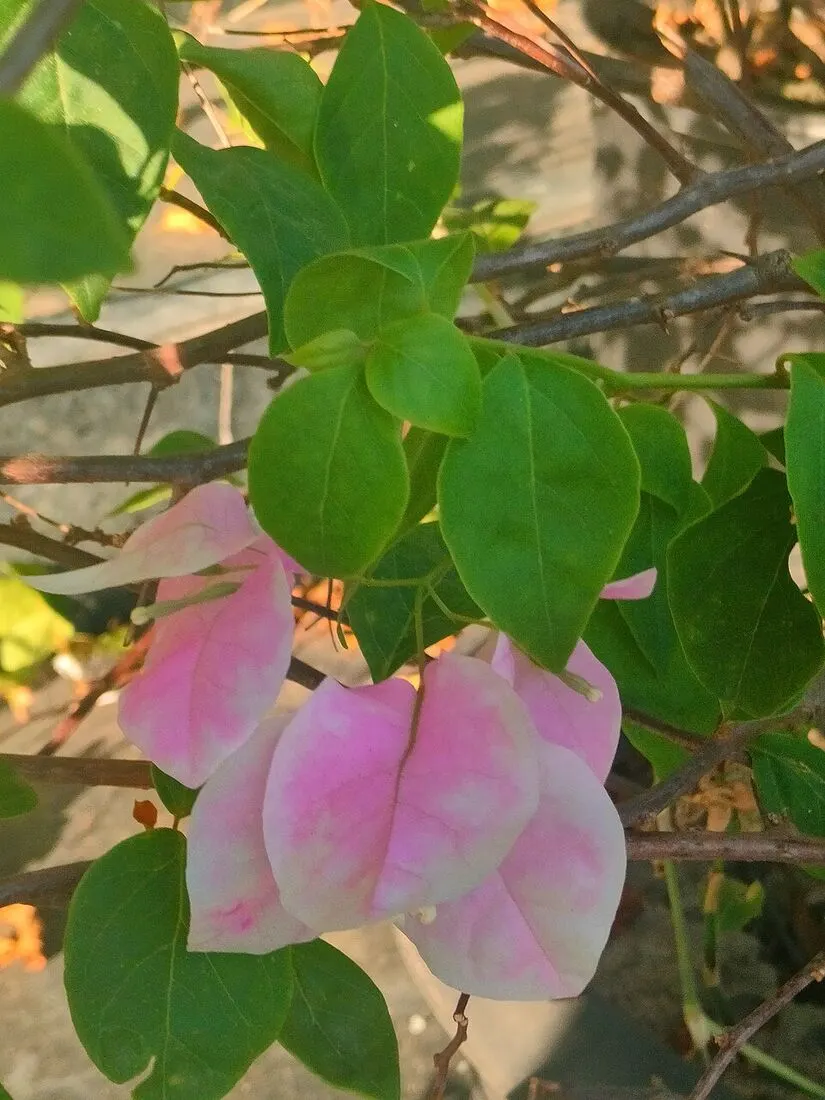
Photo: পাপৰি বৰা / Wikimedia Commons (CC BY-SA 4.0)
Bougainvillea (Bougainvillea glabra): Spectacular thorny climber-shrub with vibrant bracts — also used for respiratory and skin conditions.
🔍 Quick Facts
| Common name | Bougainvillea |
| Other names | Bougainvillea, Kagaz phool (Hindi — "paper flower") |
| Scientific name | Bougainvillea glabra |
| Plant family | Nyctaginaceae |
| Size | Scrambling shrub-climber, 2–10 m |
| Native region | South America |
| Climate | Tropical/Sub-tropical |
| Ease of growing | Fast |
| Parts used | Flowers, Leaves |
About Bougainvillea
What looks like the flower of a bougainvillea is actually a cluster of papery bracts; the true flowers are tiny white tubes in the centre. It is one of the toughest ornamental plants for Indian cities, used along highway medians and walls because it thrives on heat and neglect. The Indian Agricultural Research Institute (IARI) in Delhi has bred many of the popular varieties grown in India.
Botanically known as Bougainvillea glabra, it belongs to the Nyctaginaceae family. It is native to South America and grows best in a tropical/sub-tropical climate. The parts most often used are the flowers and leaves.
Traditional & Ayurvedic Uses
Bougainvillea is best known for:
- Cough relief
- Asthma
- Wound healing
- Antifungal
- Antioxidant
Most of these uses come from Ayurveda and folk medicine. Where we know of good clinical evidence, or of a specific safety concern, we say so in the overview, precautions and FAQs on this page.
How Bougainvillea Is Used
- Grown as a hedge, wall cover, arch or bonsai.
- Bract and leaf decoctions are used in some folk remedies for cough.
How to Grow Bougainvillea
| ☀️ Sunlight | Full sun — at least 6 hours, otherwise few bracts. |
| 💧 Watering | Water sparingly. Mild water stress actually triggers heavier flowering. |
| 🪴 Soil | Well-drained, even poor, soil. Too much nitrogen gives leaves instead of colour. |
| 🌱 Propagation | Hardwood cuttings in spring or monsoon. |
| 📅 When to plant (India) | Plant February–April. Peak colour in dry, hot months. |
| 🏡 In pots / at home | Excellent for pots and bonsai; prune hard after each flush. |
Precautions & Safety
- Sharp thorns can cause skin irritation and infection.
- Sap may cause mild dermatitis in sensitive people.
Frequently Asked Questions
Further Reading on Bougainvillea
Written by the WhyOnPlanet editorial team · Last updated October 2026