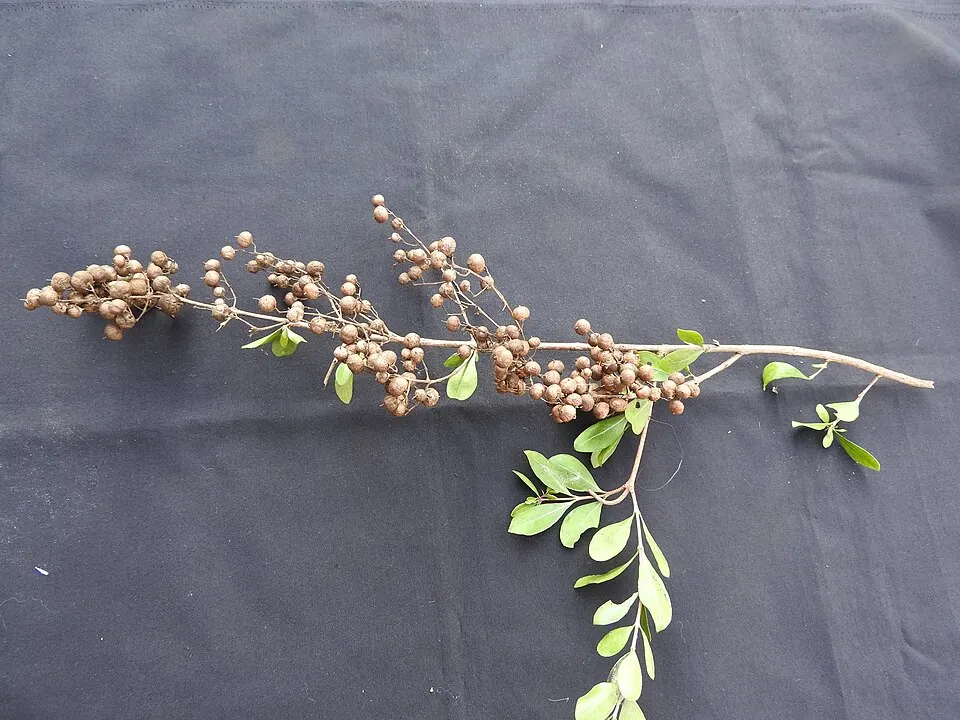
Photo: Yercaud-elango / Wikimedia Commons (CC BY-SA 4.0)
Henna (Mehendi) (Lawsonia inermis): Ancient dye plant with cooling, antifungal, and hair-conditioning properties.
🔍 Quick Facts
| Common name | Henna (Mehendi) |
| Other names | Mehendi, Mehndi (Hindi); Marudhani (Tamil); Gorintaku (Telugu) |
| Scientific name | Lawsonia inermis |
| Plant family | Lythraceae |
| Size | 2–6 m shrub, often clipped as a hedge |
| Native region | North Africa, South Asia |
| Climate | Arid/Tropical |
| Ease of growing | Moderate |
| Parts used | Leaves, Seeds, Bark |
About Henna
Henna leaves contain lawsone, an orange-red dye that binds to the keratin in skin and hair. Rajasthan — especially the Sojat region — supplies most of the world's henna powder. Besides its role in weddings and festivals, mehendi is a tough, drought-hardy hedge plant with tiny, intensely fragrant flowers.
Botanically known as Lawsonia inermis, it belongs to the Lythraceae family. It is native to North Africa, South Asia and grows best in a arid/tropical climate. The parts most often used are the leaves, seeds and bark.
Traditional & Ayurvedic Uses
Henna is best known for:
- Hair dye
- Cooling agent
- Skin conditions
- Wound healing
- Antifungal
Most of these uses come from Ayurveda and folk medicine. Where we know of good clinical evidence, or of a specific safety concern, we say so in the overview, precautions and FAQs on this page.
How Henna Is Used
- Dried leaf powder mixed with water (and often lemon or tea) is applied as body art.
- Henna paste is used as a natural hair dye and conditioner.
- Fresh leaf paste is applied to the soles of the feet as a traditional cooling remedy.
How to Grow Henna
| ☀️ Sunlight | Full sun. |
| 💧 Watering | Drought tolerant once established; water young plants weekly. |
| 🪴 Soil | Grows in poor, sandy or rocky soil; avoid waterlogged ground. |
| 🌱 Propagation | Seeds or hardwood cuttings in the monsoon. |
| 📅 When to plant (India) | Plant June–August with the rains. |
| 🏡 In pots / at home | Can be grown in a large pot, but it is happiest in the ground or as a hedge. |
Precautions & Safety
- Avoid "black henna" — it contains PPD, a chemical dye that causes severe allergic reactions.
- Not safe for babies or people with G6PD deficiency.
Frequently Asked Questions
Written by the WhyOnPlanet editorial team · Last updated October 2026