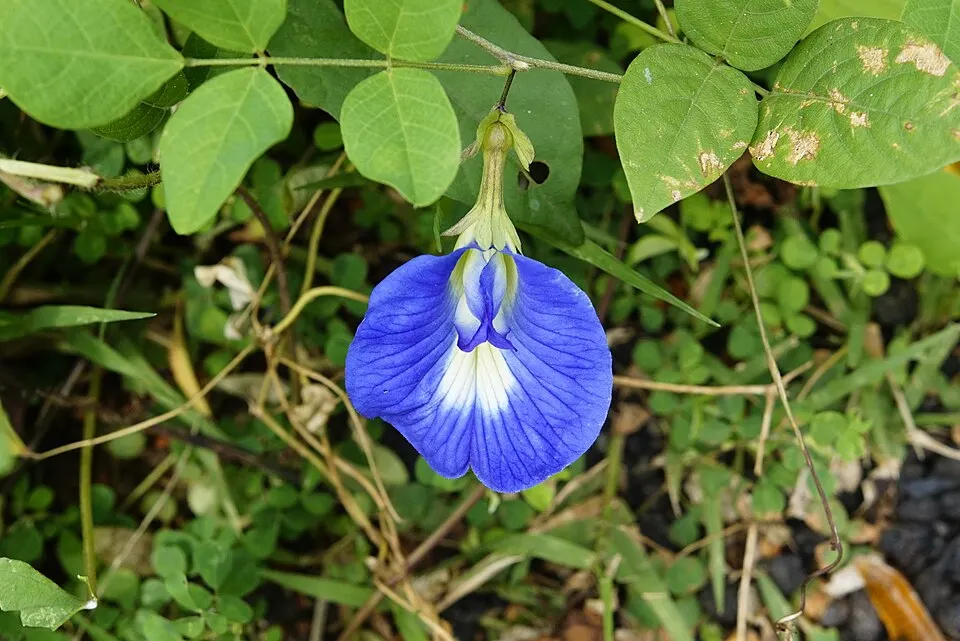
Photo: Vengolis / Wikimedia Commons (CC BY-SA 4.0)
Butterfly Pea (Aparajita) (Clitoria ternatea): Electric-blue flowered plant used in herbal teas, natural dyes, and nootropic remedies.
🔍 Quick Facts
| Common name | Butterfly Pea (Aparajita) |
| Other names | Aparajita (Hindi, Bengali); Shankhpushpi (in some regions); Sangu poo (Tamil) |
| Scientific name | Clitoria ternatea |
| Plant family | Fabaceae (legume family) |
| Size | Twining vine, 2–5 m |
| Native region | Tropical Asia |
| Climate | Tropical |
| Ease of growing | Fast |
| Parts used | Flowers, Leaves, Seeds, Root |
About Butterfly Pea
Butterfly pea is a fast-growing vine with deep blue flowers rich in anthocyanins. Its tea is famous for changing from blue to purple when lemon is added, which has made it popular in cafés worldwide. In India, aparajita flowers are offered to Lord Shiva and Durga, and the plant is a nitrogen-fixing legume that improves the soil it grows in.
Botanically known as Clitoria ternatea, it belongs to the Fabaceae family. It is native to Tropical Asia and grows best in a tropical climate. The parts most often used are the flowers, leaves, seeds and root.
Traditional & Ayurvedic Uses
Butterfly Pea is best known for:
- Memory boost
- Anxiety relief
- Anti-inflammatory
- Natural dye
- Eye health
Most of these uses come from Ayurveda and folk medicine. Where we know of good clinical evidence, or of a specific safety concern, we say so in the overview, precautions and FAQs on this page.
How Butterfly Is Used
- Fresh or dried flowers are steeped as blue tea; a squeeze of lemon turns it purple.
- Flowers colour rice, desserts and drinks naturally.
- Roots and seeds are used in traditional preparations.
How to Grow Butterfly Pea
| ☀️ Sunlight | Full sun for the most flowers. |
| 💧 Watering | Moderate; let the soil dry slightly between waterings. |
| 🪴 Soil | Light, well-drained soil; needs little fertiliser because it fixes nitrogen. |
| 🌱 Propagation | Seeds soaked overnight germinate in 7–10 days. |
| 📅 When to plant (India) | Sow February–July; it flowers year-round in warm regions. |
| 🏡 In pots / at home | Grows well in a 10–12 inch pot with a trellis or railing to climb. |
Precautions & Safety
- The flower tea is generally considered safe in normal amounts.
- Seeds and roots are strongly laxative and should not be eaten.
- Limited safety data for pregnancy — avoid concentrated use.
Frequently Asked Questions
Written by the WhyOnPlanet editorial team · Last updated October 2026