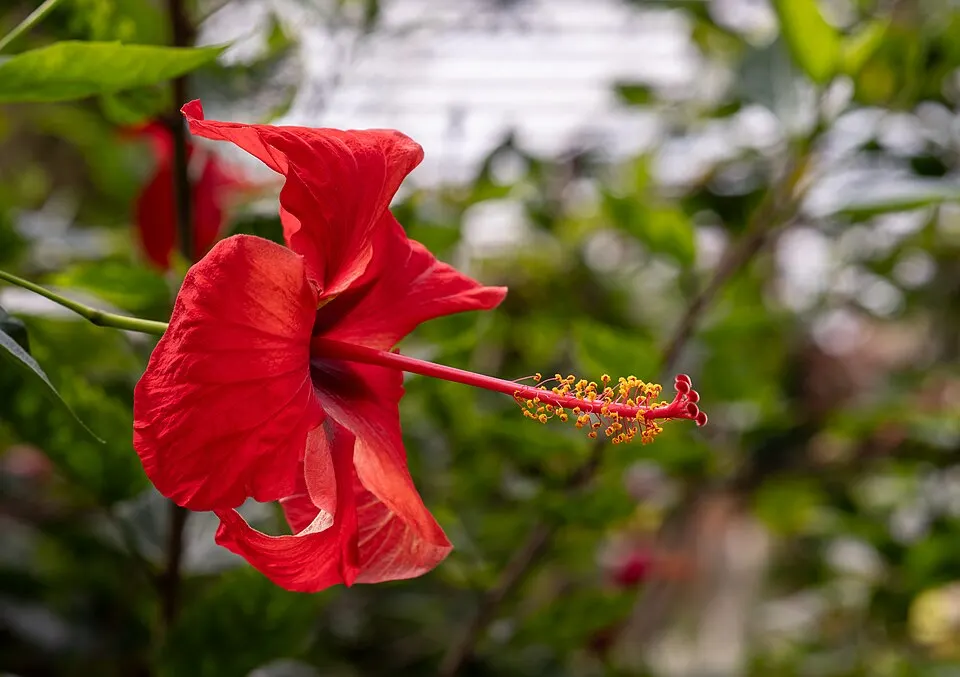
Photo: Jules Verne Times Two / Wikimedia Commons (CC BY-SA 4.0)
Hibiscus (Hibiscus rosa-sinensis): Vibrant flowering shrub used for hair care, blood pressure, and as a vitamin-C-rich herbal tea.
🔍 Quick Facts
| Common name | Hibiscus |
| Other names | Gudhal, Jaswand (Hindi, Marathi); Sembaruthi (Tamil); Japa (Sanskrit) |
| Scientific name | Hibiscus rosa-sinensis |
| Plant family | Malvaceae |
| Size | 1–3 m evergreen shrub |
| Native region | Tropical Asia |
| Climate | Tropical |
| Ease of growing | Fast |
| Parts used | Flowers, Leaves, Calyx |
About Hibiscus
The red single-petalled hibiscus is offered to the goddess Kali and Lord Ganesha and is one of the commonest garden shrubs in India. Hundreds of hybrid colours exist, but the traditional red variety is the one used in hair oils and herbal remedies. Note that the "hibiscus tea" sold for blood pressure is usually made from roselle (Hibiscus sabdariffa) calyces, a related species — though rosa-sinensis flowers are also brewed.
Botanically known as Hibiscus rosa-sinensis, it belongs to the Malvaceae family. It is native to Tropical Asia and grows best in a tropical climate. The parts most often used are the flowers, leaves and calyx.
Traditional & Ayurvedic Uses
Hibiscus is best known for:
- Hair growth
- Blood pressure
- Vitamin C source
- Liver health
- Weight loss
Most of these uses come from Ayurveda and folk medicine. Where we know of good clinical evidence, or of a specific safety concern, we say so in the overview, precautions and FAQs on this page.
How Hibiscus Is Used
- Flowers and leaves are boiled in coconut oil to make traditional hair oil.
- Leaf and flower paste is used as a natural hair wash and conditioner.
- Dried petals are steeped as a tart, ruby-coloured herbal tea.
How to Grow Hibiscus
| ☀️ Sunlight | Full sun for the most flowers; at least 5–6 hours. |
| 💧 Watering | Water deeply when the topsoil is dry; daily in hot summers. Bud drop usually means irregular watering. |
| 🪴 Soil | Fertile, well-drained, slightly acidic soil. Feed with a potassium-rich fertiliser for more blooms. |
| 🌱 Propagation | Semi-hardwood stem cuttings, 15–20 cm, root in 3–4 weeks in the monsoon. |
| 📅 When to plant (India) | Plant February–March or June–August. Prune lightly after the main flowering flush. |
| 🏡 In pots / at home | Grows well in a 14–16 inch pot. Watch for mealybugs on new shoots. |
Precautions & Safety
- Hibiscus tea may lower blood pressure — be careful if already on antihypertensives.
- Traditionally avoided in pregnancy because it may affect menstruation.
Frequently Asked Questions
Further Reading on Hibiscus
Written by the WhyOnPlanet editorial team · Last updated October 2026