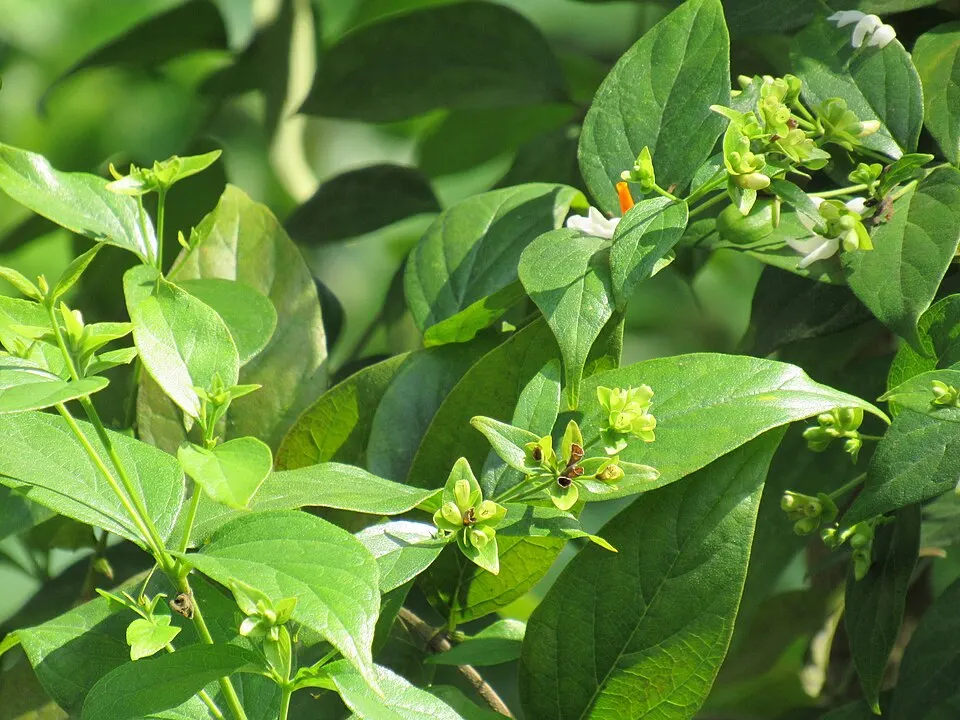
Photo: Afifa Afrin / Wikimedia Commons (CC BY-SA 3.0)
Night Jasmine (Parijat) (Nyctanthes arbor-tristis): Sacred fragrant shrub whose flowers bloom at night — used in Ayurveda for fever and arthritis.
🔍 Quick Facts
| Common name | Night Jasmine (Parijat) |
| Other names | Harsingar, Parijat (Hindi); Shiuli (Bengali); Pavazha malli (Tamil) |
| Scientific name | Nyctanthes arbor-tristis |
| Plant family | Oleaceae |
| Size | 3–10 m shrub or small tree |
| Native region | India, Southeast Asia |
| Climate | Tropical |
| Ease of growing | Moderate |
| Parts used | Flowers, Leaves, Bark, Seeds |
About Night Jasmine
Parijat flowers open after dusk and fall to the ground at dawn — white petals with bright orange tubes, carpeting the earth beneath the tree. Indian mythology says the parijat was brought from heaven, and the shiuli is the state flower of West Bengal, where its blooming announces Durga Puja. Its leaves are used in Ayurveda for fever and joint pain.
Botanically known as Nyctanthes arbor-tristis, it belongs to the Oleaceae family. It is native to India, Southeast Asia and grows best in a tropical climate. The parts most often used are the flowers, leaves, bark and seeds.
Traditional & Ayurvedic Uses
Night Jasmine is best known for:
- Fever
- Arthritis
- Antifungal
- Gut parasites
- Anti-inflammatory
Most of these uses come from Ayurveda and folk medicine. Where we know of good clinical evidence, or of a specific safety concern, we say so in the overview, precautions and FAQs on this page.
How Night Is Used
- Leaves are boiled into a bitter decoction traditionally given for fever and sciatica.
- Fallen flowers are collected for worship and garlands.
- The orange flower tubes were once used to dye fabric saffron.
How to Grow Night Jasmine
| ☀️ Sunlight | Full sun to partial shade. |
| 💧 Watering | Moderate; drought tolerant once established. |
| 🪴 Soil | Any well-drained garden soil. |
| 🌱 Propagation | Stem cuttings or seeds during the monsoon. |
| 📅 When to plant (India) | Plant June–August. Flowers mainly August–December. |
| 🏡 In pots / at home | Can be grown in a large container (18 inch+), but flowers best in the ground. |
Precautions & Safety
- Leaf decoction is very bitter and can cause nausea or stomach upset.
- Avoid medicinal use in pregnancy without professional advice.
Frequently Asked Questions
Further Reading on Night Jasmine
Written by the WhyOnPlanet editorial team · Last updated October 2026