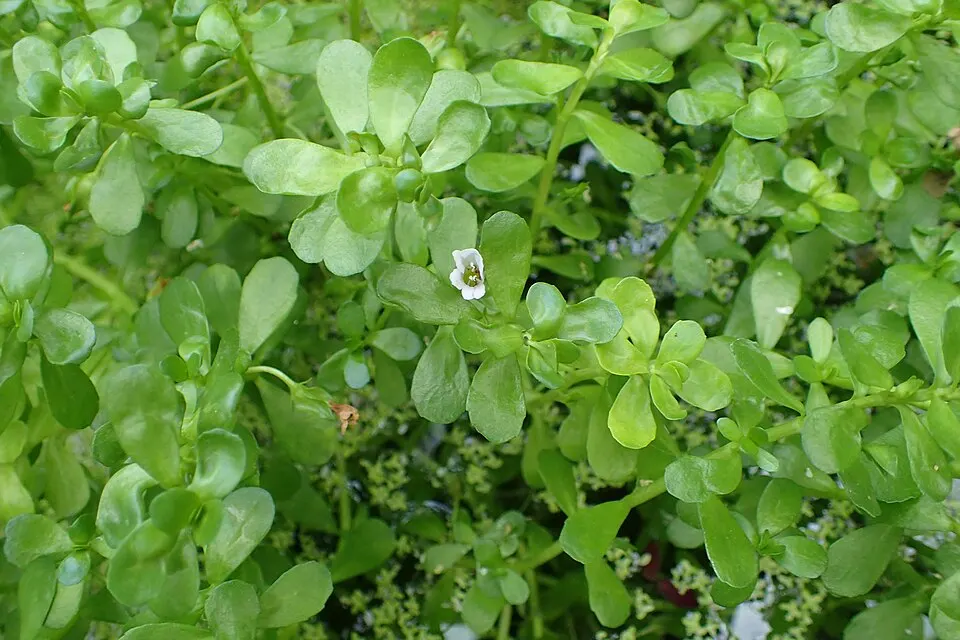
Photo: Krzysztof Ziarnek, Kenraiz / Wikimedia Commons (CC BY-SA 4.0)
Brahmi (Bacopa monnieri): Classical Ayurvedic brain tonic that enhances memory, focus, and calm.
🔍 Quick Facts
| Common name | Brahmi |
| Other names | Brahmi, Jalnimb (Hindi); Neer Brahmi (Kannada, Tamil); Bacopa |
| Scientific name | Bacopa monnieri |
| Plant family | Plantaginaceae |
| Size | Creeping herb, 10–30 cm high, spreading wide |
| Native region | India, Southeast Asia |
| Climate | Tropical/Wetlands |
| Ease of growing | Moderate |
| Parts used | Leaves, Stems |
About Brahmi
Brahmi is a small succulent creeper that grows naturally in marshes, paddy-field edges and along streams across India. It is named after Brahman, the universal consciousness, and Ayurveda classifies it as a medhya rasayana — a herb for the intellect. Unlike many traditional herbs, Bacopa monnieri has been tested in several human trials for memory, which makes it one of the better-studied Ayurvedic herbs. It is often confused with Mandukaparni (Centella asiatica), which is also sold as "brahmi" in some regions.
Botanically known as Bacopa monnieri, it belongs to the Plantaginaceae family. It is native to India, Southeast Asia and grows best in a tropical/wetlands climate. The parts most often used are the leaves and stems.
Traditional & Ayurvedic Uses
Brahmi is best known for:
- Memory enhancement
- Anxiety relief
- Cognitive function
- Sleep quality
- ADHD support
Most of these uses come from Ayurveda and folk medicine. Where we know of good clinical evidence, or of a specific safety concern, we say so in the overview, precautions and FAQs on this page.
How Brahmi Is Used
- Fresh leaves (5–10) are eaten with honey or ground into a chutney.
- Dried powder is taken with warm milk or ghee in traditional practice.
- Brahmi oil, made by infusing the herb in sesame or coconut oil, is massaged into the scalp.
How to Grow Brahmi
| ☀️ Sunlight | Bright light to full sun; tolerates partial shade but grows leggy. |
| 💧 Watering | Loves water. Keep the soil constantly moist, or grow it in a tray of shallow water or at the edge of a pond. |
| 🪴 Soil | Rich, moisture-retentive soil with plenty of organic matter; clay-loam is fine. |
| 🌱 Propagation | Easiest from stem cuttings, which root at every node within a week in wet soil. |
| 📅 When to plant (India) | Plant any time from February to September; growth slows in cold winters. |
| 🏡 In pots / at home | Ideal for a wide, shallow pot or a water-tray garden. Trim regularly to keep it dense. |
Precautions & Safety
- Can cause stomach upset, cramps or loose stools, especially on an empty stomach.
- May interact with thyroid, sedative and anticholinergic medications.
- Not well studied in pregnancy or breastfeeding — avoid supplements unless advised.
Frequently Asked Questions
Further Reading on Brahmi
Written by the WhyOnPlanet editorial team · Last updated October 2026