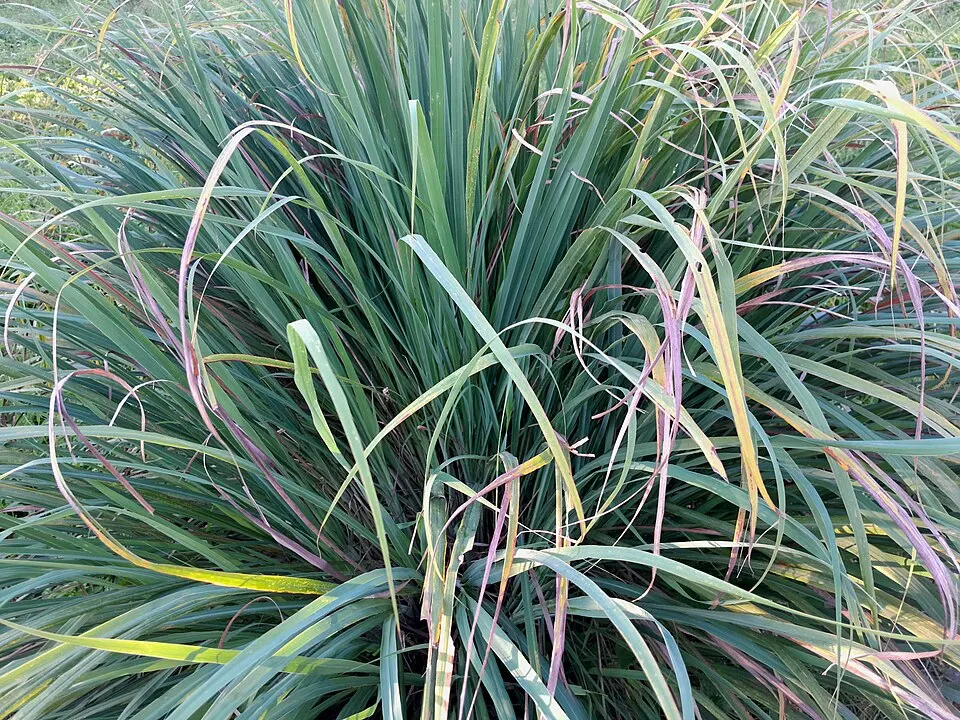
Photo: Undeka 11 / Wikimedia Commons (CC BY-SA 4.0)
Lemongrass (Cymbopogon citratus): Fragrant tropical grass used in cooking, teas, and aromatherapy for its calming citrus scent.
🔍 Quick Facts
| Common name | Lemongrass |
| Other names | Gavati chaha (Marathi); Hari chai, Sera (Hindi); Inji pullu (Malayalam) |
| Scientific name | Cymbopogon citratus |
| Plant family | Poaceae (grass family) |
| Size | Clumping grass, 1–1.5 m tall |
| Native region | Southeast Asia |
| Climate | Tropical |
| Ease of growing | Fast |
| Parts used | Leaves, Stems |
About Lemongrass
Lemongrass is a tall tropical grass whose stems and leaves contain citral, the compound behind its fresh lemon scent. In India it is a staple of "chai" in Maharashtra and Kerala, and its essential oil is distilled commercially in Kerala and the north-east. It is one of the most rewarding herbs for beginners: a single stalk bought from the market will root and grow into a large clump within one season.
Botanically known as Cymbopogon citratus, it belongs to the Poaceae family. It is native to Southeast Asia and grows best in a tropical climate. The parts most often used are the leaves and stems.
Traditional & Ayurvedic Uses
Lemongrass is best known for:
- Stress relief
- Digestion
- Fever
- Skin care
- Insect repellent
Most of these uses come from Ayurveda and folk medicine. Where we know of good clinical evidence, or of a specific safety concern, we say so in the overview, precautions and FAQs on this page.
How Lemongrass Is Used
- Chopped leaves are boiled with tea leaves or steeped alone as a caffeine-free tea.
- The white lower stem is crushed into Thai and Kerala curries and soups.
- Lemongrass oil is diluted for aromatherapy and as a natural mosquito repellent.
How to Grow Lemongrass
| ☀️ Sunlight | Full sun, 6–8 hours. Shade makes it floppy and less fragrant. |
| 💧 Watering | Regular watering; it likes moist soil in summer but must drain well. Reduce watering in winter. |
| 🪴 Soil | Any fertile, well-drained soil; feed with compost every two months for lush growth. |
| 🌱 Propagation | Root a market-bought stalk (with base intact) in a glass of water, then pot it; or divide an existing clump. |
| 📅 When to plant (India) | Plant February–July. In cold north Indian winters it browns; cut back and it regrows in spring. |
| 🏡 In pots / at home | Use a 14-inch or larger pot — the clump grows big. Divide it every year. |
Precautions & Safety
- Undiluted essential oil can irritate the skin.
- Avoid medicinal amounts in pregnancy — some traditions use it to stimulate menstruation.
- Leaf edges are sharp; wear gloves when dividing clumps.
Frequently Asked Questions
Further Reading on Lemongrass
Written by the WhyOnPlanet editorial team · Last updated October 2026