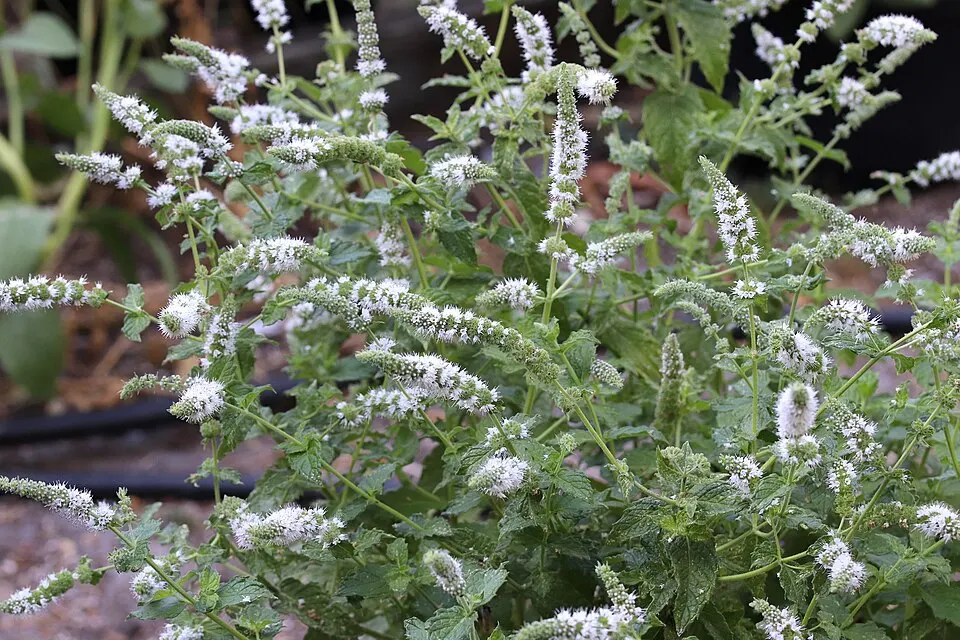
Photo: S.G.S. / Wikimedia Commons (CC BY-SA 4.0)
Peppermint (Mentha piperita): Cooling herb with menthol compounds — relieves headaches, digestive issues, and freshens breath.
🔍 Quick Facts
| Common name | Peppermint |
| Other names | Pudina, Vilayati pudina (Hindi); Pudhina (Tamil) |
| Scientific name | Mentha piperita |
| Plant family | Lamiaceae (mint family) |
| Size | 30–90 cm, spreads by runners |
| Native region | Europe, Middle East |
| Climate | Temperate |
| Ease of growing | Fast |
| Parts used | Leaves, Oil |
About Peppermint
Peppermint is a natural hybrid of water mint and spearmint, prized for its high menthol content. The pudina sold in Indian markets is usually spearmint or a local mint; true peppermint has darker, purple-tinged stems and a noticeably cooling bite. Peppermint oil is one of the few herbal remedies with good clinical evidence — enteric-coated capsules are used for irritable bowel syndrome (IBS).
Botanically known as Mentha piperita, it belongs to the Lamiaceae family. It is native to Europe, Middle East and grows best in a temperate climate. The parts most often used are the leaves and oil.
Traditional & Ayurvedic Uses
Peppermint is best known for:
- Headache relief
- Digestion
- IBS
- Breath freshener
- Nausea
Most of these uses come from Ayurveda and folk medicine. Where we know of good clinical evidence, or of a specific safety concern, we say so in the overview, precautions and FAQs on this page.
How Peppermint Is Used
- Fresh leaves are used in chutney, raita, lemonade and herbal tea.
- Peppermint tea is a traditional after-meal digestive.
- Diluted peppermint oil is rubbed on the temples for tension headaches.
How to Grow Peppermint
| ☀️ Sunlight | Partial sun to full morning sun; afternoon shade in hot Indian summers. |
| 💧 Watering | Keep soil evenly moist. Mint wilts fast in heat — water daily in summer. |
| 🪴 Soil | Rich, moist soil with compost; slightly acidic to neutral. |
| 🌱 Propagation | Stem cuttings root in water in a few days; root runners can be divided any time. |
| 📅 When to plant (India) | Best planted October–March in the plains; it can struggle in peak May–June heat. |
| 🏡 In pots / at home | Always grow it in its own pot — mint spreads aggressively and smothers other herbs. |
Precautions & Safety
- Can worsen acid reflux (GERD) by relaxing the lower oesophageal sphincter.
- Never apply peppermint oil near the face of infants or young children.
- Oil capsules may interact with some antacids and medications.
Frequently Asked Questions
Written by the WhyOnPlanet editorial team · Last updated October 2026